

Cold Open
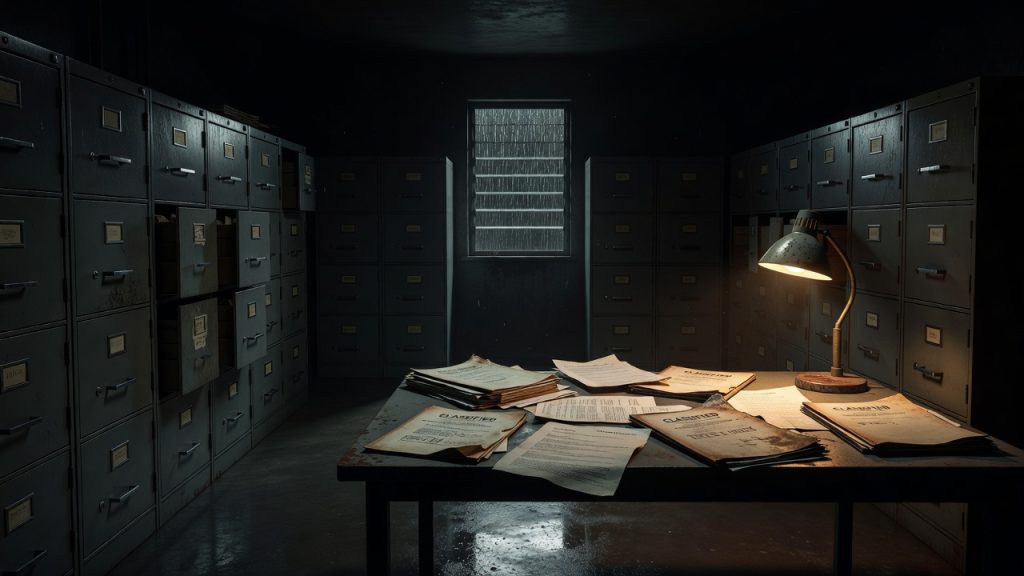
The paper trail did not begin in the jungle. It began afterward, in the long fluorescent hush of government offices, where tragedy becomes file numbers and grief becomes a records request. More than 900 people died at Jonestown. Congressman Leo Ryan was murdered on a Guyanese airstrip. The world moved on with an official story of cult terror, coercion, and mass death. But one researcher kept tugging at the seams. If intelligence agencies had been watching Peoples Temple before the end, what exactly did they know, when did they know it, and why did so much of the answer arrive blacked out? That question became McGehee v. CIA.
The Case For
The lawsuit proved the CIA had more on Jonestown than the public could see.
This is where the conspiracy case starts to breathe. In the district court decision for McGehee v. Central Intelligence Agency, the court said the CIA identified 84 responsive documents tied to Fielding McGehee’s FOIA request about Peoples Temple. According to that ruling, 26 were withheld in full, 18 were released with deletions, and 12 were released. The remaining 28 originated with the State Department or FBI. That is not proof of CIA control over Jonestown. But it is proof of an intelligence paper trail most casual readers never imagined.
To conspiracy-minded readers, the numbers matter because they show Jonestown was not just a lurid headline or a dead-end cult archive. It had generated enough interagency traffic that a single request turned up dozens of responsive records and a fight over who controlled them. Intelligence services do not build files out of pure curiosity. They build them because a subject intersects with foreign affairs, security concerns, or political sensitivity.
The appeals court found the CIA’s handling of the request deeply troubling.
The stronger fuel came from the appeal. In the D.C. Circuit opinion archived by the Jonestown digital archive, the court said the CIA used a rule that limited its search to material in its possession on the date of McGehee’s request. The court described that unpublished “time-of-request cut-off” as a policy that could shrink what the public ever got to see, even though disclosure did not begin until roughly two and a half years later. A Justice Department FOIA update later summarized the problem bluntly: the requester was eventually told that 28 of the 84 located documents were being referred to other agencies, while the court criticized both the cutoff rule and the referral practice.
If you suspect a cover-up, that sequence sounds familiar. Delay. Fragment the record. Push some documents elsewhere. Define the search narrowly. Then insist the result is complete enough. Layer that onto our Jonestown and CIA deep dive and the government secrets archive, and you can see why the case became a touchstone for readers who believe the public never got the full file. Even without a smoking gun, bureaucratic opacity can feel like its own confession.
There is another reason the case stays alive. The 1979 House report, The Assassination of Representative Leo J. Ryan and the Jonestown, Guyana Tragedy, documented abuse allegations, defections, intimidation, and the political sensitivity surrounding Ryan’s trip. When an event already sits at the junction of congressional oversight, an American mass-death disaster overseas, and intelligence records that remain partly hidden, the suspicion writes itself.
The Realist’s Eye
A file is not the same thing as ownership.
This is where the realist brake has to engage. Intelligence agencies accumulate records on volatile religious movements, foreign compounds, congressional travel, defectors, and Americans overseas all the time. A CIA file can mean awareness, collection, liaison reporting, or defensive interest. It does not automatically mean orchestration. The McGehee rulings are meaningful because they show the existence of responsive records and a contentious FOIA process. They do not establish that the CIA ran Jonestown, directed Jim Jones, or engineered the massacre.
The same caution applies to the 84-document figure. Responsive records under FOIA can include cables, routing notes, duplicate references, or material generated after the tragedy. Quantity sounds dramatic, but quantity alone does not tell us what the documents actually say. Some may have been routine. Some may have been classified for reasons unrelated to wrongdoing.
The court criticized process more clearly than it exposed substance.
Even the famous appeal needs careful handling. The D.C. Circuit criticized the CIA’s cutoff rule and, in the original opinion, harshly discussed agency conduct. But that is not the same as a judicial finding that the agency was hiding proof of a Jonestown operation. It is a finding that the search rules, referral practices, and disclosure posture deserved greater scrutiny. That distinction matters. A bad records process can conceal something explosive, but it can also conceal something mundane. The lawsuit proved opacity. It did not prove the theory that opacity was protecting.
There is also a simpler explanation for why Jonestown attracted intelligence attention: it was an American settlement in Guyana during the Cold War, led by a politically connected and unstable figure, and it ended with the murder of a sitting congressman. That alone would be enough to generate cables, interagency alerts, and classified handling. The realist position is not that the secrecy is harmless. It is that secrecy often outlives the event that produced it, and the surviving mystery can grow larger than the surviving evidence.
So the tension remains. The records fight keeps the door open to deeper questions about what was known in advance and what stayed buried afterward. But the public record still falls short of proving CIA management of Peoples Temple.
What We Know For Certain
- McGehee v. CIA concerned a FOIA request for records related to Peoples Temple and Jonestown.
- The district court said the CIA identified 84 responsive documents, with some withheld in full and others released with deletions.
- The D.C. Circuit criticized the CIA’s undisclosed time-of-request cutoff policy and examined its referral of records to other agencies.
- The 1979 House report documented abuse allegations, political concern, and the events surrounding Leo Ryan’s fatal trip to Guyana.
- No court in McGehee concluded that the CIA ran Jonestown.
The Unanswered Questions
- How much of the withheld or referred material was operationally significant, and how much was routine bureaucracy?
- Did intelligence agencies possess warnings about Peoples Temple that never reached the people trying to leave or investigate it?
- Were post-tragedy classification decisions driven by genuine source protection, institutional embarrassment, or both?
- How many Jonestown-related records remain scattered across agencies in ways the public still cannot easily reconstruct?
The Closer — You Decide
Jonestown left behind more than bodies and headlines. It left an archive with missing corners, hard edges, and just enough shadow to keep pulling people back. McGehee v. CIA did not hand the public a final answer. It handed the public a better question: why did it take so long to pry even this much loose? Maybe the case reveals a cover-up. Maybe it reveals the colder machinery of secrecy protecting itself long after the smoke cleared. Either way, the file fight was real, the records were real, and the unease was earned. The evidence is on the table. You decide.


