Menu

Bacillus globigii: The ‘Harmless’ Germ the Army Spread

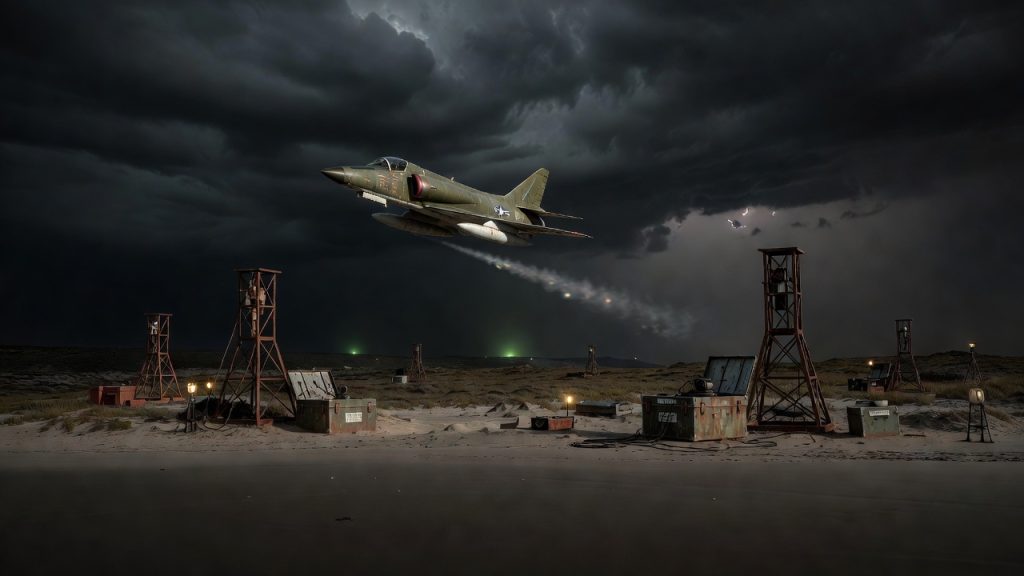
Cold War military aerosol test scene tied to Bacillus globigii — ConspiracyRealist.com

Cold Open

Some secrets arrive in sealed envelopes. Others drift through the air. In the long Cold War twilight, military planners wanted to know how a biological cloud would move over a jungle canopy, through an Arctic inversion, across the deck of a warship, and into the spaces where people thought they were safe. So they chose a stand-in organism with an oddly casual label: Bacillus globigii. The theory was simple enough. It looked enough like a dangerous germ to model an attack, but it was supposed to be harmless. Years later, the name changed, the paperwork surfaced, and the old reassurance started to sound less like certainty and more like a gamble made in the dark.

The Case For

The military really did spread Bacillus globigii as a stand-in for biological warfare agents.

This is not one of those stories built on whispers. The Defense Department’s Project 112/SHAD fact-sheet archive lists test after test involving BG, the shorthand for Bacillus globigii. It appears in operations such as Night Train near Fort Greely, Big Tom on Oahu, Scarlet Sage off San Diego, and Folded Arrow near Hawaii. That turns BG from a footnote into a system.

The official Big Tom fact sheet is especially revealing. According to the Department of Defense, the 1965 test on Oahu was meant to evaluate the feasibility of a biological attack against an island complex and refine delivery tactics. The same sheet says both liquid and dry Bacillus globigii were disseminated from military aircraft while fluorescent zinc cadmium sulfide particles were used as tracers. In plain English, the government practiced how a hostile aerosol cloud might behave over real terrain using a living simulant.

BG was chosen because officials believed it posed little danger, but later reviews became more cautious.

The conspiracy pressure point is not whether BG was used. It is how confidently officials once described it. The 2007 National Academies volume Long-Term Health Effects of Participation in Project SHAD states that BG was used as a biological warfare simulant because it was then considered to have little health consequence to humans. Then comes the line that keeps the story alive: BG is now considered a human pathogen. The report immediately adds crucial context — most reported infections involve debilitated patients, invasive trauma, surgery, catheters, or hospital settings — but the language still marks a real shift.

That shift becomes harder to ignore when you line it up with the broader record of secret military testing. The Night Train fact sheet says 14 airborne trials released BG from F-105 or F-100 aircraft near Fort Greely, with four additional surface trials from a moving personnel carrier. The purpose was to study how a biological aerosol cloud penetrated Arctic inversions and moved under different weather regimes. Read alongside our Fort Greely investigation, our Project SHAD deep dive, and the wider government secrets archive, the pattern feels unmistakable: the U.S. military repeatedly used safe stand-ins in real-world environments while keeping the public understanding of those programs fragmentary for decades.

For readers inclined toward the darker interpretation, the issue is trust. Once the state tells you a biological simulant is harmless, classifies the testing, and only later concedes that people may have been exposed without their knowledge, every later reassurance sounds thinner. Health.mil’s own SHAD overview now says exactly that.

The Realist’s Eye

Now considered a pathogen does not mean BG caused a hidden wave of mass illness.

This is where the realist brake has to engage. The strongest version of the theory says the military spread a dangerous germ, knew it was dangerous, and buried the damage. The public record does not get us that far. The National Academies review does say BG is now considered a human pathogen, but it also stresses that infections are rare, usually opportunistic, and generally associated with already compromised health or invasive medical circumstances. It found no evidence of long-term persistence, extended latency, or some uniquely sinister delayed syndrome tied to BG exposure. That distinction matters.

The same caution applies to the SHAD fact sheets themselves. Big Tom and Night Train both describe BG as considered harmless to healthy individuals at the time. The Health.mil Project 112 overview goes further, stating that DOD’s investigation found no evidence in its records that anyone died as a result of Deseret Test Center exposures. That does not prove everything was safe, but it does argue against claims of documented mass casualties from BG.

The deeper scandal may be secrecy and consent, not a proven biological disaster.

There is a second realist point that cuts in a different direction. Even if BG posed low risk at the levels used, secrecy changes the moral geometry of the whole story. A government does not have to trigger a public-health catastrophe to cross an ethical line. It can do that by turning populations, service members, or civilian spaces into unwitting test environments. The National Academies review focused on health effects, not the ethics of nonconsensual exposure. That leaves one of the central public questions unresolved.

And the archive is messy. Health.mil repeatedly notes that SHAD records were scattered, incompletely cataloged, and reconstructed decades after the tests. That does not prove a cover-up of medical harm. It does mean our confidence rests on an after-the-fact reconstruction of secret programs whose original transparency was close to zero. The realist conclusion, then, is not that the conspiracy is solved. It is that the known facts support a narrower but still serious indictment: Cold War planners normalized exposure first and explanation later.

What We Know For Certain

  • Bacillus globigii was used by the U.S. military as a biological warfare simulant in multiple Project 112/SHAD tests.
  • Official Defense Department fact sheets place BG in tests such as Big Tom, Night Train, Scarlet Sage, and others across different environments.
  • The 2007 National Academies review says BG was once considered to have little health consequence to humans but is now considered a human pathogen.
  • The same review says reported BG infections are usually opportunistic, acute, and associated with compromised hosts or invasive trauma.
  • Health.mil says some people may have been exposed in land-based simulant tests without their knowledge.

The Unanswered Questions

  • How much confidence should the public place in safety conclusions built from incomplete and reconstructed Cold War archives?
  • Were all exposed service members, contractors, and potentially affected civilians ever identified with real precision?
  • How often did military officials classify a simulant as harmless before the science around it was truly settled?
  • If the health risk was low, why did so much of the testing history remain hidden for so long?

The Closer — You Decide

Bacillus globigii sits in that uneasy Cold War category of things that were real and secret. Maybe the organism was low-risk in practice. Maybe the greater damage was done to public trust the moment officials decided that exposure without knowledge was an acceptable price of readiness. Either way, the old label harmless no longer lands the way it once did. The tests were real. The shifting science was real. And the distance between those two facts is where the suspicion still breathes. The evidence is on the table. You decide.

dive down the rabbit hole

Bacillus globigii: The ‘Harmless’ Germ the Army Spread

S-FX.com
Cold War military aerosol test scene tied to Bacillus globigii — ConspiracyRealist.com

Cold Open

Some secrets arrive in sealed envelopes. Others drift through the air. In the long Cold War twilight, military planners wanted to know how a biological cloud would move over a jungle canopy, through an Arctic inversion, across the deck of a warship, and into the spaces where people thought they were safe. So they chose a stand-in organism with an oddly casual label: Bacillus globigii. The theory was simple enough. It looked enough like a dangerous germ to model an attack, but it was supposed to be harmless. Years later, the name changed, the paperwork surfaced, and the old reassurance started to sound less like certainty and more like a gamble made in the dark.

The Case For

The military really did spread Bacillus globigii as a stand-in for biological warfare agents.

This is not one of those stories built on whispers. The Defense Department’s Project 112/SHAD fact-sheet archive lists test after test involving BG, the shorthand for Bacillus globigii. It appears in operations such as Night Train near Fort Greely, Big Tom on Oahu, Scarlet Sage off San Diego, and Folded Arrow near Hawaii. That turns BG from a footnote into a system.

The official Big Tom fact sheet is especially revealing. According to the Department of Defense, the 1965 test on Oahu was meant to evaluate the feasibility of a biological attack against an island complex and refine delivery tactics. The same sheet says both liquid and dry Bacillus globigii were disseminated from military aircraft while fluorescent zinc cadmium sulfide particles were used as tracers. In plain English, the government practiced how a hostile aerosol cloud might behave over real terrain using a living simulant.

BG was chosen because officials believed it posed little danger, but later reviews became more cautious.

The conspiracy pressure point is not whether BG was used. It is how confidently officials once described it. The 2007 National Academies volume Long-Term Health Effects of Participation in Project SHAD states that BG was used as a biological warfare simulant because it was then considered to have little health consequence to humans. Then comes the line that keeps the story alive: BG is now considered a human pathogen. The report immediately adds crucial context — most reported infections involve debilitated patients, invasive trauma, surgery, catheters, or hospital settings — but the language still marks a real shift.

That shift becomes harder to ignore when you line it up with the broader record of secret military testing. The Night Train fact sheet says 14 airborne trials released BG from F-105 or F-100 aircraft near Fort Greely, with four additional surface trials from a moving personnel carrier. The purpose was to study how a biological aerosol cloud penetrated Arctic inversions and moved under different weather regimes. Read alongside our Fort Greely investigation, our Project SHAD deep dive, and the wider government secrets archive, the pattern feels unmistakable: the U.S. military repeatedly used safe stand-ins in real-world environments while keeping the public understanding of those programs fragmentary for decades.

For readers inclined toward the darker interpretation, the issue is trust. Once the state tells you a biological simulant is harmless, classifies the testing, and only later concedes that people may have been exposed without their knowledge, every later reassurance sounds thinner. Health.mil’s own SHAD overview now says exactly that.

The Realist’s Eye

Now considered a pathogen does not mean BG caused a hidden wave of mass illness.

This is where the realist brake has to engage. The strongest version of the theory says the military spread a dangerous germ, knew it was dangerous, and buried the damage. The public record does not get us that far. The National Academies review does say BG is now considered a human pathogen, but it also stresses that infections are rare, usually opportunistic, and generally associated with already compromised health or invasive medical circumstances. It found no evidence of long-term persistence, extended latency, or some uniquely sinister delayed syndrome tied to BG exposure. That distinction matters.

The same caution applies to the SHAD fact sheets themselves. Big Tom and Night Train both describe BG as considered harmless to healthy individuals at the time. The Health.mil Project 112 overview goes further, stating that DOD’s investigation found no evidence in its records that anyone died as a result of Deseret Test Center exposures. That does not prove everything was safe, but it does argue against claims of documented mass casualties from BG.

The deeper scandal may be secrecy and consent, not a proven biological disaster.

There is a second realist point that cuts in a different direction. Even if BG posed low risk at the levels used, secrecy changes the moral geometry of the whole story. A government does not have to trigger a public-health catastrophe to cross an ethical line. It can do that by turning populations, service members, or civilian spaces into unwitting test environments. The National Academies review focused on health effects, not the ethics of nonconsensual exposure. That leaves one of the central public questions unresolved.

And the archive is messy. Health.mil repeatedly notes that SHAD records were scattered, incompletely cataloged, and reconstructed decades after the tests. That does not prove a cover-up of medical harm. It does mean our confidence rests on an after-the-fact reconstruction of secret programs whose original transparency was close to zero. The realist conclusion, then, is not that the conspiracy is solved. It is that the known facts support a narrower but still serious indictment: Cold War planners normalized exposure first and explanation later.

What We Know For Certain

  • Bacillus globigii was used by the U.S. military as a biological warfare simulant in multiple Project 112/SHAD tests.
  • Official Defense Department fact sheets place BG in tests such as Big Tom, Night Train, Scarlet Sage, and others across different environments.
  • The 2007 National Academies review says BG was once considered to have little health consequence to humans but is now considered a human pathogen.
  • The same review says reported BG infections are usually opportunistic, acute, and associated with compromised hosts or invasive trauma.
  • Health.mil says some people may have been exposed in land-based simulant tests without their knowledge.

The Unanswered Questions

  • How much confidence should the public place in safety conclusions built from incomplete and reconstructed Cold War archives?
  • Were all exposed service members, contractors, and potentially affected civilians ever identified with real precision?
  • How often did military officials classify a simulant as harmless before the science around it was truly settled?
  • If the health risk was low, why did so much of the testing history remain hidden for so long?

The Closer — You Decide

Bacillus globigii sits in that uneasy Cold War category of things that were real and secret. Maybe the organism was low-risk in practice. Maybe the greater damage was done to public trust the moment officials decided that exposure without knowledge was an acceptable price of readiness. Either way, the old label harmless no longer lands the way it once did. The tests were real. The shifting science was real. And the distance between those two facts is where the suspicion still breathes. The evidence is on the table. You decide.

Bacillus globigii: The ‘Harmless’ Germ the Army Spread

Cold War military aerosol test scene tied to Bacillus globigii — ConspiracyRealist.com

Cold Open

Some secrets arrive in sealed envelopes. Others drift through the air. In the long Cold War twilight, military planners wanted to know how a biological cloud would move over a jungle canopy, through an Arctic inversion, across the deck of a warship, and into the spaces where people thought they were safe. So they chose a stand-in organism with an oddly casual label: Bacillus globigii. The theory was simple enough. It looked enough like a dangerous germ to model an attack, but it was supposed to be harmless. Years later, the name changed, the paperwork surfaced, and the old reassurance started to sound less like certainty and more like a gamble made in the dark.

The Case For

The military really did spread Bacillus globigii as a stand-in for biological warfare agents.

This is not one of those stories built on whispers. The Defense Department’s Project 112/SHAD fact-sheet archive lists test after test involving BG, the shorthand for Bacillus globigii. It appears in operations such as Night Train near Fort Greely, Big Tom on Oahu, Scarlet Sage off San Diego, and Folded Arrow near Hawaii. That turns BG from a footnote into a system.

The official Big Tom fact sheet is especially revealing. According to the Department of Defense, the 1965 test on Oahu was meant to evaluate the feasibility of a biological attack against an island complex and refine delivery tactics. The same sheet says both liquid and dry Bacillus globigii were disseminated from military aircraft while fluorescent zinc cadmium sulfide particles were used as tracers. In plain English, the government practiced how a hostile aerosol cloud might behave over real terrain using a living simulant.

BG was chosen because officials believed it posed little danger, but later reviews became more cautious.

The conspiracy pressure point is not whether BG was used. It is how confidently officials once described it. The 2007 National Academies volume Long-Term Health Effects of Participation in Project SHAD states that BG was used as a biological warfare simulant because it was then considered to have little health consequence to humans. Then comes the line that keeps the story alive: BG is now considered a human pathogen. The report immediately adds crucial context — most reported infections involve debilitated patients, invasive trauma, surgery, catheters, or hospital settings — but the language still marks a real shift.

That shift becomes harder to ignore when you line it up with the broader record of secret military testing. The Night Train fact sheet says 14 airborne trials released BG from F-105 or F-100 aircraft near Fort Greely, with four additional surface trials from a moving personnel carrier. The purpose was to study how a biological aerosol cloud penetrated Arctic inversions and moved under different weather regimes. Read alongside our Fort Greely investigation, our Project SHAD deep dive, and the wider government secrets archive, the pattern feels unmistakable: the U.S. military repeatedly used safe stand-ins in real-world environments while keeping the public understanding of those programs fragmentary for decades.

For readers inclined toward the darker interpretation, the issue is trust. Once the state tells you a biological simulant is harmless, classifies the testing, and only later concedes that people may have been exposed without their knowledge, every later reassurance sounds thinner. Health.mil’s own SHAD overview now says exactly that.

The Realist’s Eye

Now considered a pathogen does not mean BG caused a hidden wave of mass illness.

This is where the realist brake has to engage. The strongest version of the theory says the military spread a dangerous germ, knew it was dangerous, and buried the damage. The public record does not get us that far. The National Academies review does say BG is now considered a human pathogen, but it also stresses that infections are rare, usually opportunistic, and generally associated with already compromised health or invasive medical circumstances. It found no evidence of long-term persistence, extended latency, or some uniquely sinister delayed syndrome tied to BG exposure. That distinction matters.

The same caution applies to the SHAD fact sheets themselves. Big Tom and Night Train both describe BG as considered harmless to healthy individuals at the time. The Health.mil Project 112 overview goes further, stating that DOD’s investigation found no evidence in its records that anyone died as a result of Deseret Test Center exposures. That does not prove everything was safe, but it does argue against claims of documented mass casualties from BG.

The deeper scandal may be secrecy and consent, not a proven biological disaster.

There is a second realist point that cuts in a different direction. Even if BG posed low risk at the levels used, secrecy changes the moral geometry of the whole story. A government does not have to trigger a public-health catastrophe to cross an ethical line. It can do that by turning populations, service members, or civilian spaces into unwitting test environments. The National Academies review focused on health effects, not the ethics of nonconsensual exposure. That leaves one of the central public questions unresolved.

And the archive is messy. Health.mil repeatedly notes that SHAD records were scattered, incompletely cataloged, and reconstructed decades after the tests. That does not prove a cover-up of medical harm. It does mean our confidence rests on an after-the-fact reconstruction of secret programs whose original transparency was close to zero. The realist conclusion, then, is not that the conspiracy is solved. It is that the known facts support a narrower but still serious indictment: Cold War planners normalized exposure first and explanation later.

What We Know For Certain

  • Bacillus globigii was used by the U.S. military as a biological warfare simulant in multiple Project 112/SHAD tests.
  • Official Defense Department fact sheets place BG in tests such as Big Tom, Night Train, Scarlet Sage, and others across different environments.
  • The 2007 National Academies review says BG was once considered to have little health consequence to humans but is now considered a human pathogen.
  • The same review says reported BG infections are usually opportunistic, acute, and associated with compromised hosts or invasive trauma.
  • Health.mil says some people may have been exposed in land-based simulant tests without their knowledge.

The Unanswered Questions

  • How much confidence should the public place in safety conclusions built from incomplete and reconstructed Cold War archives?
  • Were all exposed service members, contractors, and potentially affected civilians ever identified with real precision?
  • How often did military officials classify a simulant as harmless before the science around it was truly settled?
  • If the health risk was low, why did so much of the testing history remain hidden for so long?

The Closer — You Decide

Bacillus globigii sits in that uneasy Cold War category of things that were real and secret. Maybe the organism was low-risk in practice. Maybe the greater damage was done to public trust the moment officials decided that exposure without knowledge was an acceptable price of readiness. Either way, the old label harmless no longer lands the way it once did. The tests were real. The shifting science was real. And the distance between those two facts is where the suspicion still breathes. The evidence is on the table. You decide.

Table of contents