Magic Sword: The Pentagon’s Mosquito Sea Test
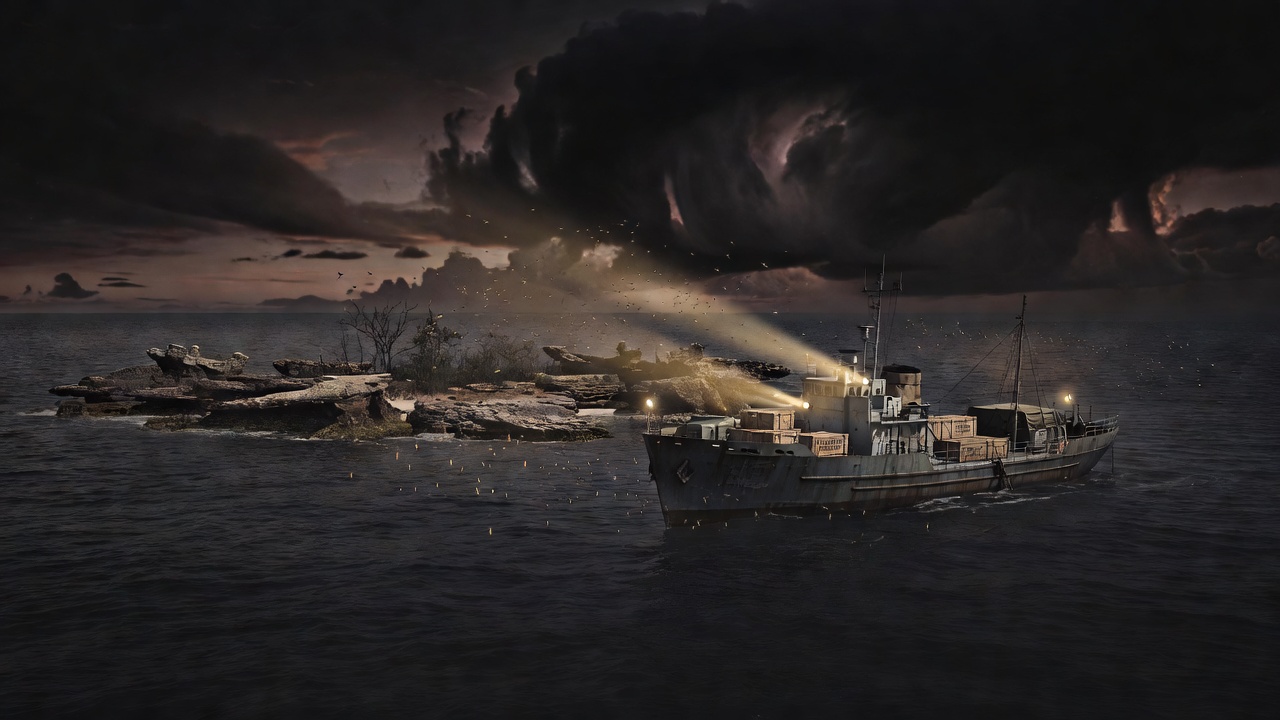
Night in the central Pacific has a way of making every deck light feel guilty. Somewhere off Baker Island in May 1965, the USS George Eastman drifted in black water with cages, traps, and a very Cold War question on board: could the U.S. military release mosquitoes offshore, move them onto land, and measure what happened next? The official answer was technical, clinical, and classified. Critics hear something darker in it. Not just secrecy, but the logic of weaponizing nature itself — one bite at a time.
The Case For
A real SHAD test built around insect vectors
The reason Magic Sword deserves a serious look is that it is not folklore. It appears in the Defense Department’s released Project SHAD records as DTC Test 65-4. The official Health.mil fact sheet for Magic Sword says the purpose was to study the feasibility of an offshore release of Aedes aegypti mosquitoes and to gather information about biting habits, trap technology, and the logistics of delivering mosquitoes to remote sites. That sentence matters. This was not a loose field curiosity. It was a military test asking whether insect vectors could be moved, released, tracked, and controlled in operational conditions.
The same fact sheet states that uninfected mosquitoes were released from the USS George Eastman off Baker Island, that traps were placed on the island, and that volunteers were positioned at specific locations to record the number of bites they received. At the end of the test, the military used a thermal fog generator on the island and high heat plus insecticide aboard ship to eradicate the mosquito population. However cleanly it was written up, the image is hard to shake: a U.S. research vessel deliberately releasing mosquitoes near a remote island while human volunteers measured the results.
The broader record makes the operation harder to dismiss
Magic Sword looks even more unsettling when placed inside the wider SHAD archive. The National Academies’ 2007 review of Project SHAD includes Magic Sword in its table of tests and lists the USS George Eastman as the participating ship, with “mosquitoes” and “insecticide” as the relevant materials. That same volume places the ship in other SHAD operations involving biological simulants, sarin-related trials, and VX-related testing. So Magic Sword was not an isolated oddity. It was one piece of a wider defense program.
If you read Magic Sword through the darker lens of Cold War planning, the logic is obvious. Aedes aegypti is a known vector for diseases including dengue and yellow fever. A test that proves you can transport, release, monitor, and eradicate that species on command starts to look like a feasibility study for entomological warfare, even if the trial itself used uninfected insects.
The wider paper trail matters too. A 2004 GAO review of Project 112 said DoD had identified 134 planned tests, 50 conducted, and 84 canceled. That scale tells you Magic Sword was part of a genuine system. It belongs in the same documented cluster as our Project SHAD deep dive and the USS George Eastman investigation.
The Realist’s Eye
Unsettling is not the same as proven biowarfare deployment
This is where the record demands precision. The strongest sensational claim would be that the U.S. military secretly field-tested disease-bearing mosquitoes against human beings. The released documents do not prove that. The Health.mil fact sheet explicitly says the mosquitoes used in Magic Sword were uninfected. The documented health effects listed there are the ordinary swelling and irritation associated with mosquito bites, not an outbreak. If we go beyond that, we leave the record and enter speculation.
There is also a difference between studying vector delivery and proving an active offensive weapon plan. Militaries often test what they fear, not only what they intend to use. A Cold War planner could argue that understanding mosquito dispersal, biting behavior, and trap effectiveness was part of defensive preparedness in an age when biological warfare remained a live strategic concern. The same ugly logic that makes the test feel sinister can also be used to explain it in bureaucratic terms.
The archive leaves room for doubt in both directions
There are limits on the evidence. The SHAD fact sheets were reconstructed decades after the program, and even Pentagon materials concede the records were fragmented. The VA’s public Project 112/SHAD page says there is no clear evidence of specific long-term health problems associated with participation in SHAD overall, and the National Academies did not produce a simple, universal finding of catastrophic long-term injury across all participants. That does not erase the ethical problem of secrecy or the use of volunteers in a classified vector test. It does mean the cleanest accusation is narrower than the loudest one.
So what is the narrow accusation? That the U.S. military ran a classified test to see whether disease-vector mosquitoes could be released from an offshore ship, tracked on land, and eliminated afterward, and that the public learned about it only decades later through declassification. That is already serious. It does not require embellishment.
What We Know For Certain
- Health.mil identifies Magic Sword as Project SHAD test 65-4, conducted in May 1965 near Baker Island.
- The released fact sheet says the test used uninfected Aedes aegypti mosquitoes released from the USS George Eastman.
- The same fact sheet says volunteers recorded mosquito bites at designated locations onshore.
- The National Academies lists Magic Sword in its overview of SHAD tests and ties it to the USS George Eastman.
- GAO reported that DoD identified 134 planned Project 112 tests, of which 50 were conducted.
The Unanswered Questions
- How much operational interest did the Pentagon have in offensive insect-vector delivery beyond this released test?
- What additional planning documents, if any, once linked Magic Sword to broader biological warfare doctrine?
- How fully informed were the volunteers about the strategic purpose of the biting study?
- Were other vector-related tests proposed, deferred, or canceled without leaving an equally clear public trail?
The Closer — You Decide
Some conspiracies collapse because the documents never arrive. Magic Sword is stranger than that. The documents did arrive, and they confirmed enough to keep the room cold: a secret military test, a remote island, a research ship, released mosquitoes, and volunteers counting bites in the Pacific dark. Maybe that was defensive science in a paranoid era. Maybe it was a glimpse of how far planners were willing to go when nobody was watching. The evidence is on the table. You decide.