Opens in a new tab
Menu

UK Pilot Plant Inspection: VEREX’s Dry Run

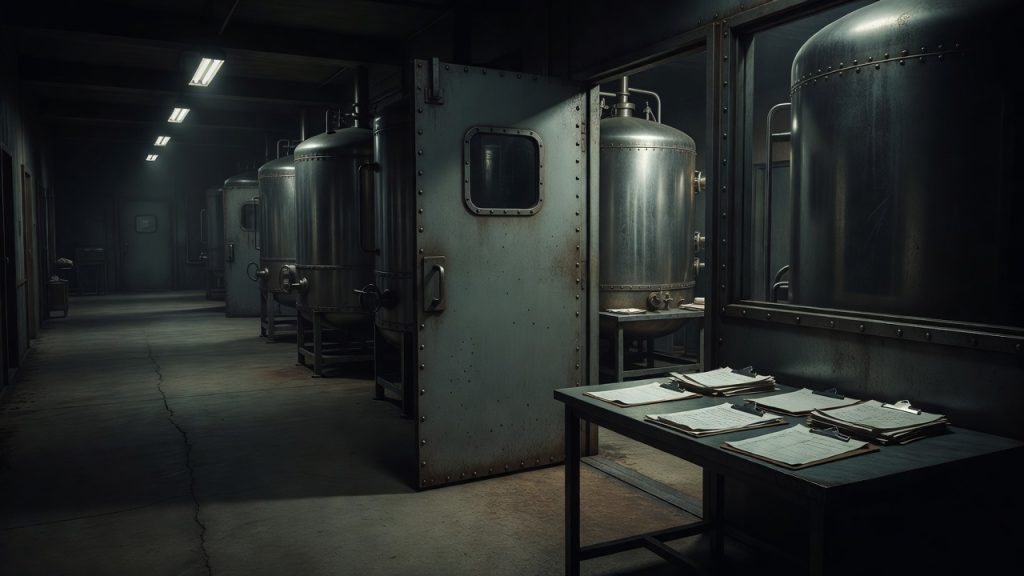
Cold-war pharmaceutical pilot plant inspection corridor representing VEREX managed access — ConspiracyRealist.com

UK Pilot Plant Inspection: VEREX’s Dry Run

Before the treaty language hardened into protocol drafts and diplomatic deadlock, there was a quieter scene: a real industrial site, a one-day inspection, and a set of rooms where peaceful chemistry could have looked like something darker if you asked the wrong question. No alarms. No hazmat theater. Just inspectors walking a pharmaceutical pilot plant in Britain, testing whether biology’s most dangerous problem could be solved with clipboards, escorts, and negotiated access. The site itself never became a smoking gun. That is precisely why the exercise still matters. It showed how close the world came to building biological inspections — and how quickly the old fear of secrecy pushed back.

The Case For

The practice inspection proved the treaty world was serious enough to test access in the real world

The strongest case for taking the UK exercise seriously starts with the official record. The 1993 VEREX final report, BWC/CONF.III/VEREX/9, says delegates reviewed two trial inspections during the Biological Weapons Convention’s technical verification process: one at a large vaccine facility run by the Netherlands and Canada, and one British exercise titled UK Practice Inspection: Pharmaceutical Pilot Plant. That matters because VEREX was not a fringe workshop. It was an official state-party effort created after the 1991 Third Review Conference to identify verification measures from a scientific and technical standpoint.

The British working paper was summarized publicly enough to reveal the essentials. Searchable UN records for BWC/CONF.III/VEREX/WP.141 say the UK conducted a one-day practice inspection in April at a pharmaceutical pilot plant and associated laboratories, after two planning meetings on ground rules and administration. A related UK summary, WP.147, says the inspected facilities were part of a much larger site kept outside the exercise, and that the drill exposed practical issues including briefings, team size, escorting, and equipment.

This is where the BWC story starts to feel uncomfortably real

Those details matter because biology does not announce itself like a missile field. A pilot plant can host ordinary scale-up work, quality controls, and process testing while sitting close to the same technical terrain that would matter in a covert program. That is why the exercise feels larger than its modest scale. States were testing whether inspectors could enter a commercially sensitive site without wrecking the business or exposing every trade secret in the building.

The most provocative line in the VEREX report is one of the driest. It says the countries involved in the two trial inspections told delegates that the access given had not compromised commercial confidentiality. That undercuts the argument that any meaningful biological inspection would automatically expose proprietary processes. Readers who followed our earlier deep dive on the VEREX vaccine inspection trial will recognize the same tension: the system kept finding signs that access was workable, even while the broader protocol fight kept stalling.

The Realist’s Eye

A successful practice inspection did not solve biology’s intent problem

Still, the realist has to put the brakes on the dramatic version. A one-day practice inspection is not the same thing as a coercive international inspection under crisis conditions. The British site was participating in an exercise, not resisting an allegation. Ground rules were negotiated in advance. Part of the larger site stayed out of bounds. That means the exercise could test logistics and managed access better than it could test confrontation, deception, or the political friction that arrives when a state thinks inspectors may uncover something truly damaging.

More importantly, VEREX never claimed that trial inspections settled the problem. The final report said no single measure could conclusively distinguish prohibited from permitted biological activity. That limitation matters because a pilot plant can be inspected thoroughly and still leave the biggest question untouched: intent. Inspectors can see rooms, vessels, paperwork, and workflows. They can compare a declaration against what is on the floor. What they may still struggle to prove is whether a dual-use capability is being steered toward something illicit, whether key work happens elsewhere, or whether the most important evidence never enters the inspected area at all.

Commercial secrecy was real, even if the UK exercise did not break it

The other caution is that “did not compromise confidentiality” is not the same as “confidentiality fears were solved.” VEREX’s own discussion made clear that more work was needed on protecting commercial proprietary information before consensus could form. That is where the later protocol history becomes important. The 2001 draft BWC protocol, CRP.8, tried to encode that balance directly: states could protect commercial proprietary and national-security information, but not use secrecy to conceal prohibited activity. That language tells you how hard the negotiators were still wrestling with the same dilemma years after the UK dry run.

So the darker interpretation has to stay disciplined. The British exercise does not prove that pharmaceutical pilot plants were fronts for secret weapons work. It proves something subtler and, in its own way, more unsettling: the treaty system had enough evidence to know inspections might be feasible in sensitive industrial environments, yet still failed to turn that knowledge into a lasting verification regime. In the world of government secrets and black-site history, that is often where suspicion survives — not in a solved crime, but in a mechanism that almost existed and then vanished into process.

What We Know For Certain

  • The 1993 VEREX final report says delegates reviewed a UK practice inspection at a pharmaceutical pilot plant and associated laboratories.
  • UN document records for WP.141 say the UK exercise lasted one day and was preceded by two planning meetings on ground rules and administration.
  • A related UK summary says the inspected facilities were part of a much larger site that remained outside the exercise.
  • The VEREX report says the states involved told delegates that the access given in the trial inspections did not compromise commercial confidentiality.
  • VEREX concluded that no single verification measure could conclusively distinguish prohibited from permitted biological activity.

The Unanswered Questions

  • How much access did inspectors actually receive inside the pilot plant, and what specific limits were imposed during the UK exercise?
  • Would the same confidentiality protections have held up during an adversarial inspection rather than a cooperative practice run?
  • How much of the larger site stayed outside exercise play because it was irrelevant, and how much because wider access was too sensitive to test?
  • If the UK trial suggested workable access was possible, why did states still fail to build a standing BWC verification regime?

The Closer — You Decide

Sometimes the strangest files are not the ones that expose a hidden program. They are the ones that show the system almost learning how to look. A British pilot plant. One day. Two planning meetings. A record saying inspectors got in, and a treaty world still unconvinced it could live with the consequences. Maybe that is proof the risk of exposure was always too high. Maybe it is proof that biology was simply too slippery for clean verification. Either way, the paperwork is real, the rehearsal was real, and the regime that might have followed never fully arrived. The evidence is on the table. You decide.

dive down the rabbit hole

UK Pilot Plant Inspection: VEREX’s Dry Run

S-FX.com
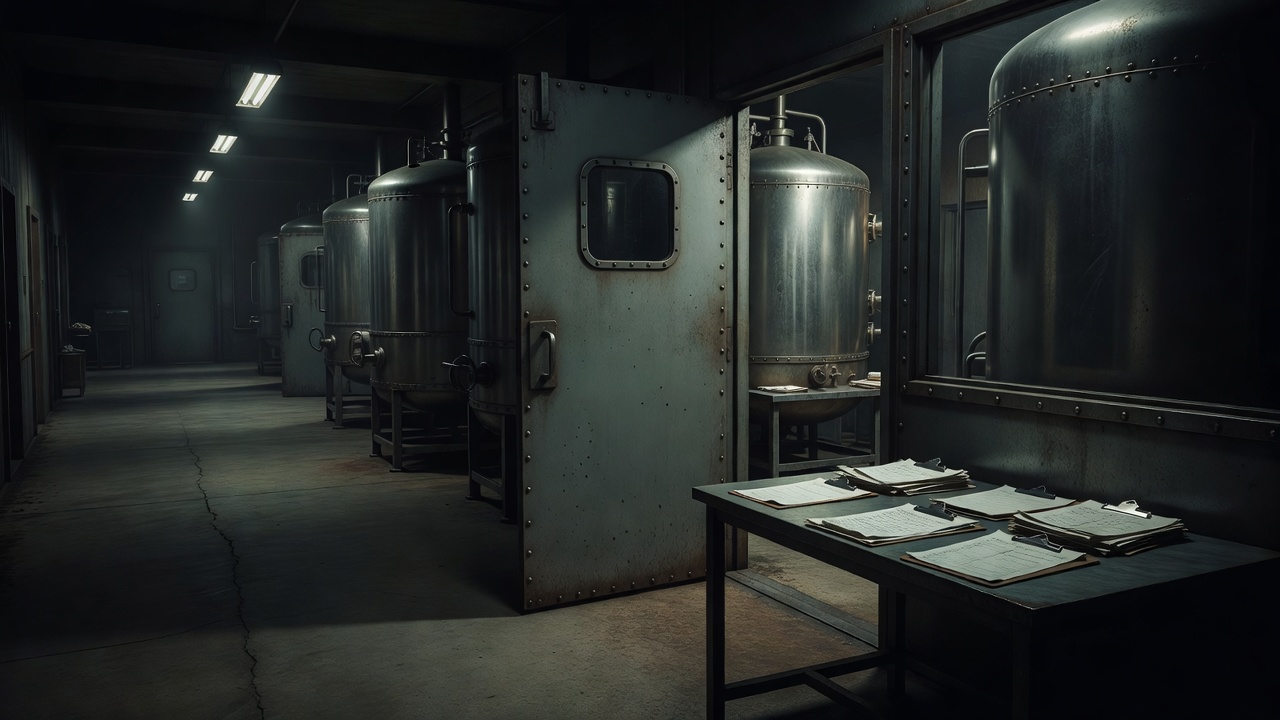
Cold-war pharmaceutical pilot plant inspection corridor representing VEREX managed access — ConspiracyRealist.com

UK Pilot Plant Inspection: VEREX’s Dry Run

Before the treaty language hardened into protocol drafts and diplomatic deadlock, there was a quieter scene: a real industrial site, a one-day inspection, and a set of rooms where peaceful chemistry could have looked like something darker if you asked the wrong question. No alarms. No hazmat theater. Just inspectors walking a pharmaceutical pilot plant in Britain, testing whether biology’s most dangerous problem could be solved with clipboards, escorts, and negotiated access. The site itself never became a smoking gun. That is precisely why the exercise still matters. It showed how close the world came to building biological inspections — and how quickly the old fear of secrecy pushed back.

The Case For

The practice inspection proved the treaty world was serious enough to test access in the real world

The strongest case for taking the UK exercise seriously starts with the official record. The 1993 VEREX final report, BWC/CONF.III/VEREX/9, says delegates reviewed two trial inspections during the Biological Weapons Convention’s technical verification process: one at a large vaccine facility run by the Netherlands and Canada, and one British exercise titled UK Practice Inspection: Pharmaceutical Pilot Plant. That matters because VEREX was not a fringe workshop. It was an official state-party effort created after the 1991 Third Review Conference to identify verification measures from a scientific and technical standpoint.

The British working paper was summarized publicly enough to reveal the essentials. Searchable UN records for BWC/CONF.III/VEREX/WP.141 say the UK conducted a one-day practice inspection in April at a pharmaceutical pilot plant and associated laboratories, after two planning meetings on ground rules and administration. A related UK summary, WP.147, says the inspected facilities were part of a much larger site kept outside the exercise, and that the drill exposed practical issues including briefings, team size, escorting, and equipment.

This is where the BWC story starts to feel uncomfortably real

Those details matter because biology does not announce itself like a missile field. A pilot plant can host ordinary scale-up work, quality controls, and process testing while sitting close to the same technical terrain that would matter in a covert program. That is why the exercise feels larger than its modest scale. States were testing whether inspectors could enter a commercially sensitive site without wrecking the business or exposing every trade secret in the building.

The most provocative line in the VEREX report is one of the driest. It says the countries involved in the two trial inspections told delegates that the access given had not compromised commercial confidentiality. That undercuts the argument that any meaningful biological inspection would automatically expose proprietary processes. Readers who followed our earlier deep dive on the VEREX vaccine inspection trial will recognize the same tension: the system kept finding signs that access was workable, even while the broader protocol fight kept stalling.

The Realist’s Eye

A successful practice inspection did not solve biology’s intent problem

Still, the realist has to put the brakes on the dramatic version. A one-day practice inspection is not the same thing as a coercive international inspection under crisis conditions. The British site was participating in an exercise, not resisting an allegation. Ground rules were negotiated in advance. Part of the larger site stayed out of bounds. That means the exercise could test logistics and managed access better than it could test confrontation, deception, or the political friction that arrives when a state thinks inspectors may uncover something truly damaging.

More importantly, VEREX never claimed that trial inspections settled the problem. The final report said no single measure could conclusively distinguish prohibited from permitted biological activity. That limitation matters because a pilot plant can be inspected thoroughly and still leave the biggest question untouched: intent. Inspectors can see rooms, vessels, paperwork, and workflows. They can compare a declaration against what is on the floor. What they may still struggle to prove is whether a dual-use capability is being steered toward something illicit, whether key work happens elsewhere, or whether the most important evidence never enters the inspected area at all.

Commercial secrecy was real, even if the UK exercise did not break it

The other caution is that “did not compromise confidentiality” is not the same as “confidentiality fears were solved.” VEREX’s own discussion made clear that more work was needed on protecting commercial proprietary information before consensus could form. That is where the later protocol history becomes important. The 2001 draft BWC protocol, CRP.8, tried to encode that balance directly: states could protect commercial proprietary and national-security information, but not use secrecy to conceal prohibited activity. That language tells you how hard the negotiators were still wrestling with the same dilemma years after the UK dry run.

So the darker interpretation has to stay disciplined. The British exercise does not prove that pharmaceutical pilot plants were fronts for secret weapons work. It proves something subtler and, in its own way, more unsettling: the treaty system had enough evidence to know inspections might be feasible in sensitive industrial environments, yet still failed to turn that knowledge into a lasting verification regime. In the world of government secrets and black-site history, that is often where suspicion survives — not in a solved crime, but in a mechanism that almost existed and then vanished into process.

What We Know For Certain

  • The 1993 VEREX final report says delegates reviewed a UK practice inspection at a pharmaceutical pilot plant and associated laboratories.
  • UN document records for WP.141 say the UK exercise lasted one day and was preceded by two planning meetings on ground rules and administration.
  • A related UK summary says the inspected facilities were part of a much larger site that remained outside the exercise.
  • The VEREX report says the states involved told delegates that the access given in the trial inspections did not compromise commercial confidentiality.
  • VEREX concluded that no single verification measure could conclusively distinguish prohibited from permitted biological activity.

The Unanswered Questions

  • How much access did inspectors actually receive inside the pilot plant, and what specific limits were imposed during the UK exercise?
  • Would the same confidentiality protections have held up during an adversarial inspection rather than a cooperative practice run?
  • How much of the larger site stayed outside exercise play because it was irrelevant, and how much because wider access was too sensitive to test?
  • If the UK trial suggested workable access was possible, why did states still fail to build a standing BWC verification regime?

The Closer — You Decide

Sometimes the strangest files are not the ones that expose a hidden program. They are the ones that show the system almost learning how to look. A British pilot plant. One day. Two planning meetings. A record saying inspectors got in, and a treaty world still unconvinced it could live with the consequences. Maybe that is proof the risk of exposure was always too high. Maybe it is proof that biology was simply too slippery for clean verification. Either way, the paperwork is real, the rehearsal was real, and the regime that might have followed never fully arrived. The evidence is on the table. You decide.

UK Pilot Plant Inspection: VEREX’s Dry Run

Cold-war pharmaceutical pilot plant inspection corridor representing VEREX managed access — ConspiracyRealist.com

UK Pilot Plant Inspection: VEREX’s Dry Run

Before the treaty language hardened into protocol drafts and diplomatic deadlock, there was a quieter scene: a real industrial site, a one-day inspection, and a set of rooms where peaceful chemistry could have looked like something darker if you asked the wrong question. No alarms. No hazmat theater. Just inspectors walking a pharmaceutical pilot plant in Britain, testing whether biology’s most dangerous problem could be solved with clipboards, escorts, and negotiated access. The site itself never became a smoking gun. That is precisely why the exercise still matters. It showed how close the world came to building biological inspections — and how quickly the old fear of secrecy pushed back.

The Case For

The practice inspection proved the treaty world was serious enough to test access in the real world

The strongest case for taking the UK exercise seriously starts with the official record. The 1993 VEREX final report, BWC/CONF.III/VEREX/9, says delegates reviewed two trial inspections during the Biological Weapons Convention’s technical verification process: one at a large vaccine facility run by the Netherlands and Canada, and one British exercise titled UK Practice Inspection: Pharmaceutical Pilot Plant. That matters because VEREX was not a fringe workshop. It was an official state-party effort created after the 1991 Third Review Conference to identify verification measures from a scientific and technical standpoint.

The British working paper was summarized publicly enough to reveal the essentials. Searchable UN records for BWC/CONF.III/VEREX/WP.141 say the UK conducted a one-day practice inspection in April at a pharmaceutical pilot plant and associated laboratories, after two planning meetings on ground rules and administration. A related UK summary, WP.147, says the inspected facilities were part of a much larger site kept outside the exercise, and that the drill exposed practical issues including briefings, team size, escorting, and equipment.

This is where the BWC story starts to feel uncomfortably real

Those details matter because biology does not announce itself like a missile field. A pilot plant can host ordinary scale-up work, quality controls, and process testing while sitting close to the same technical terrain that would matter in a covert program. That is why the exercise feels larger than its modest scale. States were testing whether inspectors could enter a commercially sensitive site without wrecking the business or exposing every trade secret in the building.

The most provocative line in the VEREX report is one of the driest. It says the countries involved in the two trial inspections told delegates that the access given had not compromised commercial confidentiality. That undercuts the argument that any meaningful biological inspection would automatically expose proprietary processes. Readers who followed our earlier deep dive on the VEREX vaccine inspection trial will recognize the same tension: the system kept finding signs that access was workable, even while the broader protocol fight kept stalling.

The Realist’s Eye

A successful practice inspection did not solve biology’s intent problem

Still, the realist has to put the brakes on the dramatic version. A one-day practice inspection is not the same thing as a coercive international inspection under crisis conditions. The British site was participating in an exercise, not resisting an allegation. Ground rules were negotiated in advance. Part of the larger site stayed out of bounds. That means the exercise could test logistics and managed access better than it could test confrontation, deception, or the political friction that arrives when a state thinks inspectors may uncover something truly damaging.

More importantly, VEREX never claimed that trial inspections settled the problem. The final report said no single measure could conclusively distinguish prohibited from permitted biological activity. That limitation matters because a pilot plant can be inspected thoroughly and still leave the biggest question untouched: intent. Inspectors can see rooms, vessels, paperwork, and workflows. They can compare a declaration against what is on the floor. What they may still struggle to prove is whether a dual-use capability is being steered toward something illicit, whether key work happens elsewhere, or whether the most important evidence never enters the inspected area at all.

Commercial secrecy was real, even if the UK exercise did not break it

The other caution is that “did not compromise confidentiality” is not the same as “confidentiality fears were solved.” VEREX’s own discussion made clear that more work was needed on protecting commercial proprietary information before consensus could form. That is where the later protocol history becomes important. The 2001 draft BWC protocol, CRP.8, tried to encode that balance directly: states could protect commercial proprietary and national-security information, but not use secrecy to conceal prohibited activity. That language tells you how hard the negotiators were still wrestling with the same dilemma years after the UK dry run.

So the darker interpretation has to stay disciplined. The British exercise does not prove that pharmaceutical pilot plants were fronts for secret weapons work. It proves something subtler and, in its own way, more unsettling: the treaty system had enough evidence to know inspections might be feasible in sensitive industrial environments, yet still failed to turn that knowledge into a lasting verification regime. In the world of government secrets and black-site history, that is often where suspicion survives — not in a solved crime, but in a mechanism that almost existed and then vanished into process.

What We Know For Certain

  • The 1993 VEREX final report says delegates reviewed a UK practice inspection at a pharmaceutical pilot plant and associated laboratories.
  • UN document records for WP.141 say the UK exercise lasted one day and was preceded by two planning meetings on ground rules and administration.
  • A related UK summary says the inspected facilities were part of a much larger site that remained outside the exercise.
  • The VEREX report says the states involved told delegates that the access given in the trial inspections did not compromise commercial confidentiality.
  • VEREX concluded that no single verification measure could conclusively distinguish prohibited from permitted biological activity.

The Unanswered Questions

  • How much access did inspectors actually receive inside the pilot plant, and what specific limits were imposed during the UK exercise?
  • Would the same confidentiality protections have held up during an adversarial inspection rather than a cooperative practice run?
  • How much of the larger site stayed outside exercise play because it was irrelevant, and how much because wider access was too sensitive to test?
  • If the UK trial suggested workable access was possible, why did states still fail to build a standing BWC verification regime?

The Closer — You Decide

Sometimes the strangest files are not the ones that expose a hidden program. They are the ones that show the system almost learning how to look. A British pilot plant. One day. Two planning meetings. A record saying inspectors got in, and a treaty world still unconvinced it could live with the consequences. Maybe that is proof the risk of exposure was always too high. Maybe it is proof that biology was simply too slippery for clean verification. Either way, the paperwork is real, the rehearsal was real, and the regime that might have followed never fully arrived. The evidence is on the table. You decide.

Table of contents