Opens in a new tab
Menu

The Metadata Blackout Conspiracy: How Missing Context Keeps the Best UAP Cases Forever Unprovable

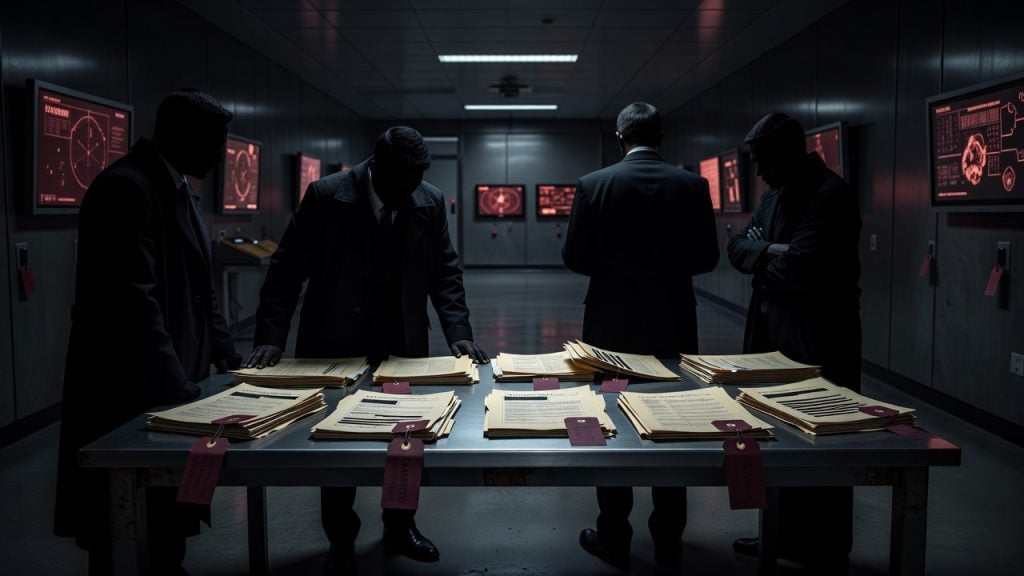
Dark faceless intelligence-analysis room fused with an airport surveillance corridor, redacted dossiers, maroon evidence tags, radar glow, and ominous shadows symbolizing the metadata blackout conspiracy — ConspiracyRealist.com

The Metadata Blackout Conspiracy: How Missing Context Keeps the Best UAP Cases Forever Unprovable

A screen flickers in a sealed room. A pilot files the report. A sensor catches something it was never meant to catch. Then the trail begins to dissolve. The time stamp is partial. The platform is classified. The raw file stays buried. What reaches the public is a blur with a caption. That is the chilling core of the metadata blackout conspiracy: not that every UAP case proves something extraordinary, but that the most important context disappears so consistently that the strongest incidents can never fully stand trial in daylight.

The Case For

The government keeps admitting the same thing: the decisive context is missing

The case for the metadata blackout conspiracy starts with official documents, not internet folklore. NASA’s 2023 UAP Independent Study Team report says analysis is hampered by poor sensor calibration, a lack of multiple measurements, a lack of sensor metadata, and a lack of baseline data. That is not a fringe accusation. That is NASA describing the evidentiary void at the center of the modern UAP file.

The 2021 ODNI preliminary UAP assessment reinforced the same pattern. It said the limited amount of high-quality reporting hampered firm conclusions, even while noting that most reviewed UAP probably represented physical objects and that many were registered across multiple sensors. Read that slowly. The government says some events are real enough to trigger multi-sensor concern, but the reporting architecture is too thin to settle what those events were. That gap is where conspiracy thinking hardens into structural suspicion.

Then came the bigger numbers. AARO’s FY2024 consolidated annual report said its ability to resolve cases remained constrained by a lack of timely and actionable sensor data. It also said AARO did not receive any UAP reports collected through national GEOINT, SIGINT, or MASINT platforms during that period. That is the kind of line conspiracy realists circle in red ink. If the state possesses the most powerful sensing stack on earth, why does the public conversation keep collapsing onto cropped clips, anecdotal summaries, and after-the-fact descriptions?

The archive side looks just as eerie. The National Archives says the new Unidentified Anomalous Phenomena Records Collection FAQ requires agencies to transfer digital copies of publicly releasable UAP records with metadata, while AC 04.2025 says redacted and unredacted copies must move together into Record Group 615. In theory, that is a transparency breakthrough. In practice, it also confirms the battlefield: metadata, redaction layers, and transfer timing now determine what the public can reconstruct. We have tracked that tension before in our coverage of the searchable transparency conspiracy and the wider Government Secrets investigations. The pattern keeps repeating. The evidence is not always destroyed. It is made context-poor.

The Realist’s Eye

Missing metadata is a real problem, but it does not automatically prove a deliberate cover-up

A disciplined reading has to hit the brakes. Missing context can come from bureaucracy, not just design. UAP footage is often incidental. Sensors aboard military aircraft are built for targeting, navigation, force protection, or surveillance, not for creating courtroom-perfect anomaly dossiers. Files get clipped. Operators preserve what seems operationally relevant. Classification rules wall off platform details because revealing them could expose capabilities unrelated to the anomaly itself. That is frustrating, but frustration alone is not proof of a coordinated deception regime.

There is also a more mundane explanation for why the public gets thin evidence: most anomalies are probably ordinary things seen badly. AARO’s FY2024 and FY2025 reports say resolved cases were attributed to balloons, birds, satellites, aircraft, unmanned systems, a commercial rocket launch, and even a manned jet pack. The same FY2025 report says a new analytic capability let AARO resolve 238 reports as satellite flaring. In other words, better metadata does not only help believers. It also helps kill bad cases faster.

Still, the realist critique does not erase the conspiracy frame. It sharpens it. The problem may not be a single mastermind hiding alien truth in a vault. The darker possibility is a system that predictably strips the very details needed for public trust. The 2025 AARO-sponsored workshop paper on narrative data, infrastructures, and analysis says classification remains a dominant barrier, retention failures can lead to lost critical records, and provenance is essential for interpretability and trust. That sounds less like a solved transparency regime than an official admission that chain-of-custody and context remain broken.

The 2023 House hearing on UAP, national security, public safety, and government transparency added the human layer. Ryan Graves warned that stigma suppresses reporting. If witnesses stay quiet, if pilots underreport, if civilian submissions remain fragmented, and if the best technical data sits behind classification walls, then the public is left with permanent ambiguity by default. That does not prove the extraordinary claim at the center of every UAP story. But it does make the metadata blackout conspiracy feel less like fantasy and more like an architecture. The UFOs & Extraterrestrial archive is crowded with cases that survive precisely because the context never fully arrives.

What We Know For Certain

  • NASA’s 2023 UAP study said poor calibration, missing metadata, weak baselines, and too few measurements block rigorous analysis.
  • The 2021 ODNI assessment said limited high-quality reporting prevented firm conclusions, even though many reviewed incidents involved multiple sensors.
  • AARO’s FY2024 report said case resolution remained constrained by a lack of timely and actionable sensor data.
  • The National Archives now requires publicly releasable UAP records transferred into Record Group 615 to include metadata, and redacted and unredacted copies must move together.
  • The 2025 AARO-sponsored workshop said provenance, retention, and standardized metadata are essential for trust and interpretation.

The Unanswered Questions

  • How many of the strongest UAP incidents cannot be publicly evaluated because the relevant platform, sensor mode, or raw data remains classified?
  • Will Record Group 615 expose meaningful metadata, or mostly produce sanitized records that preserve secrecy by other means?
  • How often are potentially important UAP files degraded by clipping, compression, retention failures, or missing chain-of-custody records before analysts ever compare them?
  • If civilian reporting systems improve, will the public finally get better context, or will the highest-value cases still remain trapped behind national security compartments?

The Closer — You Decide

Maybe the void is ordinary. Sensors were imperfect. Pilots were rushed. Archivists were late. Classification rules were blunt. Maybe that is all. But maybe that is exactly how the most durable secrecy works: not by erasing every fact, but by letting the fact survive without the context that would make it decisive. The video remains. The witness remains. The anomaly remains. What goes missing is the frame around it. And in that missing frame, entire realities can hide. The documents are real. The gaps are real. The evidence is on the table. You decide.

dive down the rabbit hole

The Metadata Blackout Conspiracy: How Missing Context Keeps the Best UAP Cases Forever Unprovable

S-FX.com
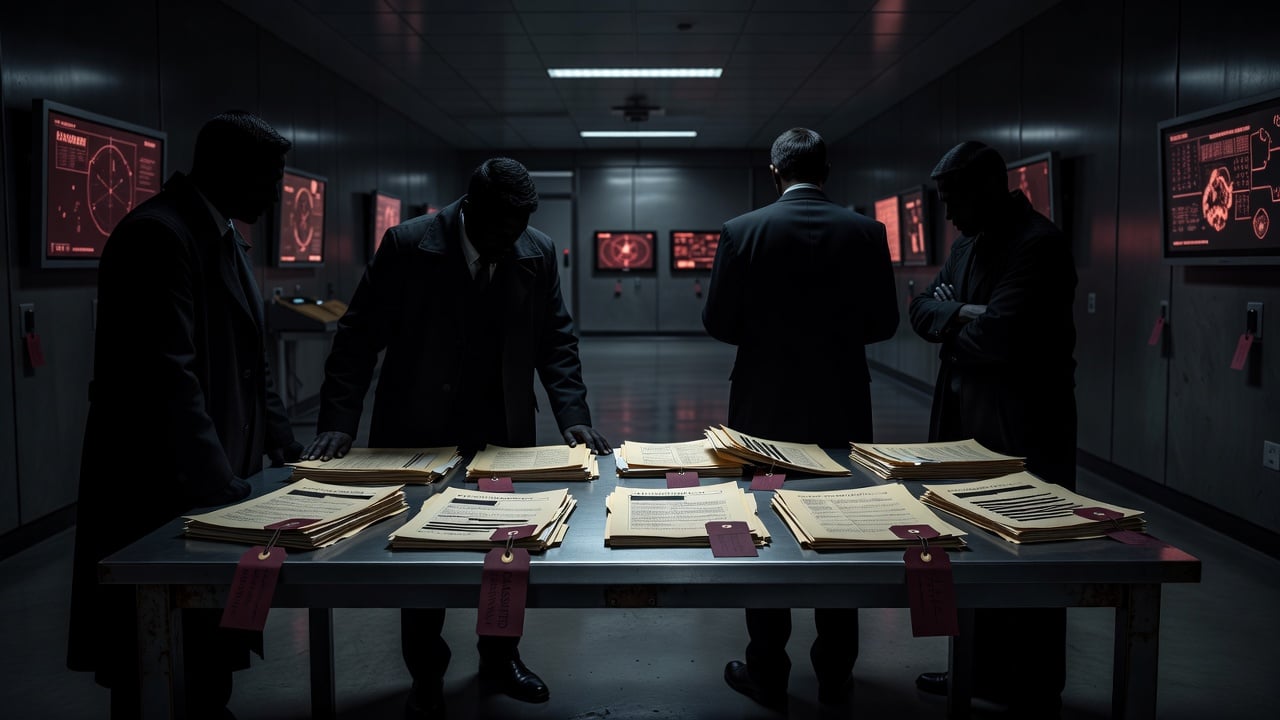
Dark faceless intelligence-analysis room fused with an airport surveillance corridor, redacted dossiers, maroon evidence tags, radar glow, and ominous shadows symbolizing the metadata blackout conspiracy — ConspiracyRealist.com

The Metadata Blackout Conspiracy: How Missing Context Keeps the Best UAP Cases Forever Unprovable

A screen flickers in a sealed room. A pilot files the report. A sensor catches something it was never meant to catch. Then the trail begins to dissolve. The time stamp is partial. The platform is classified. The raw file stays buried. What reaches the public is a blur with a caption. That is the chilling core of the metadata blackout conspiracy: not that every UAP case proves something extraordinary, but that the most important context disappears so consistently that the strongest incidents can never fully stand trial in daylight.

The Case For

The government keeps admitting the same thing: the decisive context is missing

The case for the metadata blackout conspiracy starts with official documents, not internet folklore. NASA’s 2023 UAP Independent Study Team report says analysis is hampered by poor sensor calibration, a lack of multiple measurements, a lack of sensor metadata, and a lack of baseline data. That is not a fringe accusation. That is NASA describing the evidentiary void at the center of the modern UAP file.

The 2021 ODNI preliminary UAP assessment reinforced the same pattern. It said the limited amount of high-quality reporting hampered firm conclusions, even while noting that most reviewed UAP probably represented physical objects and that many were registered across multiple sensors. Read that slowly. The government says some events are real enough to trigger multi-sensor concern, but the reporting architecture is too thin to settle what those events were. That gap is where conspiracy thinking hardens into structural suspicion.

Then came the bigger numbers. AARO’s FY2024 consolidated annual report said its ability to resolve cases remained constrained by a lack of timely and actionable sensor data. It also said AARO did not receive any UAP reports collected through national GEOINT, SIGINT, or MASINT platforms during that period. That is the kind of line conspiracy realists circle in red ink. If the state possesses the most powerful sensing stack on earth, why does the public conversation keep collapsing onto cropped clips, anecdotal summaries, and after-the-fact descriptions?

The archive side looks just as eerie. The National Archives says the new Unidentified Anomalous Phenomena Records Collection FAQ requires agencies to transfer digital copies of publicly releasable UAP records with metadata, while AC 04.2025 says redacted and unredacted copies must move together into Record Group 615. In theory, that is a transparency breakthrough. In practice, it also confirms the battlefield: metadata, redaction layers, and transfer timing now determine what the public can reconstruct. We have tracked that tension before in our coverage of the searchable transparency conspiracy and the wider Government Secrets investigations. The pattern keeps repeating. The evidence is not always destroyed. It is made context-poor.

The Realist’s Eye

Missing metadata is a real problem, but it does not automatically prove a deliberate cover-up

A disciplined reading has to hit the brakes. Missing context can come from bureaucracy, not just design. UAP footage is often incidental. Sensors aboard military aircraft are built for targeting, navigation, force protection, or surveillance, not for creating courtroom-perfect anomaly dossiers. Files get clipped. Operators preserve what seems operationally relevant. Classification rules wall off platform details because revealing them could expose capabilities unrelated to the anomaly itself. That is frustrating, but frustration alone is not proof of a coordinated deception regime.

There is also a more mundane explanation for why the public gets thin evidence: most anomalies are probably ordinary things seen badly. AARO’s FY2024 and FY2025 reports say resolved cases were attributed to balloons, birds, satellites, aircraft, unmanned systems, a commercial rocket launch, and even a manned jet pack. The same FY2025 report says a new analytic capability let AARO resolve 238 reports as satellite flaring. In other words, better metadata does not only help believers. It also helps kill bad cases faster.

Still, the realist critique does not erase the conspiracy frame. It sharpens it. The problem may not be a single mastermind hiding alien truth in a vault. The darker possibility is a system that predictably strips the very details needed for public trust. The 2025 AARO-sponsored workshop paper on narrative data, infrastructures, and analysis says classification remains a dominant barrier, retention failures can lead to lost critical records, and provenance is essential for interpretability and trust. That sounds less like a solved transparency regime than an official admission that chain-of-custody and context remain broken.

The 2023 House hearing on UAP, national security, public safety, and government transparency added the human layer. Ryan Graves warned that stigma suppresses reporting. If witnesses stay quiet, if pilots underreport, if civilian submissions remain fragmented, and if the best technical data sits behind classification walls, then the public is left with permanent ambiguity by default. That does not prove the extraordinary claim at the center of every UAP story. But it does make the metadata blackout conspiracy feel less like fantasy and more like an architecture. The UFOs & Extraterrestrial archive is crowded with cases that survive precisely because the context never fully arrives.

What We Know For Certain

  • NASA’s 2023 UAP study said poor calibration, missing metadata, weak baselines, and too few measurements block rigorous analysis.
  • The 2021 ODNI assessment said limited high-quality reporting prevented firm conclusions, even though many reviewed incidents involved multiple sensors.
  • AARO’s FY2024 report said case resolution remained constrained by a lack of timely and actionable sensor data.
  • The National Archives now requires publicly releasable UAP records transferred into Record Group 615 to include metadata, and redacted and unredacted copies must move together.
  • The 2025 AARO-sponsored workshop said provenance, retention, and standardized metadata are essential for trust and interpretation.

The Unanswered Questions

  • How many of the strongest UAP incidents cannot be publicly evaluated because the relevant platform, sensor mode, or raw data remains classified?
  • Will Record Group 615 expose meaningful metadata, or mostly produce sanitized records that preserve secrecy by other means?
  • How often are potentially important UAP files degraded by clipping, compression, retention failures, or missing chain-of-custody records before analysts ever compare them?
  • If civilian reporting systems improve, will the public finally get better context, or will the highest-value cases still remain trapped behind national security compartments?

The Closer — You Decide

Maybe the void is ordinary. Sensors were imperfect. Pilots were rushed. Archivists were late. Classification rules were blunt. Maybe that is all. But maybe that is exactly how the most durable secrecy works: not by erasing every fact, but by letting the fact survive without the context that would make it decisive. The video remains. The witness remains. The anomaly remains. What goes missing is the frame around it. And in that missing frame, entire realities can hide. The documents are real. The gaps are real. The evidence is on the table. You decide.

The Metadata Blackout Conspiracy: How Missing Context Keeps the Best UAP Cases Forever Unprovable

Dark faceless intelligence-analysis room fused with an airport surveillance corridor, redacted dossiers, maroon evidence tags, radar glow, and ominous shadows symbolizing the metadata blackout conspiracy — ConspiracyRealist.com

The Metadata Blackout Conspiracy: How Missing Context Keeps the Best UAP Cases Forever Unprovable

A screen flickers in a sealed room. A pilot files the report. A sensor catches something it was never meant to catch. Then the trail begins to dissolve. The time stamp is partial. The platform is classified. The raw file stays buried. What reaches the public is a blur with a caption. That is the chilling core of the metadata blackout conspiracy: not that every UAP case proves something extraordinary, but that the most important context disappears so consistently that the strongest incidents can never fully stand trial in daylight.

The Case For

The government keeps admitting the same thing: the decisive context is missing

The case for the metadata blackout conspiracy starts with official documents, not internet folklore. NASA’s 2023 UAP Independent Study Team report says analysis is hampered by poor sensor calibration, a lack of multiple measurements, a lack of sensor metadata, and a lack of baseline data. That is not a fringe accusation. That is NASA describing the evidentiary void at the center of the modern UAP file.

The 2021 ODNI preliminary UAP assessment reinforced the same pattern. It said the limited amount of high-quality reporting hampered firm conclusions, even while noting that most reviewed UAP probably represented physical objects and that many were registered across multiple sensors. Read that slowly. The government says some events are real enough to trigger multi-sensor concern, but the reporting architecture is too thin to settle what those events were. That gap is where conspiracy thinking hardens into structural suspicion.

Then came the bigger numbers. AARO’s FY2024 consolidated annual report said its ability to resolve cases remained constrained by a lack of timely and actionable sensor data. It also said AARO did not receive any UAP reports collected through national GEOINT, SIGINT, or MASINT platforms during that period. That is the kind of line conspiracy realists circle in red ink. If the state possesses the most powerful sensing stack on earth, why does the public conversation keep collapsing onto cropped clips, anecdotal summaries, and after-the-fact descriptions?

The archive side looks just as eerie. The National Archives says the new Unidentified Anomalous Phenomena Records Collection FAQ requires agencies to transfer digital copies of publicly releasable UAP records with metadata, while AC 04.2025 says redacted and unredacted copies must move together into Record Group 615. In theory, that is a transparency breakthrough. In practice, it also confirms the battlefield: metadata, redaction layers, and transfer timing now determine what the public can reconstruct. We have tracked that tension before in our coverage of the searchable transparency conspiracy and the wider Government Secrets investigations. The pattern keeps repeating. The evidence is not always destroyed. It is made context-poor.

The Realist’s Eye

Missing metadata is a real problem, but it does not automatically prove a deliberate cover-up

A disciplined reading has to hit the brakes. Missing context can come from bureaucracy, not just design. UAP footage is often incidental. Sensors aboard military aircraft are built for targeting, navigation, force protection, or surveillance, not for creating courtroom-perfect anomaly dossiers. Files get clipped. Operators preserve what seems operationally relevant. Classification rules wall off platform details because revealing them could expose capabilities unrelated to the anomaly itself. That is frustrating, but frustration alone is not proof of a coordinated deception regime.

There is also a more mundane explanation for why the public gets thin evidence: most anomalies are probably ordinary things seen badly. AARO’s FY2024 and FY2025 reports say resolved cases were attributed to balloons, birds, satellites, aircraft, unmanned systems, a commercial rocket launch, and even a manned jet pack. The same FY2025 report says a new analytic capability let AARO resolve 238 reports as satellite flaring. In other words, better metadata does not only help believers. It also helps kill bad cases faster.

Still, the realist critique does not erase the conspiracy frame. It sharpens it. The problem may not be a single mastermind hiding alien truth in a vault. The darker possibility is a system that predictably strips the very details needed for public trust. The 2025 AARO-sponsored workshop paper on narrative data, infrastructures, and analysis says classification remains a dominant barrier, retention failures can lead to lost critical records, and provenance is essential for interpretability and trust. That sounds less like a solved transparency regime than an official admission that chain-of-custody and context remain broken.

The 2023 House hearing on UAP, national security, public safety, and government transparency added the human layer. Ryan Graves warned that stigma suppresses reporting. If witnesses stay quiet, if pilots underreport, if civilian submissions remain fragmented, and if the best technical data sits behind classification walls, then the public is left with permanent ambiguity by default. That does not prove the extraordinary claim at the center of every UAP story. But it does make the metadata blackout conspiracy feel less like fantasy and more like an architecture. The UFOs & Extraterrestrial archive is crowded with cases that survive precisely because the context never fully arrives.

What We Know For Certain

  • NASA’s 2023 UAP study said poor calibration, missing metadata, weak baselines, and too few measurements block rigorous analysis.
  • The 2021 ODNI assessment said limited high-quality reporting prevented firm conclusions, even though many reviewed incidents involved multiple sensors.
  • AARO’s FY2024 report said case resolution remained constrained by a lack of timely and actionable sensor data.
  • The National Archives now requires publicly releasable UAP records transferred into Record Group 615 to include metadata, and redacted and unredacted copies must move together.
  • The 2025 AARO-sponsored workshop said provenance, retention, and standardized metadata are essential for trust and interpretation.

The Unanswered Questions

  • How many of the strongest UAP incidents cannot be publicly evaluated because the relevant platform, sensor mode, or raw data remains classified?
  • Will Record Group 615 expose meaningful metadata, or mostly produce sanitized records that preserve secrecy by other means?
  • How often are potentially important UAP files degraded by clipping, compression, retention failures, or missing chain-of-custody records before analysts ever compare them?
  • If civilian reporting systems improve, will the public finally get better context, or will the highest-value cases still remain trapped behind national security compartments?

The Closer — You Decide

Maybe the void is ordinary. Sensors were imperfect. Pilots were rushed. Archivists were late. Classification rules were blunt. Maybe that is all. But maybe that is exactly how the most durable secrecy works: not by erasing every fact, but by letting the fact survive without the context that would make it decisive. The video remains. The witness remains. The anomaly remains. What goes missing is the frame around it. And in that missing frame, entire realities can hide. The documents are real. The gaps are real. The evidence is on the table. You decide.

Table of contents