The Invisible Arsenal Conspiracy: How the World Banned Bioweapons While Leaving the Labs Uninspected
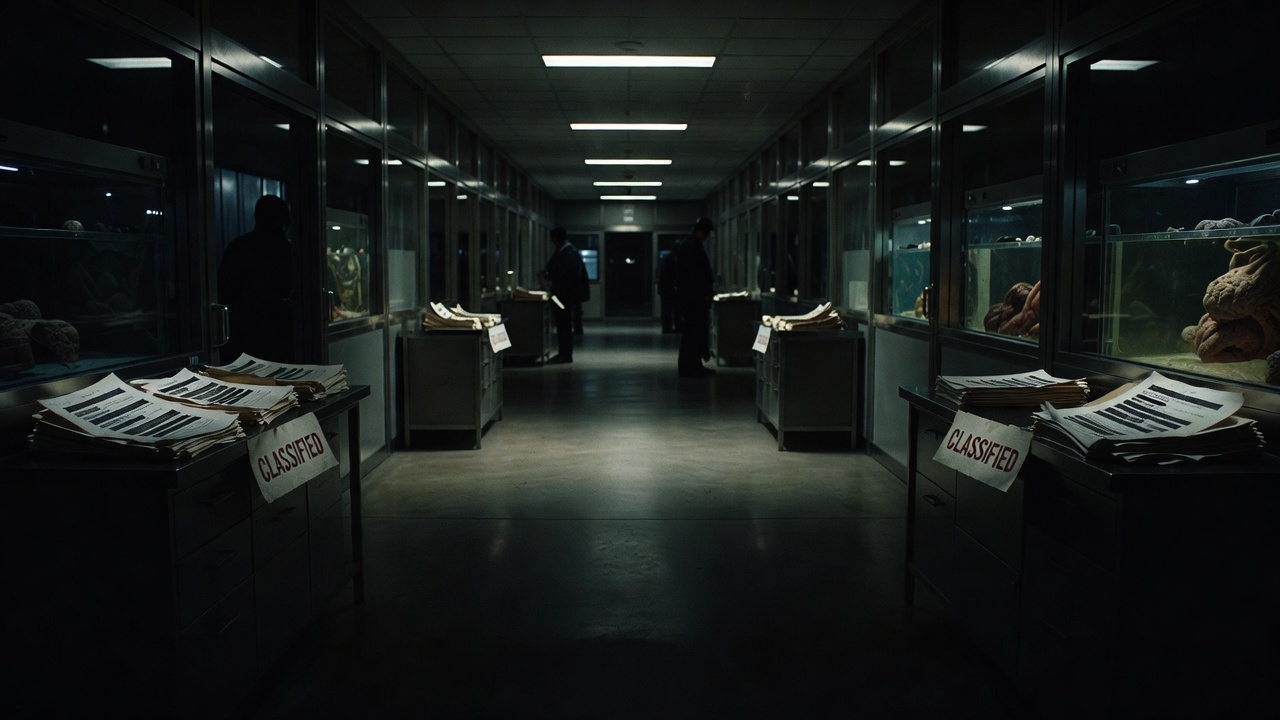
The treaty is signed. The cameras flash. The vault door never opens. Somewhere behind sterile glass and classified paperwork, the deadliest category of weapon on earth is declared outlawed—without the world ever building a reliable way to check who kept a sample, who scaled a culture, or who simply moved the program behind another badge.
The Case For
The conspiracy is not that bioweapons were banned—it is that the ban arrived without a system strong enough to pierce the secrecy around them
The Biological Weapons Convention is one of the most ambitious promises in modern arms control. The United Nations Office for Disarmament Affairs says the treaty effectively prohibits the development, production, acquisition, transfer, stockpiling, and use of biological and toxin weapons. It opened for signature in 1972, entered into force in 1975, and today stands near-universal, with 189 States Parties and four signatory states. On paper, that sounds like a civilizational firewall.
But the darker reading begins the moment you ask the obvious question: who verifies it? Unlike the chemical-weapons regime, biology never gained an equivalent standing inspection system with real international reach. The convention is short—just 15 articles—and its formal enforcement path is strikingly thin. UNODA’s own summary notes that Article V centers on consultation and cooperation, while Article VI allows states to bring alleged breaches to the UN Security Council. That is a legal structure, but not the same thing as routine, intrusive verification. It leaves the world with a ban that is morally sweeping and operationally hazy.
That gap is not just a technical footnote. It is the heart of the conspiracy. Biological weapons occupy the perfect zone for strategic ambiguity: devastating enough to terrify governments, dual-use enough to hide inside legitimate research, and politically toxic enough that almost no state would openly admit to crossing the line. If you wanted a class of weapons that could survive in the shadows while everyone publicly swore they were gone, you would design exactly this kind of regime—broad prohibition in public, chronic uncertainty in practice.
When the world tried to build real transparency, the inspection dream collapsed
This is where the record gets harder to wave away. NTI’s detailed history of the BWC compliance protocol negotiations explains that the treaty did not include formal measures to ensure compliance, and that years of negotiations sought to create a legally binding protocol to improve transparency and monitoring of dual-use biological activity. That effort ran for most of the 1990s. It did not end with a triumphant inspection architecture. It ended in collapse.
According to NTI, the United States rejected the draft protocol in 2001 after an interagency review concluded that the proposed regime would expose biodefense research and commercial secrets while still failing to stop cheaters. Arms Control Association’s analysis of the aftermath described that collapse as the death of a decade-long attempt to build a standing verification organization for the BWC. In plain English: when the treaty’s biggest structural weakness was finally confronted, the world backed away from the one path that might have made secrecy more expensive.
That decision still echoes. The official case against strong verification was that biology is unusually hard to police because the same equipment, organisms, and expertise can support vaccines, diagnostics, defensive work, or offensive misuse. That is true as far as it goes. But it also has a conspiratorial implication that is harder to ignore: the more “dual-use” the space becomes, the easier it is for states to defend opacity as prudence. The perfect hiding place is not the underground bunker everyone can picture. It is the legitimate laboratory nobody is allowed to inspect deeply enough to settle the question.
The Realist’s Eye
The evidence does not prove a secret global bioweapons empire—but it does prove a system built to tolerate permanent uncertainty
A serious reading has to separate two claims. Claim one is that many countries are secretly running offensive bioweapons programs right now. Claim two is that the international system was never built to give the public high confidence either way. The available evidence does not let us prove the first claim from open sources alone. It strongly supports the second.
UNODA itself stresses why biology is uniquely difficult: suspicious disease events can be hard to distinguish from nature, accidents, sabotage, or deliberate warfare. NTI’s protocol history adds the technical reason. Small quantities can matter. Facilities can be dual-capable. Sensitive traces can disappear fast. None of that automatically means the world is crawling with hidden arsenals. It does mean the burden of proof is stacked toward ambiguity—and ambiguity is where secret programs breathe easiest.
The comparison with chemical weapons sharpens the point. The OPCW’s Article IX page spells out a challenge-inspection mechanism under the Chemical Weapons Convention: a State Party can request an on-site inspection of any facility or location in another State Party, and the inspected state is obligated to permit it, though it may protect unrelated sensitive information through managed access. That is not perfect, and challenge inspections are politically rare. But the architecture exists. In biology, the comparable muscle never truly arrived.
That is why the conspiracy frame persists even among people who are not ready to claim a smoking gun. If the world genuinely believes biological weapons are among the gravest threats imaginable, why is the international oversight structure still built around declarations, consultations, partial transparency, and arguments over what inspectors would be allowed to know? Why does the hardest category of weapon remain the one most easily shielded by the language of public health, proprietary science, and national security?
We have traced pieces of that larger puzzle before in our coverage of the biosecurity state, why the BWC never got its own OPCW, and Project SHAD. The pattern that emerges is not simple incompetence. It is a durable arrangement in which the public is told the taboo is absolute while the mechanisms needed to test compliance remain politically fragile, institutionally weak, or permanently unfinished.
The bigger suspicion is that invisibility became a feature, not merely a flaw
Here is the most uncomfortable possibility. The absence of strong inspection power may persist not because governments forgot to solve it, but because too many powerful actors prefer the blur. States with large biodefense establishments can defend secrecy as a matter of security. Commercial firms can raise legitimate concerns about trade secrets. Governments worried about sovereignty can resist intrusive access. Even states that support stronger rules may hesitate when they imagine foreign inspectors peering into sensitive labs. The result is a strange consensus: everyone condemns bioweapons, but many stakeholders have reasons to fear a system that could genuinely expose the gray zone where defense, research, and prohibited capability begin to overlap.
That does not prove an active offensive program in every shadowed facility. It does suggest that the current order is remarkably compatible with one. A ban without trusted visibility creates an ecosystem where suspicion never dies, whistleblowers are hard to verify, and every unexplained outbreak or biodefense expansion can be folded into a deeper story of concealed capability. In other words, the regime may not merely fail to end the conspiracy. It may continuously regenerate it.
What We Know For Certain
- UNODA says the Biological Weapons Convention prohibits the development, production, acquisition, transfer, stockpiling, and use of biological and toxin weapons.
- UNODA says the BWC opened for signature in 1972, entered into force in 1975, and now has 189 States Parties and four signatory states.
- UNODA’s summary of the treaty highlights consultation under Article V and Security Council referral under Article VI, but the convention does not provide the kind of standing challenge-inspection system associated with the chemical-weapons regime.
- NTI says the BWC lacked formal verification measures and that negotiations toward a legally binding compliance protocol collapsed after the United States rejected the draft in 2001.
- OPCW states that under the Chemical Weapons Convention, States Parties can request on-site challenge inspections of facilities or locations in another State Party to clarify compliance concerns.
The Unanswered Questions
- How much confidence should the public have in any global bioweapons ban that still relies so heavily on declarations, diplomacy, and political will rather than standing inspection power?
- How many high-containment or dual-use facilities around the world have capabilities that are legal on paper but impossible for outsiders to distinguish from prohibited preparation?
- Would a real inspection regime expose hidden risk—or expose how many governments and institutions quietly prefer not to know too much?
- When biodefense programs expand under secrecy, where exactly is the line between protection, deterrence, and latent offensive capacity?
- If a future suspicious outbreak ever intersects with geopolitical conflict, would the world have any trusted mechanism to settle the truth before the information war overtakes the evidence?
The Closer — You Decide
Maybe the invisible arsenal is mostly a phantom born from the awkward reality of dual-use biology. Maybe most governments are acting in good faith inside a treaty system that is technically difficult to perfect. But maybe the harder truth is this: the world banned bioweapons in language bold enough to reassure the public, then stopped short of building the level of inspection power that would make reassurance fully credible. That leaves humanity in a permanent twilight—protected by a norm, haunted by a blind spot, and asked to trust that the deadliest capabilities remain buried where almost nobody can look. If there is a conspiracy here, it may be less about one hidden lab than about an international order that has learned to live with not knowing. For a weapon class built on invisibility, that may be the most dangerous secrecy of all.