Menu

The Bermuda Triangle: Science vs. Legend

The Bermuda Triangle: Science vs. Legend

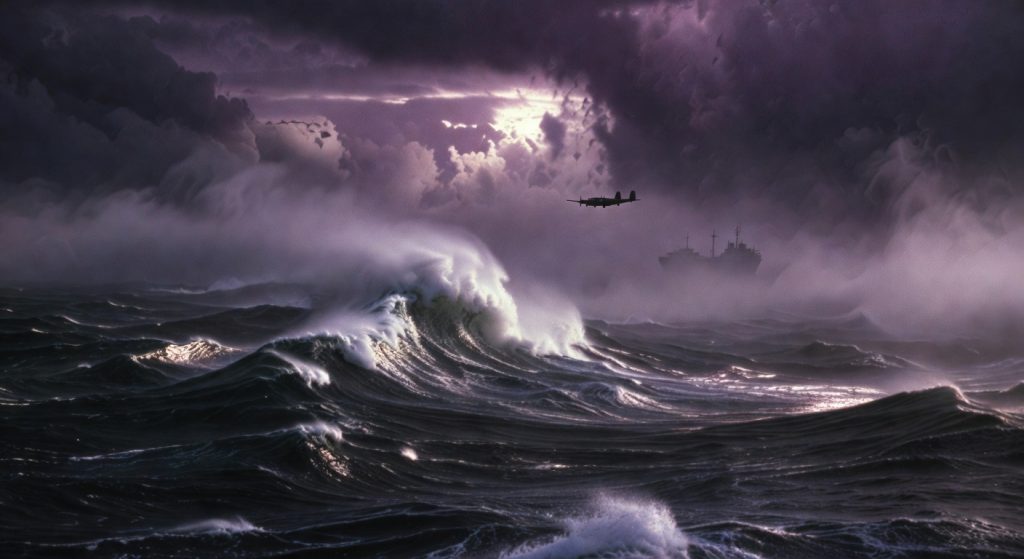
On the afternoon of December 5, 1945, fourteen U.S. Navy airmen climbed into five Avenger torpedo bombers at Naval Air Station Fort Lauderdale, Florida, and took off on a routine training exercise. They never came back. The rescue plane sent to find them — a PBM Mariner with a crew of thirteen — also vanished. Twenty-seven men. Six aircraft. Gone without a trace in a patch of ocean that, within a generation, would become the most talked-about stretch of water on the planet.

Welcome to the Bermuda Triangle.

That name alone carries weight. It conjures compasses spinning wildly, ships swallowed mid-voyage, pilots broadcasting confused final transmissions into dead air. For decades it’s been the shorthand for the inexplicable — the place where the laws of physics seem to take a coffee break. And yet, official inquiries have repeatedly declared the area unremarkable. Insurance actuaries don’t charge extra for policies covering vessels that cross it. The U.S. Coast Guard doesn’t even officially recognize it as a danger zone.

So which is it? A graveyard of the unexplained, or the world’s most successful piece of geographic mythology? The answer, as is usually the case with the best mysteries, is neither entirely — and both a little.


How a Magazine Article Became a Monster

The Bermuda Triangle didn’t spring fully formed from the sea. It was built — assembled piece by piece through journalism, publishing, and the very human hunger for a story that doesn’t end cleanly.

The first architect was Vincent Gaddis, a writer who coined the phrase “Bermuda Triangle” in a 1964 article for Argosy magazine. He connected a cluster of disappearances under a single geographic banner and gave them a name. Names are powerful. Once something has a name, it has a pattern. Once it has a pattern, it has a legend.

Then came Charles Berlitz. His 1974 book, simply titled The Bermuda Triangle, sold more than 20 million copies worldwide and translated into dozens of languages. Berlitz painted the region as a zone of genuine supernatural menace — a place where alien craft, time warps, and the lost city of Atlantis might all be implicated in the disappearances. It was sensational, sweeping, and enormously effective. Berlitz didn’t invent the disappearances. He just gave them the most dramatic possible interpretation.

The counter-punch came three years later. In 1975, librarian and researcher Larry Kusche published The Bermuda Triangle Mystery — Solved, a methodical takedown of the legend. Kusche went back to original sources — official records, Lloyd’s of London shipping logs, newspaper archives, weather reports — and found something remarkable: the legend simply didn’t hold up. Ships that “disappeared without warning” had actually sunk in documented storms. Vessels described as lost in the Triangle had gone down nowhere near it. Some had never existed at all. Kusche’s conclusion was blunt: the Bermuda Triangle mystery was a manufactured one, “a mystery only because it was treated as a mystery.”

Case closed, right?

Not quite.


The Cases That Don’t Go Away Quietly

Kusche did valuable work. Skepticism is healthy, and his research genuinely dismantled some of the more inflated claims. But here’s the thing about the Bermuda Triangle that the debunkers sometimes gloss over: a few of the cases are genuinely, stubbornly strange. Not “misrepresented newspaper story” strange. Actually strange.

Flight 19: The Training Mission That Vanished

The most famous disappearance in the Triangle’s mythology is also one of its most legitimately mysterious. Flight 19, the five-Avenger formation that disappeared on December 5, 1945, wasn’t lost because of bad weather or crew incompetence — at least not in any way that fully explains what happened. The lead pilot, Lieutenant Charles Taylor, was an experienced aviator. Radio transmissions recovered from that afternoon are disquieting. Taylor told controllers that both his compasses had failed. He reported that the ocean didn’t look right — that he couldn’t tell where he was, and that everything looked strange, even wrong. The flight dissolved into radio silence as darkness fell.

The Navy’s original investigation attributed the loss to “causes or reasons unknown.” A later board revised this to pilot error, a conclusion Taylor’s family spent years fighting. The official naval inquiry is publicly available through the Naval History and Heritage Command — and it is, to put it gently, inconclusive.

USS Cyclops: 306 Souls, No Signal

Long before Flight 19, the ocean swallowed something far larger. In March 1918, the USS Cyclops — a massive Navy collier carrying 306 crew and passengers — departed Barbados bound for Baltimore and was never seen or heard from again. No distress signal. No wreckage found. No bodies. The ship simply ceased to exist.

The U.S. Navy has called it “one of the most baffling mysteries in the annals of the Navy.” Theories have ranged from German submarine attack (no U-boat ever claimed it) to structural failure to mutiny. The Cyclops remains the single largest loss of life in U.S. Naval history not involving combat — and it has never been explained.

Marine Sulphur Queen: A Ship That Should Have Talked

In February 1963, the Marine Sulphur Queen, a converted T2 tanker carrying liquid sulfur, vanished with 39 crew members off the coast of Florida. What the Coast Guard‘s official report found was unsettling: the ship had a history of structural problems, had been showing signs of stress — and still, no mayday, no distress call, nothing. A life jacket and some debris were found days later. No other trace. The Coast Guard’s inquiry was damning about the vessel’s condition but couldn’t explain how a ship disappears without even managing to send a distress call in modern, trafficked waters.

The Ellen Austin and the Ghost Ship That Wasn’t

Not every case holds up under scrutiny. The tale of the Ellen Austin, an 1881 schooner that allegedly encountered an abandoned, crewless vessel in the Triangle — then lost a salvage crew placed aboard that ship when it vanished again — is romantic and eerie. It’s also almost certainly embellished beyond recognition. The original incident may have happened; the details as usually told do not appear in contemporary records. It’s the kind of case that illustrates Kusche’s point perfectly: some Triangle lore is built on fog.

The honest accounting is this — some disappearances were exaggerated, mislocated, or fabricated. Others are genuinely unexplained. The legend swallowed both kinds whole and served them up as a single terrifying narrative.


The Conventional Explanations (And Why They’re Not Enough)

Ask a scientist or a Coast Guard officer about the Bermuda Triangle and you’ll get a reasonable, multi-part answer. The region, they’ll point out, is one of the most heavily trafficked stretches of ocean and airspace in the world. More traffic means more accidents. More accidents means more missing vessels. When you also factor in the unpredictable weather patterns — the sudden, violent squalls that can materialize with almost no warning across that corridor — the casualty rate starts to look less supernatural and more statistical.

Then there’s the Gulf Stream. Running at up to five miles per hour through the Florida Straits, it’s one of the most powerful ocean currents on Earth. A vessel that sinks in the Triangle doesn’t just sink — it can be carried hundreds of miles away before any wreckage surfaces, which helps explain why some ships seem to disappear without a trace. The ocean is doing the vanishing act for them.

Researchers have also pointed to methane hydrate deposits on the ocean floor in the region. When disturbed — by seismic activity or pressure changes — these deposits can release enormous bubbles of methane gas. Laboratory experiments have shown that a large enough methane eruption could theoretically reduce water density enough to sink a ship instantly, and disrupt aircraft engines and instruments. It’s a compelling mechanism, though it remains difficult to observe directly.

And then there’s the matter of compass variation. The Bermuda Triangle is one of a handful of places on Earth where magnetic north and true north align — meaning a compass reading there, without correction, could put a navigator significantly off course. Pilots and sailors of earlier eras, unfamiliar with this local anomaly, could have drifted far from intended routes without understanding why.

These are real phenomena. They’re worth taking seriously. But here’s the problem with the “nothing to see here” narrative: it answers the general question — why do ships sometimes sink in this region? — without answering the specific ones. Why did Flight 19’s experienced pilot believe both his compasses had failed simultaneously? Why did the USS Cyclops send no distress signal, in calm weather, before disappearing with 306 people aboard? Why does the ocean floor in this region remain so poorly mapped that we genuinely don’t know what’s down there?

Debunking a legend in the aggregate does not explain every individual case. That’s a category error that skeptics sometimes make — and it’s worth calling out.


What the Ocean Is Still Hiding

Here’s a number to sit with: we have better maps of the surface of Mars than we do of the ocean floor. The deep sea remains one of the genuine frontiers of human knowledge, and the section of the Atlantic that encompasses the Bermuda Triangle is no exception.

Underwater Volcanism and the Ocean Floor

The region sits over geologically active terrain. There are underwater mountain ranges, trenches, and volcanic features that have not been comprehensively surveyed. Localized volcanic events could theoretically produce the kind of sudden, disruptive physical changes — water temperature spikes, gas releases, pressure waves — that might explain unusual instrument behavior or rapid structural failure in vessels.

Rogue Waves: The Monsters That Were Real

For most of maritime history, sailors’ reports of impossible walls of water — waves of 80, 100 feet appearing from nowhere — were dismissed as exaggeration or hallucination. Then, on January 1, 1995, the Draupner oil platform off Norway recorded a wave measuring 84 feet in seas where waves of that size should have been statistically impossible. Rogue waves are now an accepted phenomenon, and the Atlantic, with its mix of strong currents and storm systems, is considered a prime breeding ground for them. A rogue wave hitting a vessel at the right angle could sink it in seconds — before any distress call could be made.

Electromagnetic Anomalies: When Instruments Lie

Pilots and sailors in the Triangle have reported compass anomalies, instrument failures, and disorientation events that go beyond what standard magnetic variation would predict. Some researchers have proposed that infrasound — low-frequency sound waves below human hearing, generated by certain weather patterns — could cause the disorientation and even panic that might explain why otherwise competent crews made fatal decisions. Whether the Triangle produces infrasound at unusual levels remains an open research question.

This is not to say the answer is aliens, or a time portal, or the ghost of Atlantis humming beneath the waves. It’s to say that “we don’t fully understand this” is a legitimate scientific statement — and one that gets glossed over in the rush to declare the mystery solved.


The Problem With Pattern Recognition

The human brain is a pattern-detection machine. It evolved that way because noticing patterns — that particular rustle in the grass means predator, that particular cloud formation means storm — was the difference between survival and death. But the same hardware that kept our ancestors alive also causes us to see patterns that aren’t there: faces in clouds, conspiracies in coincidences, curses in geography.

The Bermuda Triangle is, in part, a product of this tendency. Once Gaddis gave the region a name and a shape on the map, every subsequent loss in that area was filed under the same heading. The pattern was confirmed, the legend fed. This is called confirmation bias, and it’s a known cognitive trap.

But here’s the counter-trap: overcorrection. The same pattern-recognition that builds myths can also, when triggered in reverse, cause us to dismiss real signals as noise. The fact that some Triangle cases were exaggerated doesn’t mean all of them were unremarkable. The fact that the legend was partly manufactured doesn’t mean the ocean in that region is entirely understood.

Healthy skepticism means applying it in both directions. That’s a lesson the Bermuda Triangle teaches with unusual clarity — and it’s one that shows up in other disappearance mysteries too. The case of MH370, a modern aircraft lost over the Indian Ocean in 2014 with all the resources of 21st-century search technology deployed to find it, proved that the ocean can still beat us. Sometimes things disappear and we genuinely don’t know why.


What the Triangle Is Really Teaching Us

Strip away the aliens and the time portals and the Atlantis theories. Strip away the breathless late-night TV specials and the overheated bestsellers. What you’re left with is something actually interesting: a geographic region that became a cultural Rorschach test, revealing more about how we process mystery than about the ocean itself.

The Bermuda Triangle endures not because the ocean there is uniquely dangerous — statistically, it isn’t — but because it gives form to a deep anxiety: the knowledge that despite all our satellites and GPS and sonar, the world still contains places that can swallow people whole and give nothing back. That anxiety is not irrational. It’s honest. We live on a planet whose oceans cover 71% of its surface and whose depths remain largely unmapped and poorly understood. Things do disappear. People do die without explanation. Ships and planes do occasionally, inexplicably, vanish.

The legend of the Bermuda Triangle is the story we built around that fear. And like all the best legends, it points toward something real — even if the thing it points toward isn’t quite what we imagined.

The ocean doesn’t need to be haunted to be terrifying. It’s doing fine on its own.


Down the Rabbit Hole

  • The USS Cyclops: America’s Greatest Naval Mystery — A deep dive into the 1918 disappearance of 306 crew members and the theories that have never quite added up.
  • Rogue Waves: The Ocean’s Hidden Killers — How science finally confirmed what sailors always feared, and what we still don’t know about these catastrophic phenomena.
  • Flight 19: What the Navy’s Own Records Actually Say — A forensic look at the declassified inquiry into the most famous disappearance in aviation history.
  • MH370: The Plane That Vanished — The disappearance of Malaysia Airlines Flight 370 proved that in the modern age, we’re still not beyond losing a commercial jetliner without a trace.
  • Methane Hydrates and the Sinking of Ships: A Scientific Deep Dive — The seafloor is laced with frozen gas deposits that could, under the right conditions, bring down vessels in seconds — and we’re only beginning to understand them.

Disclaimer: The content on ConspiracyRealist.com is produced for entertainment and educational exploration. The cases and theories discussed here reflect publicly available information and ongoing historical debate. Readers are encouraged to consult primary sources, think critically, and draw their own conclusions.

dive down the rabbit hole

The Bermuda Triangle: Science vs. Legend

Conspiracy Realist
The Bermuda Triangle: Science vs. Legend

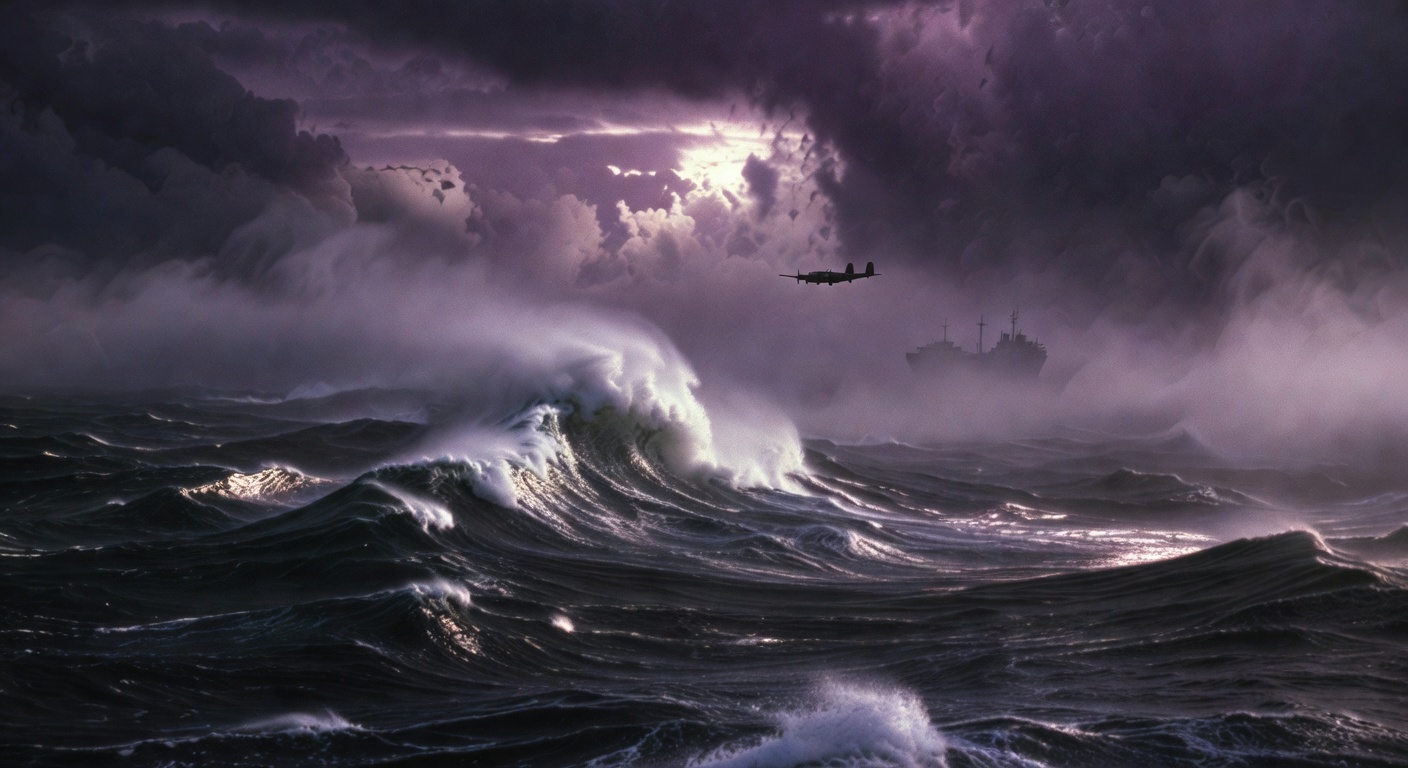
On the afternoon of December 5, 1945, fourteen U.S. Navy airmen climbed into five Avenger torpedo bombers at Naval Air Station Fort Lauderdale, Florida, and took off on a routine training exercise. They never came back. The rescue plane sent to find them — a PBM Mariner with a crew of thirteen — also vanished. Twenty-seven men. Six aircraft. Gone without a trace in a patch of ocean that, within a generation, would become the most talked-about stretch of water on the planet.

Welcome to the Bermuda Triangle.

That name alone carries weight. It conjures compasses spinning wildly, ships swallowed mid-voyage, pilots broadcasting confused final transmissions into dead air. For decades it’s been the shorthand for the inexplicable — the place where the laws of physics seem to take a coffee break. And yet, official inquiries have repeatedly declared the area unremarkable. Insurance actuaries don’t charge extra for policies covering vessels that cross it. The U.S. Coast Guard doesn’t even officially recognize it as a danger zone.

So which is it? A graveyard of the unexplained, or the world’s most successful piece of geographic mythology? The answer, as is usually the case with the best mysteries, is neither entirely — and both a little.


How a Magazine Article Became a Monster

The Bermuda Triangle didn’t spring fully formed from the sea. It was built — assembled piece by piece through journalism, publishing, and the very human hunger for a story that doesn’t end cleanly.

The first architect was Vincent Gaddis, a writer who coined the phrase “Bermuda Triangle” in a 1964 article for Argosy magazine. He connected a cluster of disappearances under a single geographic banner and gave them a name. Names are powerful. Once something has a name, it has a pattern. Once it has a pattern, it has a legend.

Then came Charles Berlitz. His 1974 book, simply titled The Bermuda Triangle, sold more than 20 million copies worldwide and translated into dozens of languages. Berlitz painted the region as a zone of genuine supernatural menace — a place where alien craft, time warps, and the lost city of Atlantis might all be implicated in the disappearances. It was sensational, sweeping, and enormously effective. Berlitz didn’t invent the disappearances. He just gave them the most dramatic possible interpretation.

The counter-punch came three years later. In 1975, librarian and researcher Larry Kusche published The Bermuda Triangle Mystery — Solved, a methodical takedown of the legend. Kusche went back to original sources — official records, Lloyd’s of London shipping logs, newspaper archives, weather reports — and found something remarkable: the legend simply didn’t hold up. Ships that “disappeared without warning” had actually sunk in documented storms. Vessels described as lost in the Triangle had gone down nowhere near it. Some had never existed at all. Kusche’s conclusion was blunt: the Bermuda Triangle mystery was a manufactured one, “a mystery only because it was treated as a mystery.”

Case closed, right?

Not quite.


The Cases That Don’t Go Away Quietly

Kusche did valuable work. Skepticism is healthy, and his research genuinely dismantled some of the more inflated claims. But here’s the thing about the Bermuda Triangle that the debunkers sometimes gloss over: a few of the cases are genuinely, stubbornly strange. Not “misrepresented newspaper story” strange. Actually strange.

Flight 19: The Training Mission That Vanished

The most famous disappearance in the Triangle’s mythology is also one of its most legitimately mysterious. Flight 19, the five-Avenger formation that disappeared on December 5, 1945, wasn’t lost because of bad weather or crew incompetence — at least not in any way that fully explains what happened. The lead pilot, Lieutenant Charles Taylor, was an experienced aviator. Radio transmissions recovered from that afternoon are disquieting. Taylor told controllers that both his compasses had failed. He reported that the ocean didn’t look right — that he couldn’t tell where he was, and that everything looked strange, even wrong. The flight dissolved into radio silence as darkness fell.

The Navy’s original investigation attributed the loss to “causes or reasons unknown.” A later board revised this to pilot error, a conclusion Taylor’s family spent years fighting. The official naval inquiry is publicly available through the Naval History and Heritage Command — and it is, to put it gently, inconclusive.

USS Cyclops: 306 Souls, No Signal

Long before Flight 19, the ocean swallowed something far larger. In March 1918, the USS Cyclops — a massive Navy collier carrying 306 crew and passengers — departed Barbados bound for Baltimore and was never seen or heard from again. No distress signal. No wreckage found. No bodies. The ship simply ceased to exist.

The U.S. Navy has called it “one of the most baffling mysteries in the annals of the Navy.” Theories have ranged from German submarine attack (no U-boat ever claimed it) to structural failure to mutiny. The Cyclops remains the single largest loss of life in U.S. Naval history not involving combat — and it has never been explained.

Marine Sulphur Queen: A Ship That Should Have Talked

In February 1963, the Marine Sulphur Queen, a converted T2 tanker carrying liquid sulfur, vanished with 39 crew members off the coast of Florida. What the Coast Guard‘s official report found was unsettling: the ship had a history of structural problems, had been showing signs of stress — and still, no mayday, no distress call, nothing. A life jacket and some debris were found days later. No other trace. The Coast Guard’s inquiry was damning about the vessel’s condition but couldn’t explain how a ship disappears without even managing to send a distress call in modern, trafficked waters.

The Ellen Austin and the Ghost Ship That Wasn’t

Not every case holds up under scrutiny. The tale of the Ellen Austin, an 1881 schooner that allegedly encountered an abandoned, crewless vessel in the Triangle — then lost a salvage crew placed aboard that ship when it vanished again — is romantic and eerie. It’s also almost certainly embellished beyond recognition. The original incident may have happened; the details as usually told do not appear in contemporary records. It’s the kind of case that illustrates Kusche’s point perfectly: some Triangle lore is built on fog.

The honest accounting is this — some disappearances were exaggerated, mislocated, or fabricated. Others are genuinely unexplained. The legend swallowed both kinds whole and served them up as a single terrifying narrative.


The Conventional Explanations (And Why They’re Not Enough)

Ask a scientist or a Coast Guard officer about the Bermuda Triangle and you’ll get a reasonable, multi-part answer. The region, they’ll point out, is one of the most heavily trafficked stretches of ocean and airspace in the world. More traffic means more accidents. More accidents means more missing vessels. When you also factor in the unpredictable weather patterns — the sudden, violent squalls that can materialize with almost no warning across that corridor — the casualty rate starts to look less supernatural and more statistical.

Then there’s the Gulf Stream. Running at up to five miles per hour through the Florida Straits, it’s one of the most powerful ocean currents on Earth. A vessel that sinks in the Triangle doesn’t just sink — it can be carried hundreds of miles away before any wreckage surfaces, which helps explain why some ships seem to disappear without a trace. The ocean is doing the vanishing act for them.

Researchers have also pointed to methane hydrate deposits on the ocean floor in the region. When disturbed — by seismic activity or pressure changes — these deposits can release enormous bubbles of methane gas. Laboratory experiments have shown that a large enough methane eruption could theoretically reduce water density enough to sink a ship instantly, and disrupt aircraft engines and instruments. It’s a compelling mechanism, though it remains difficult to observe directly.

And then there’s the matter of compass variation. The Bermuda Triangle is one of a handful of places on Earth where magnetic north and true north align — meaning a compass reading there, without correction, could put a navigator significantly off course. Pilots and sailors of earlier eras, unfamiliar with this local anomaly, could have drifted far from intended routes without understanding why.

These are real phenomena. They’re worth taking seriously. But here’s the problem with the “nothing to see here” narrative: it answers the general question — why do ships sometimes sink in this region? — without answering the specific ones. Why did Flight 19’s experienced pilot believe both his compasses had failed simultaneously? Why did the USS Cyclops send no distress signal, in calm weather, before disappearing with 306 people aboard? Why does the ocean floor in this region remain so poorly mapped that we genuinely don’t know what’s down there?

Debunking a legend in the aggregate does not explain every individual case. That’s a category error that skeptics sometimes make — and it’s worth calling out.


What the Ocean Is Still Hiding

Here’s a number to sit with: we have better maps of the surface of Mars than we do of the ocean floor. The deep sea remains one of the genuine frontiers of human knowledge, and the section of the Atlantic that encompasses the Bermuda Triangle is no exception.

Underwater Volcanism and the Ocean Floor

The region sits over geologically active terrain. There are underwater mountain ranges, trenches, and volcanic features that have not been comprehensively surveyed. Localized volcanic events could theoretically produce the kind of sudden, disruptive physical changes — water temperature spikes, gas releases, pressure waves — that might explain unusual instrument behavior or rapid structural failure in vessels.

Rogue Waves: The Monsters That Were Real

For most of maritime history, sailors’ reports of impossible walls of water — waves of 80, 100 feet appearing from nowhere — were dismissed as exaggeration or hallucination. Then, on January 1, 1995, the Draupner oil platform off Norway recorded a wave measuring 84 feet in seas where waves of that size should have been statistically impossible. Rogue waves are now an accepted phenomenon, and the Atlantic, with its mix of strong currents and storm systems, is considered a prime breeding ground for them. A rogue wave hitting a vessel at the right angle could sink it in seconds — before any distress call could be made.

Electromagnetic Anomalies: When Instruments Lie

Pilots and sailors in the Triangle have reported compass anomalies, instrument failures, and disorientation events that go beyond what standard magnetic variation would predict. Some researchers have proposed that infrasound — low-frequency sound waves below human hearing, generated by certain weather patterns — could cause the disorientation and even panic that might explain why otherwise competent crews made fatal decisions. Whether the Triangle produces infrasound at unusual levels remains an open research question.

This is not to say the answer is aliens, or a time portal, or the ghost of Atlantis humming beneath the waves. It’s to say that “we don’t fully understand this” is a legitimate scientific statement — and one that gets glossed over in the rush to declare the mystery solved.


The Problem With Pattern Recognition

The human brain is a pattern-detection machine. It evolved that way because noticing patterns — that particular rustle in the grass means predator, that particular cloud formation means storm — was the difference between survival and death. But the same hardware that kept our ancestors alive also causes us to see patterns that aren’t there: faces in clouds, conspiracies in coincidences, curses in geography.

The Bermuda Triangle is, in part, a product of this tendency. Once Gaddis gave the region a name and a shape on the map, every subsequent loss in that area was filed under the same heading. The pattern was confirmed, the legend fed. This is called confirmation bias, and it’s a known cognitive trap.

But here’s the counter-trap: overcorrection. The same pattern-recognition that builds myths can also, when triggered in reverse, cause us to dismiss real signals as noise. The fact that some Triangle cases were exaggerated doesn’t mean all of them were unremarkable. The fact that the legend was partly manufactured doesn’t mean the ocean in that region is entirely understood.

Healthy skepticism means applying it in both directions. That’s a lesson the Bermuda Triangle teaches with unusual clarity — and it’s one that shows up in other disappearance mysteries too. The case of MH370, a modern aircraft lost over the Indian Ocean in 2014 with all the resources of 21st-century search technology deployed to find it, proved that the ocean can still beat us. Sometimes things disappear and we genuinely don’t know why.


What the Triangle Is Really Teaching Us

Strip away the aliens and the time portals and the Atlantis theories. Strip away the breathless late-night TV specials and the overheated bestsellers. What you’re left with is something actually interesting: a geographic region that became a cultural Rorschach test, revealing more about how we process mystery than about the ocean itself.

The Bermuda Triangle endures not because the ocean there is uniquely dangerous — statistically, it isn’t — but because it gives form to a deep anxiety: the knowledge that despite all our satellites and GPS and sonar, the world still contains places that can swallow people whole and give nothing back. That anxiety is not irrational. It’s honest. We live on a planet whose oceans cover 71% of its surface and whose depths remain largely unmapped and poorly understood. Things do disappear. People do die without explanation. Ships and planes do occasionally, inexplicably, vanish.

The legend of the Bermuda Triangle is the story we built around that fear. And like all the best legends, it points toward something real — even if the thing it points toward isn’t quite what we imagined.

The ocean doesn’t need to be haunted to be terrifying. It’s doing fine on its own.


Down the Rabbit Hole

  • The USS Cyclops: America’s Greatest Naval Mystery — A deep dive into the 1918 disappearance of 306 crew members and the theories that have never quite added up.
  • Rogue Waves: The Ocean’s Hidden Killers — How science finally confirmed what sailors always feared, and what we still don’t know about these catastrophic phenomena.
  • Flight 19: What the Navy’s Own Records Actually Say — A forensic look at the declassified inquiry into the most famous disappearance in aviation history.
  • MH370: The Plane That Vanished — The disappearance of Malaysia Airlines Flight 370 proved that in the modern age, we’re still not beyond losing a commercial jetliner without a trace.
  • Methane Hydrates and the Sinking of Ships: A Scientific Deep Dive — The seafloor is laced with frozen gas deposits that could, under the right conditions, bring down vessels in seconds — and we’re only beginning to understand them.

Disclaimer: The content on ConspiracyRealist.com is produced for entertainment and educational exploration. The cases and theories discussed here reflect publicly available information and ongoing historical debate. Readers are encouraged to consult primary sources, think critically, and draw their own conclusions.

The Bermuda Triangle: Science vs. Legend

The Bermuda Triangle: Science vs. Legend

On the afternoon of December 5, 1945, fourteen U.S. Navy airmen climbed into five Avenger torpedo bombers at Naval Air Station Fort Lauderdale, Florida, and took off on a routine training exercise. They never came back. The rescue plane sent to find them — a PBM Mariner with a crew of thirteen — also vanished. Twenty-seven men. Six aircraft. Gone without a trace in a patch of ocean that, within a generation, would become the most talked-about stretch of water on the planet.

Welcome to the Bermuda Triangle.

That name alone carries weight. It conjures compasses spinning wildly, ships swallowed mid-voyage, pilots broadcasting confused final transmissions into dead air. For decades it’s been the shorthand for the inexplicable — the place where the laws of physics seem to take a coffee break. And yet, official inquiries have repeatedly declared the area unremarkable. Insurance actuaries don’t charge extra for policies covering vessels that cross it. The U.S. Coast Guard doesn’t even officially recognize it as a danger zone.

So which is it? A graveyard of the unexplained, or the world’s most successful piece of geographic mythology? The answer, as is usually the case with the best mysteries, is neither entirely — and both a little.


How a Magazine Article Became a Monster

The Bermuda Triangle didn’t spring fully formed from the sea. It was built — assembled piece by piece through journalism, publishing, and the very human hunger for a story that doesn’t end cleanly.

The first architect was Vincent Gaddis, a writer who coined the phrase “Bermuda Triangle” in a 1964 article for Argosy magazine. He connected a cluster of disappearances under a single geographic banner and gave them a name. Names are powerful. Once something has a name, it has a pattern. Once it has a pattern, it has a legend.

Then came Charles Berlitz. His 1974 book, simply titled The Bermuda Triangle, sold more than 20 million copies worldwide and translated into dozens of languages. Berlitz painted the region as a zone of genuine supernatural menace — a place where alien craft, time warps, and the lost city of Atlantis might all be implicated in the disappearances. It was sensational, sweeping, and enormously effective. Berlitz didn’t invent the disappearances. He just gave them the most dramatic possible interpretation.

The counter-punch came three years later. In 1975, librarian and researcher Larry Kusche published The Bermuda Triangle Mystery — Solved, a methodical takedown of the legend. Kusche went back to original sources — official records, Lloyd’s of London shipping logs, newspaper archives, weather reports — and found something remarkable: the legend simply didn’t hold up. Ships that “disappeared without warning” had actually sunk in documented storms. Vessels described as lost in the Triangle had gone down nowhere near it. Some had never existed at all. Kusche’s conclusion was blunt: the Bermuda Triangle mystery was a manufactured one, “a mystery only because it was treated as a mystery.”

Case closed, right?

Not quite.


The Cases That Don’t Go Away Quietly

Kusche did valuable work. Skepticism is healthy, and his research genuinely dismantled some of the more inflated claims. But here’s the thing about the Bermuda Triangle that the debunkers sometimes gloss over: a few of the cases are genuinely, stubbornly strange. Not “misrepresented newspaper story” strange. Actually strange.

Flight 19: The Training Mission That Vanished

The most famous disappearance in the Triangle’s mythology is also one of its most legitimately mysterious. Flight 19, the five-Avenger formation that disappeared on December 5, 1945, wasn’t lost because of bad weather or crew incompetence — at least not in any way that fully explains what happened. The lead pilot, Lieutenant Charles Taylor, was an experienced aviator. Radio transmissions recovered from that afternoon are disquieting. Taylor told controllers that both his compasses had failed. He reported that the ocean didn’t look right — that he couldn’t tell where he was, and that everything looked strange, even wrong. The flight dissolved into radio silence as darkness fell.

The Navy’s original investigation attributed the loss to “causes or reasons unknown.” A later board revised this to pilot error, a conclusion Taylor’s family spent years fighting. The official naval inquiry is publicly available through the Naval History and Heritage Command — and it is, to put it gently, inconclusive.

USS Cyclops: 306 Souls, No Signal

Long before Flight 19, the ocean swallowed something far larger. In March 1918, the USS Cyclops — a massive Navy collier carrying 306 crew and passengers — departed Barbados bound for Baltimore and was never seen or heard from again. No distress signal. No wreckage found. No bodies. The ship simply ceased to exist.

The U.S. Navy has called it “one of the most baffling mysteries in the annals of the Navy.” Theories have ranged from German submarine attack (no U-boat ever claimed it) to structural failure to mutiny. The Cyclops remains the single largest loss of life in U.S. Naval history not involving combat — and it has never been explained.

Marine Sulphur Queen: A Ship That Should Have Talked

In February 1963, the Marine Sulphur Queen, a converted T2 tanker carrying liquid sulfur, vanished with 39 crew members off the coast of Florida. What the Coast Guard‘s official report found was unsettling: the ship had a history of structural problems, had been showing signs of stress — and still, no mayday, no distress call, nothing. A life jacket and some debris were found days later. No other trace. The Coast Guard’s inquiry was damning about the vessel’s condition but couldn’t explain how a ship disappears without even managing to send a distress call in modern, trafficked waters.

The Ellen Austin and the Ghost Ship That Wasn’t

Not every case holds up under scrutiny. The tale of the Ellen Austin, an 1881 schooner that allegedly encountered an abandoned, crewless vessel in the Triangle — then lost a salvage crew placed aboard that ship when it vanished again — is romantic and eerie. It’s also almost certainly embellished beyond recognition. The original incident may have happened; the details as usually told do not appear in contemporary records. It’s the kind of case that illustrates Kusche’s point perfectly: some Triangle lore is built on fog.

The honest accounting is this — some disappearances were exaggerated, mislocated, or fabricated. Others are genuinely unexplained. The legend swallowed both kinds whole and served them up as a single terrifying narrative.


The Conventional Explanations (And Why They’re Not Enough)

Ask a scientist or a Coast Guard officer about the Bermuda Triangle and you’ll get a reasonable, multi-part answer. The region, they’ll point out, is one of the most heavily trafficked stretches of ocean and airspace in the world. More traffic means more accidents. More accidents means more missing vessels. When you also factor in the unpredictable weather patterns — the sudden, violent squalls that can materialize with almost no warning across that corridor — the casualty rate starts to look less supernatural and more statistical.

Then there’s the Gulf Stream. Running at up to five miles per hour through the Florida Straits, it’s one of the most powerful ocean currents on Earth. A vessel that sinks in the Triangle doesn’t just sink — it can be carried hundreds of miles away before any wreckage surfaces, which helps explain why some ships seem to disappear without a trace. The ocean is doing the vanishing act for them.

Researchers have also pointed to methane hydrate deposits on the ocean floor in the region. When disturbed — by seismic activity or pressure changes — these deposits can release enormous bubbles of methane gas. Laboratory experiments have shown that a large enough methane eruption could theoretically reduce water density enough to sink a ship instantly, and disrupt aircraft engines and instruments. It’s a compelling mechanism, though it remains difficult to observe directly.

And then there’s the matter of compass variation. The Bermuda Triangle is one of a handful of places on Earth where magnetic north and true north align — meaning a compass reading there, without correction, could put a navigator significantly off course. Pilots and sailors of earlier eras, unfamiliar with this local anomaly, could have drifted far from intended routes without understanding why.

These are real phenomena. They’re worth taking seriously. But here’s the problem with the “nothing to see here” narrative: it answers the general question — why do ships sometimes sink in this region? — without answering the specific ones. Why did Flight 19’s experienced pilot believe both his compasses had failed simultaneously? Why did the USS Cyclops send no distress signal, in calm weather, before disappearing with 306 people aboard? Why does the ocean floor in this region remain so poorly mapped that we genuinely don’t know what’s down there?

Debunking a legend in the aggregate does not explain every individual case. That’s a category error that skeptics sometimes make — and it’s worth calling out.


What the Ocean Is Still Hiding

Here’s a number to sit with: we have better maps of the surface of Mars than we do of the ocean floor. The deep sea remains one of the genuine frontiers of human knowledge, and the section of the Atlantic that encompasses the Bermuda Triangle is no exception.

Underwater Volcanism and the Ocean Floor

The region sits over geologically active terrain. There are underwater mountain ranges, trenches, and volcanic features that have not been comprehensively surveyed. Localized volcanic events could theoretically produce the kind of sudden, disruptive physical changes — water temperature spikes, gas releases, pressure waves — that might explain unusual instrument behavior or rapid structural failure in vessels.

Rogue Waves: The Monsters That Were Real

For most of maritime history, sailors’ reports of impossible walls of water — waves of 80, 100 feet appearing from nowhere — were dismissed as exaggeration or hallucination. Then, on January 1, 1995, the Draupner oil platform off Norway recorded a wave measuring 84 feet in seas where waves of that size should have been statistically impossible. Rogue waves are now an accepted phenomenon, and the Atlantic, with its mix of strong currents and storm systems, is considered a prime breeding ground for them. A rogue wave hitting a vessel at the right angle could sink it in seconds — before any distress call could be made.

Electromagnetic Anomalies: When Instruments Lie

Pilots and sailors in the Triangle have reported compass anomalies, instrument failures, and disorientation events that go beyond what standard magnetic variation would predict. Some researchers have proposed that infrasound — low-frequency sound waves below human hearing, generated by certain weather patterns — could cause the disorientation and even panic that might explain why otherwise competent crews made fatal decisions. Whether the Triangle produces infrasound at unusual levels remains an open research question.

This is not to say the answer is aliens, or a time portal, or the ghost of Atlantis humming beneath the waves. It’s to say that “we don’t fully understand this” is a legitimate scientific statement — and one that gets glossed over in the rush to declare the mystery solved.


The Problem With Pattern Recognition

The human brain is a pattern-detection machine. It evolved that way because noticing patterns — that particular rustle in the grass means predator, that particular cloud formation means storm — was the difference between survival and death. But the same hardware that kept our ancestors alive also causes us to see patterns that aren’t there: faces in clouds, conspiracies in coincidences, curses in geography.

The Bermuda Triangle is, in part, a product of this tendency. Once Gaddis gave the region a name and a shape on the map, every subsequent loss in that area was filed under the same heading. The pattern was confirmed, the legend fed. This is called confirmation bias, and it’s a known cognitive trap.

But here’s the counter-trap: overcorrection. The same pattern-recognition that builds myths can also, when triggered in reverse, cause us to dismiss real signals as noise. The fact that some Triangle cases were exaggerated doesn’t mean all of them were unremarkable. The fact that the legend was partly manufactured doesn’t mean the ocean in that region is entirely understood.

Healthy skepticism means applying it in both directions. That’s a lesson the Bermuda Triangle teaches with unusual clarity — and it’s one that shows up in other disappearance mysteries too. The case of MH370, a modern aircraft lost over the Indian Ocean in 2014 with all the resources of 21st-century search technology deployed to find it, proved that the ocean can still beat us. Sometimes things disappear and we genuinely don’t know why.


What the Triangle Is Really Teaching Us

Strip away the aliens and the time portals and the Atlantis theories. Strip away the breathless late-night TV specials and the overheated bestsellers. What you’re left with is something actually interesting: a geographic region that became a cultural Rorschach test, revealing more about how we process mystery than about the ocean itself.

The Bermuda Triangle endures not because the ocean there is uniquely dangerous — statistically, it isn’t — but because it gives form to a deep anxiety: the knowledge that despite all our satellites and GPS and sonar, the world still contains places that can swallow people whole and give nothing back. That anxiety is not irrational. It’s honest. We live on a planet whose oceans cover 71% of its surface and whose depths remain largely unmapped and poorly understood. Things do disappear. People do die without explanation. Ships and planes do occasionally, inexplicably, vanish.

The legend of the Bermuda Triangle is the story we built around that fear. And like all the best legends, it points toward something real — even if the thing it points toward isn’t quite what we imagined.

The ocean doesn’t need to be haunted to be terrifying. It’s doing fine on its own.


Down the Rabbit Hole

  • The USS Cyclops: America’s Greatest Naval Mystery — A deep dive into the 1918 disappearance of 306 crew members and the theories that have never quite added up.
  • Rogue Waves: The Ocean’s Hidden Killers — How science finally confirmed what sailors always feared, and what we still don’t know about these catastrophic phenomena.
  • Flight 19: What the Navy’s Own Records Actually Say — A forensic look at the declassified inquiry into the most famous disappearance in aviation history.
  • MH370: The Plane That Vanished — The disappearance of Malaysia Airlines Flight 370 proved that in the modern age, we’re still not beyond losing a commercial jetliner without a trace.
  • Methane Hydrates and the Sinking of Ships: A Scientific Deep Dive — The seafloor is laced with frozen gas deposits that could, under the right conditions, bring down vessels in seconds — and we’re only beginning to understand them.

Disclaimer: The content on ConspiracyRealist.com is produced for entertainment and educational exploration. The cases and theories discussed here reflect publicly available information and ongoing historical debate. Readers are encouraged to consult primary sources, think critically, and draw their own conclusions.

Table of contents