Opens in a new tab
Menu

The Göbekli Tepe Mystery and Secrets

The Göbekli Tepe Mystery and Secrets

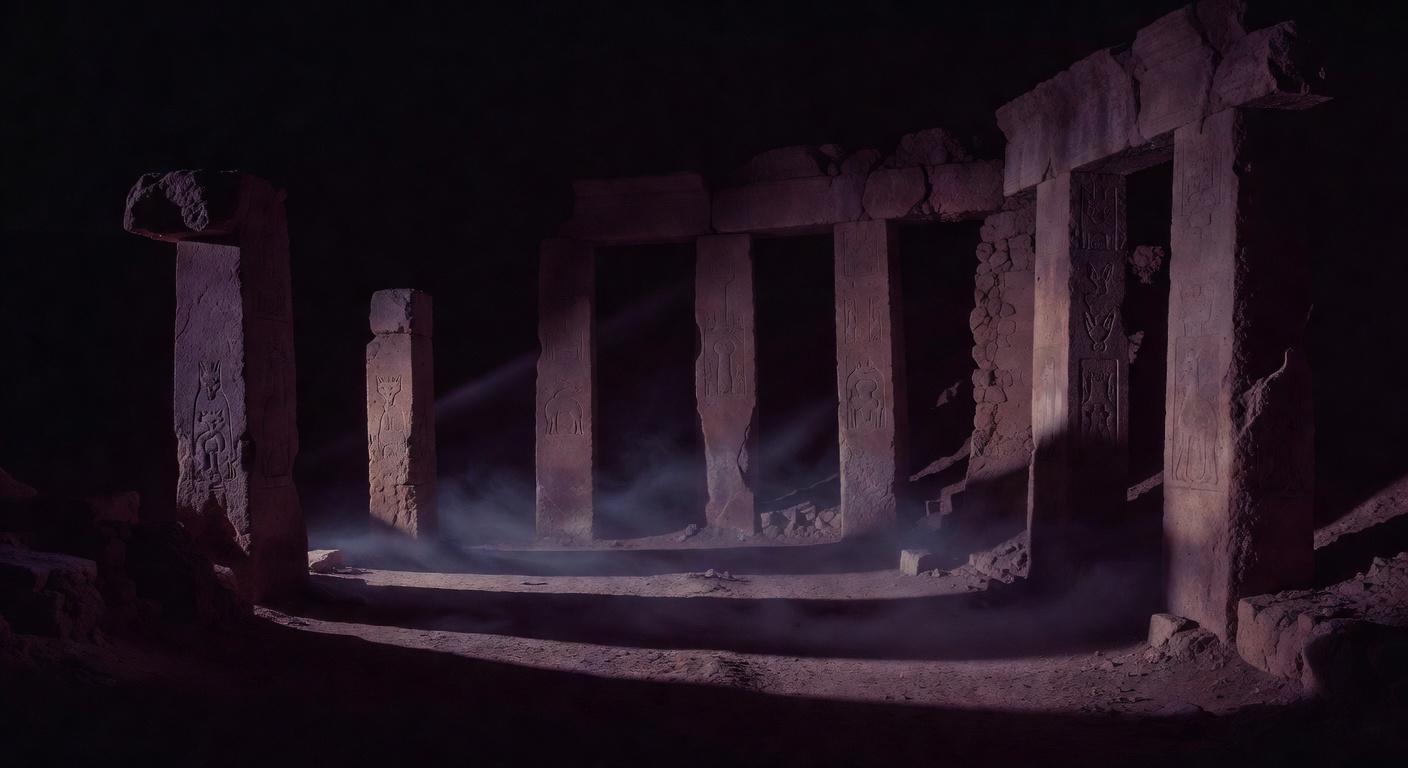
Imagine stumbling upon a cluster of massive stone circles, each pillar taller than a giraffe and carved with foxes, scorpions, and what look like comets—built by people who hadn’t even invented farming yet. That’s Göbekli Tepe, a site in Turkey that’s been quietly flipping the script on everything we thought we knew about human civilization. Discovered in the ’90s but dating back to around 9600 BCE, this isn’t just some old rocks; it’s a potential bombshell that whispers of forgotten tech, star visitors, or a cover-up bigger than your wildest dreams. As a journalist who’s chased shadows from Roswell to Area 51, I’ve got to tell you: this place pulls you in like a black hole. Stick with me as we peel back the layers—what if our history books are missing entire chapters?

The Discovery That Broke the Timeline

Picture this: It’s 1994, and German archaeologist Klaus Schmidt is poking around a mound in southeastern Turkey, near the Syrian border. What he finds isn’t a village or a graveyard—it’s 20 massive enclosures, some with T-shaped pillars up to 20 feet high and weighing 10-20 tons each. These aren’t random boulders; they’re meticulously carved with animals, abstract symbols, and what some swear are astronomical maps. Carbon dating? Around 12,000 years old, predating Stonehenge by 6,000 years and the pyramids by 7,000.

Traditional history says hunter-gatherers were too busy chasing mammoths to build temples. The Neolithic Revolution—that shift to farming and cities—supposedly came first, enabling big projects like this. But Göbekli Tepe flips it: the temple came before the farms. Schmidt himself called it “the world’s first temple,” suggesting religion drove people to settle and invent agriculture. But here’s where it gets juicy—did they really haul those stones with ropes and manpower, or is there more to the story? The site’s only 5% excavated, buried deliberately around 8000 BCE. Why hide it?

Why This Site Screams “Not Your Standard Prehistory”

Let’s nerd out on the details. Those T-pillars? They’re like prehistoric billboards, etched with vultures, boars, snakes, and humanoid figures. One pillar has what looks like a handbag motif—echoed in Sumerian and Mesoamerican art. Enclosures align with stars, maybe even tracking the Younger Dryas comet impact around 10,900 BCE, a mini-ice age that nearly wiped out megafauna. Coincidence? Or a warning carved in stone?

No pottery, no homes, no signs of settled life nearby. Yet thousands coordinated to quarry, transport, and erect these monoliths on a hilltop. Mainstream archaeologists say it was communal hunter-gatherer effort, maybe 500 people at a time. But skeptics point to the precision: pillars interlock like Lego, reliefs rival Renaissance art. How’d they do it without metal tools, wheels, or beasts of burden? It’s like finding a Ferrari in a caveman’s garage.

Rabbit Hole #1: Advanced Ancient Civilization – Atlantis 2.0?

Buckle up for the first big theory: Göbekli Tepe wasn’t built by primitives—it was the smoking gun of a lost high-tech society. Think Atlantis or a pre-flood supercivilization that got erased by cataclysm. Proponents like Graham Hancock (author of Fingerprints of the Gods) argue these pillars encode astronomical knowledge of precession—the 26,000-year wobble of Earth’s axis. One carving? Matches Sirius’s position 12,000 years ago. Random luck, or survivors of a comet barrage passing down star maps?

Hancock’s take: Around 12,800 years ago, fragments of a disintegrating comet slammed Earth (Younger Dryas Impact Hypothesis), flooding coasts and freezing the planet. Ice Age survivors—smarter than we credit—rebuilt here as a knowledge repository. No aliens needed; just humans with forgotten smarts. Evidence? Similar pillar styles pop up later in Caral-Supe (Peru) and Gunung Padang (Indonesia), hinting at a global network. Mainstream dismissal? “Coincidences.” But with sea levels 400 feet higher now, how much is underwater?

Rabbit Hole #2: Ancient Astronauts Touch Down in Turkey

Now, the fun stuff—enter Erich von Däniken and the Ancient Aliens crew. What if extraterrestrials landed, shared blueprints, and peaced out? Those T-pillars? They resemble Egyptian obelisks or even modern launch pads. Carvings of “beings” with helmets? Alien visitors. Alignments to Cygnus constellation? A cosmic beacon.

Zecharia Sitchin fans tie it to the Anunnaki—Sumerian “gods from the sky” mining gold on Earth. Göbekli Tepe as their first outpost? The site’s in Upper Mesopotamia, cradle of Sumer. One relief shows 12 vultures circling a headless man—zodiac or ET ritual? Giorgio Tsoukalos (yeah, the hair guy) has episodes on it, but dig deeper: a 2021 study in BioEssays journal links carvings to a comet swarm, suggesting sky-watchers with tech we can’t fathom.

Hyperlink alert: Check the German Archaeological Institute’s official Göbekli Tepe page for raw excavation reports—nothing screams “alien,” but the alignments are there if you squint.

Rabbit Hole #3: Hidden Knowledge and Cataclysmic Codes

Ever wonder if Göbekli Tepe is a time capsule? Theorists say it records humanity’s true origins—maybe we were seeded by stars, or it maps a cycle of destruction. Pillar 43, the “Vulture Stone,” allegedly predicts the Younger Dryas with scorpion (Scorpius constellation) and circling birds (comet fragments). Martin Sweatman‘s research claims it’s the world’s oldest solar calendar, marking the Taurid meteor stream.

Deeper: Handbag symbols? Universal in ancient art, possibly tech devices or measurement tools. Some see DNA helices in the carvings—genetic knowledge from a prior age? Or proof of giants—skeletons nearby hint at taller folk. It’s a rabbit hole of symbols begging decoding, like a Stone Age Rosetta Stone.

The Big One: Suppression by the Powers That Be

Here’s the conspiracy core: Why the slow dig? UNESCO World Heritage since 2018, but Turkish authorities limit access. Klaus Schmidt died in 2014 amid whispers of pressure. Theories swirl—Vatican hides it to protect Genesis timelines; governments bury it to avoid free-energy tech encoded in stones; oil interests block full excavation.

Fuel: In 2017, lidar scans revealed hundreds more structures underground. Yet funding dries up. Compare to Egypt—pyramids get billions. Coincidence? Or does full reveal shatter the “hunter-gatherer to farmer” narrative, upending religions and economies? Forums like AboveTopSecret buzz with “they’re hiding giant bones” claims. Plausible? The site’s deliberate burial screams “erase this knowledge.”

Counterarguments: Hard Work or Just Smarter Nomads?

To be fair, let’s hit the debunk side. Ian Hodder (Çatalhöyük excavator) says it was ritual feasting—500 workers, seasonal gatherings, no need for aliens. Bones show gazelle roasts, beer brewing from wild grains. Agriculture followed because of the site, drawing people to farm nearby (Nevalı Çori has domestic wheat).

Precision? Copper tools from Anatolia, levers, and sweat. Alignments? Human pattern-seeking. Still, even skeptics admit it’s revolutionary—Nature called it “a paradigm shifter.” No conspiracy needed for the wow factor.

Modern Twists: Göbekli Tepe in Pop Culture and New Finds

Göbekli Tepe hit Netflix’s Ancient Apocalypse with Hancock, sparking debates. 2023 drone surveys found Karahan Tepe nearby—another mega-site with skulls on pillars. Twin sites? Pattern of “skull cults”? Drones hint at a 3km-wide complex. Turkey’s promoting tourism, but excavations crawl. What’s brewing under those hills?

Piecing It Together: What If They’re All Right?

Blend the theories: Comet hits, survivors with ET-taught knowledge build Göbekli Tepe as a reset button, then elites bury it to control the narrative. Or it’s just brilliant nomads proving we’re underestimating ancients. Either way, it demands we rethink origins—no more “cavemen were dumb.” With climate chaos echoing Younger Dryas, maybe those carvings warn us: Watch the skies.

Down the Rabbit Hole

  • Gunung Padang’s Buried Megaliths: Indonesia’s 25,000-year-old pyramid—lost civ or natural? Links to Göbekli?
  • Younger Dryas Comet Cover-Up: Declassified NASA docs on the ice age killer—did it spawn Göbekli survivors?
  • Anunnaki in Sumer: Sitchin’s gold-mining gods—did they start at Göbekli Tepe?
  • Vatican Ancient Knowledge Vaults: Rumors of suppressed tablets mirroring Turkish carvings.
  • Bermuda Triangle Anomalies: Underwater ruins matching Göbekli styles—flood survivors?

Disclaimer: This post is for entertainment and educational exploration only. Theories presented are speculative; always cross-reference with scientific sources.

Related Reads

dive down the rabbit hole

The Göbekli Tepe Mystery and Secrets

Conspiracy Realist
The Göbekli Tepe Mystery and Secrets

Imagine stumbling upon a cluster of massive stone circles, each pillar taller than a giraffe and carved with foxes, scorpions, and what look like comets—built by people who hadn’t even invented farming yet. That’s Göbekli Tepe, a site in Turkey that’s been quietly flipping the script on everything we thought we knew about human civilization. Discovered in the ’90s but dating back to around 9600 BCE, this isn’t just some old rocks; it’s a potential bombshell that whispers of forgotten tech, star visitors, or a cover-up bigger than your wildest dreams. As a journalist who’s chased shadows from Roswell to Area 51, I’ve got to tell you: this place pulls you in like a black hole. Stick with me as we peel back the layers—what if our history books are missing entire chapters?

The Discovery That Broke the Timeline

Picture this: It’s 1994, and German archaeologist Klaus Schmidt is poking around a mound in southeastern Turkey, near the Syrian border. What he finds isn’t a village or a graveyard—it’s 20 massive enclosures, some with T-shaped pillars up to 20 feet high and weighing 10-20 tons each. These aren’t random boulders; they’re meticulously carved with animals, abstract symbols, and what some swear are astronomical maps. Carbon dating? Around 12,000 years old, predating Stonehenge by 6,000 years and the pyramids by 7,000.

Traditional history says hunter-gatherers were too busy chasing mammoths to build temples. The Neolithic Revolution—that shift to farming and cities—supposedly came first, enabling big projects like this. But Göbekli Tepe flips it: the temple came before the farms. Schmidt himself called it “the world’s first temple,” suggesting religion drove people to settle and invent agriculture. But here’s where it gets juicy—did they really haul those stones with ropes and manpower, or is there more to the story? The site’s only 5% excavated, buried deliberately around 8000 BCE. Why hide it?

Why This Site Screams “Not Your Standard Prehistory”

Let’s nerd out on the details. Those T-pillars? They’re like prehistoric billboards, etched with vultures, boars, snakes, and humanoid figures. One pillar has what looks like a handbag motif—echoed in Sumerian and Mesoamerican art. Enclosures align with stars, maybe even tracking the Younger Dryas comet impact around 10,900 BCE, a mini-ice age that nearly wiped out megafauna. Coincidence? Or a warning carved in stone?

No pottery, no homes, no signs of settled life nearby. Yet thousands coordinated to quarry, transport, and erect these monoliths on a hilltop. Mainstream archaeologists say it was communal hunter-gatherer effort, maybe 500 people at a time. But skeptics point to the precision: pillars interlock like Lego, reliefs rival Renaissance art. How’d they do it without metal tools, wheels, or beasts of burden? It’s like finding a Ferrari in a caveman’s garage.

Rabbit Hole #1: Advanced Ancient Civilization – Atlantis 2.0?

Buckle up for the first big theory: Göbekli Tepe wasn’t built by primitives—it was the smoking gun of a lost high-tech society. Think Atlantis or a pre-flood supercivilization that got erased by cataclysm. Proponents like Graham Hancock (author of Fingerprints of the Gods) argue these pillars encode astronomical knowledge of precession—the 26,000-year wobble of Earth’s axis. One carving? Matches Sirius’s position 12,000 years ago. Random luck, or survivors of a comet barrage passing down star maps?

Hancock’s take: Around 12,800 years ago, fragments of a disintegrating comet slammed Earth (Younger Dryas Impact Hypothesis), flooding coasts and freezing the planet. Ice Age survivors—smarter than we credit—rebuilt here as a knowledge repository. No aliens needed; just humans with forgotten smarts. Evidence? Similar pillar styles pop up later in Caral-Supe (Peru) and Gunung Padang (Indonesia), hinting at a global network. Mainstream dismissal? “Coincidences.” But with sea levels 400 feet higher now, how much is underwater?

Rabbit Hole #2: Ancient Astronauts Touch Down in Turkey

Now, the fun stuff—enter Erich von Däniken and the Ancient Aliens crew. What if extraterrestrials landed, shared blueprints, and peaced out? Those T-pillars? They resemble Egyptian obelisks or even modern launch pads. Carvings of “beings” with helmets? Alien visitors. Alignments to Cygnus constellation? A cosmic beacon.

Zecharia Sitchin fans tie it to the Anunnaki—Sumerian “gods from the sky” mining gold on Earth. Göbekli Tepe as their first outpost? The site’s in Upper Mesopotamia, cradle of Sumer. One relief shows 12 vultures circling a headless man—zodiac or ET ritual? Giorgio Tsoukalos (yeah, the hair guy) has episodes on it, but dig deeper: a 2021 study in BioEssays journal links carvings to a comet swarm, suggesting sky-watchers with tech we can’t fathom.

Hyperlink alert: Check the German Archaeological Institute’s official Göbekli Tepe page for raw excavation reports—nothing screams “alien,” but the alignments are there if you squint.

Rabbit Hole #3: Hidden Knowledge and Cataclysmic Codes

Ever wonder if Göbekli Tepe is a time capsule? Theorists say it records humanity’s true origins—maybe we were seeded by stars, or it maps a cycle of destruction. Pillar 43, the “Vulture Stone,” allegedly predicts the Younger Dryas with scorpion (Scorpius constellation) and circling birds (comet fragments). Martin Sweatman‘s research claims it’s the world’s oldest solar calendar, marking the Taurid meteor stream.

Deeper: Handbag symbols? Universal in ancient art, possibly tech devices or measurement tools. Some see DNA helices in the carvings—genetic knowledge from a prior age? Or proof of giants—skeletons nearby hint at taller folk. It’s a rabbit hole of symbols begging decoding, like a Stone Age Rosetta Stone.

The Big One: Suppression by the Powers That Be

Here’s the conspiracy core: Why the slow dig? UNESCO World Heritage since 2018, but Turkish authorities limit access. Klaus Schmidt died in 2014 amid whispers of pressure. Theories swirl—Vatican hides it to protect Genesis timelines; governments bury it to avoid free-energy tech encoded in stones; oil interests block full excavation.

Fuel: In 2017, lidar scans revealed hundreds more structures underground. Yet funding dries up. Compare to Egypt—pyramids get billions. Coincidence? Or does full reveal shatter the “hunter-gatherer to farmer” narrative, upending religions and economies? Forums like AboveTopSecret buzz with “they’re hiding giant bones” claims. Plausible? The site’s deliberate burial screams “erase this knowledge.”

Counterarguments: Hard Work or Just Smarter Nomads?

To be fair, let’s hit the debunk side. Ian Hodder (Çatalhöyük excavator) says it was ritual feasting—500 workers, seasonal gatherings, no need for aliens. Bones show gazelle roasts, beer brewing from wild grains. Agriculture followed because of the site, drawing people to farm nearby (Nevalı Çori has domestic wheat).

Precision? Copper tools from Anatolia, levers, and sweat. Alignments? Human pattern-seeking. Still, even skeptics admit it’s revolutionary—Nature called it “a paradigm shifter.” No conspiracy needed for the wow factor.

Modern Twists: Göbekli Tepe in Pop Culture and New Finds

Göbekli Tepe hit Netflix’s Ancient Apocalypse with Hancock, sparking debates. 2023 drone surveys found Karahan Tepe nearby—another mega-site with skulls on pillars. Twin sites? Pattern of “skull cults”? Drones hint at a 3km-wide complex. Turkey’s promoting tourism, but excavations crawl. What’s brewing under those hills?

Piecing It Together: What If They’re All Right?

Blend the theories: Comet hits, survivors with ET-taught knowledge build Göbekli Tepe as a reset button, then elites bury it to control the narrative. Or it’s just brilliant nomads proving we’re underestimating ancients. Either way, it demands we rethink origins—no more “cavemen were dumb.” With climate chaos echoing Younger Dryas, maybe those carvings warn us: Watch the skies.

Down the Rabbit Hole

  • Gunung Padang’s Buried Megaliths: Indonesia’s 25,000-year-old pyramid—lost civ or natural? Links to Göbekli?
  • Younger Dryas Comet Cover-Up: Declassified NASA docs on the ice age killer—did it spawn Göbekli survivors?
  • Anunnaki in Sumer: Sitchin’s gold-mining gods—did they start at Göbekli Tepe?
  • Vatican Ancient Knowledge Vaults: Rumors of suppressed tablets mirroring Turkish carvings.
  • Bermuda Triangle Anomalies: Underwater ruins matching Göbekli styles—flood survivors?

Disclaimer: This post is for entertainment and educational exploration only. Theories presented are speculative; always cross-reference with scientific sources.

Related Reads

The Göbekli Tepe Mystery and Secrets

The Göbekli Tepe Mystery and Secrets

Imagine stumbling upon a cluster of massive stone circles, each pillar taller than a giraffe and carved with foxes, scorpions, and what look like comets—built by people who hadn’t even invented farming yet. That’s Göbekli Tepe, a site in Turkey that’s been quietly flipping the script on everything we thought we knew about human civilization. Discovered in the ’90s but dating back to around 9600 BCE, this isn’t just some old rocks; it’s a potential bombshell that whispers of forgotten tech, star visitors, or a cover-up bigger than your wildest dreams. As a journalist who’s chased shadows from Roswell to Area 51, I’ve got to tell you: this place pulls you in like a black hole. Stick with me as we peel back the layers—what if our history books are missing entire chapters?

The Discovery That Broke the Timeline

Picture this: It’s 1994, and German archaeologist Klaus Schmidt is poking around a mound in southeastern Turkey, near the Syrian border. What he finds isn’t a village or a graveyard—it’s 20 massive enclosures, some with T-shaped pillars up to 20 feet high and weighing 10-20 tons each. These aren’t random boulders; they’re meticulously carved with animals, abstract symbols, and what some swear are astronomical maps. Carbon dating? Around 12,000 years old, predating Stonehenge by 6,000 years and the pyramids by 7,000.

Traditional history says hunter-gatherers were too busy chasing mammoths to build temples. The Neolithic Revolution—that shift to farming and cities—supposedly came first, enabling big projects like this. But Göbekli Tepe flips it: the temple came before the farms. Schmidt himself called it “the world’s first temple,” suggesting religion drove people to settle and invent agriculture. But here’s where it gets juicy—did they really haul those stones with ropes and manpower, or is there more to the story? The site’s only 5% excavated, buried deliberately around 8000 BCE. Why hide it?

Why This Site Screams “Not Your Standard Prehistory”

Let’s nerd out on the details. Those T-pillars? They’re like prehistoric billboards, etched with vultures, boars, snakes, and humanoid figures. One pillar has what looks like a handbag motif—echoed in Sumerian and Mesoamerican art. Enclosures align with stars, maybe even tracking the Younger Dryas comet impact around 10,900 BCE, a mini-ice age that nearly wiped out megafauna. Coincidence? Or a warning carved in stone?

No pottery, no homes, no signs of settled life nearby. Yet thousands coordinated to quarry, transport, and erect these monoliths on a hilltop. Mainstream archaeologists say it was communal hunter-gatherer effort, maybe 500 people at a time. But skeptics point to the precision: pillars interlock like Lego, reliefs rival Renaissance art. How’d they do it without metal tools, wheels, or beasts of burden? It’s like finding a Ferrari in a caveman’s garage.

Rabbit Hole #1: Advanced Ancient Civilization – Atlantis 2.0?

Buckle up for the first big theory: Göbekli Tepe wasn’t built by primitives—it was the smoking gun of a lost high-tech society. Think Atlantis or a pre-flood supercivilization that got erased by cataclysm. Proponents like Graham Hancock (author of Fingerprints of the Gods) argue these pillars encode astronomical knowledge of precession—the 26,000-year wobble of Earth’s axis. One carving? Matches Sirius’s position 12,000 years ago. Random luck, or survivors of a comet barrage passing down star maps?

Hancock’s take: Around 12,800 years ago, fragments of a disintegrating comet slammed Earth (Younger Dryas Impact Hypothesis), flooding coasts and freezing the planet. Ice Age survivors—smarter than we credit—rebuilt here as a knowledge repository. No aliens needed; just humans with forgotten smarts. Evidence? Similar pillar styles pop up later in Caral-Supe (Peru) and Gunung Padang (Indonesia), hinting at a global network. Mainstream dismissal? “Coincidences.” But with sea levels 400 feet higher now, how much is underwater?

Rabbit Hole #2: Ancient Astronauts Touch Down in Turkey

Now, the fun stuff—enter Erich von Däniken and the Ancient Aliens crew. What if extraterrestrials landed, shared blueprints, and peaced out? Those T-pillars? They resemble Egyptian obelisks or even modern launch pads. Carvings of “beings” with helmets? Alien visitors. Alignments to Cygnus constellation? A cosmic beacon.

Zecharia Sitchin fans tie it to the Anunnaki—Sumerian “gods from the sky” mining gold on Earth. Göbekli Tepe as their first outpost? The site’s in Upper Mesopotamia, cradle of Sumer. One relief shows 12 vultures circling a headless man—zodiac or ET ritual? Giorgio Tsoukalos (yeah, the hair guy) has episodes on it, but dig deeper: a 2021 study in BioEssays journal links carvings to a comet swarm, suggesting sky-watchers with tech we can’t fathom.

Hyperlink alert: Check the German Archaeological Institute’s official Göbekli Tepe page for raw excavation reports—nothing screams “alien,” but the alignments are there if you squint.

Rabbit Hole #3: Hidden Knowledge and Cataclysmic Codes

Ever wonder if Göbekli Tepe is a time capsule? Theorists say it records humanity’s true origins—maybe we were seeded by stars, or it maps a cycle of destruction. Pillar 43, the “Vulture Stone,” allegedly predicts the Younger Dryas with scorpion (Scorpius constellation) and circling birds (comet fragments). Martin Sweatman‘s research claims it’s the world’s oldest solar calendar, marking the Taurid meteor stream.

Deeper: Handbag symbols? Universal in ancient art, possibly tech devices or measurement tools. Some see DNA helices in the carvings—genetic knowledge from a prior age? Or proof of giants—skeletons nearby hint at taller folk. It’s a rabbit hole of symbols begging decoding, like a Stone Age Rosetta Stone.

The Big One: Suppression by the Powers That Be

Here’s the conspiracy core: Why the slow dig? UNESCO World Heritage since 2018, but Turkish authorities limit access. Klaus Schmidt died in 2014 amid whispers of pressure. Theories swirl—Vatican hides it to protect Genesis timelines; governments bury it to avoid free-energy tech encoded in stones; oil interests block full excavation.

Fuel: In 2017, lidar scans revealed hundreds more structures underground. Yet funding dries up. Compare to Egypt—pyramids get billions. Coincidence? Or does full reveal shatter the “hunter-gatherer to farmer” narrative, upending religions and economies? Forums like AboveTopSecret buzz with “they’re hiding giant bones” claims. Plausible? The site’s deliberate burial screams “erase this knowledge.”

Counterarguments: Hard Work or Just Smarter Nomads?

To be fair, let’s hit the debunk side. Ian Hodder (Çatalhöyük excavator) says it was ritual feasting—500 workers, seasonal gatherings, no need for aliens. Bones show gazelle roasts, beer brewing from wild grains. Agriculture followed because of the site, drawing people to farm nearby (Nevalı Çori has domestic wheat).

Precision? Copper tools from Anatolia, levers, and sweat. Alignments? Human pattern-seeking. Still, even skeptics admit it’s revolutionary—Nature called it “a paradigm shifter.” No conspiracy needed for the wow factor.

Modern Twists: Göbekli Tepe in Pop Culture and New Finds

Göbekli Tepe hit Netflix’s Ancient Apocalypse with Hancock, sparking debates. 2023 drone surveys found Karahan Tepe nearby—another mega-site with skulls on pillars. Twin sites? Pattern of “skull cults”? Drones hint at a 3km-wide complex. Turkey’s promoting tourism, but excavations crawl. What’s brewing under those hills?

Piecing It Together: What If They’re All Right?

Blend the theories: Comet hits, survivors with ET-taught knowledge build Göbekli Tepe as a reset button, then elites bury it to control the narrative. Or it’s just brilliant nomads proving we’re underestimating ancients. Either way, it demands we rethink origins—no more “cavemen were dumb.” With climate chaos echoing Younger Dryas, maybe those carvings warn us: Watch the skies.

Down the Rabbit Hole

  • Gunung Padang’s Buried Megaliths: Indonesia’s 25,000-year-old pyramid—lost civ or natural? Links to Göbekli?
  • Younger Dryas Comet Cover-Up: Declassified NASA docs on the ice age killer—did it spawn Göbekli survivors?
  • Anunnaki in Sumer: Sitchin’s gold-mining gods—did they start at Göbekli Tepe?
  • Vatican Ancient Knowledge Vaults: Rumors of suppressed tablets mirroring Turkish carvings.
  • Bermuda Triangle Anomalies: Underwater ruins matching Göbekli styles—flood survivors?

Disclaimer: This post is for entertainment and educational exploration only. Theories presented are speculative; always cross-reference with scientific sources.

Related Reads

Table of contents