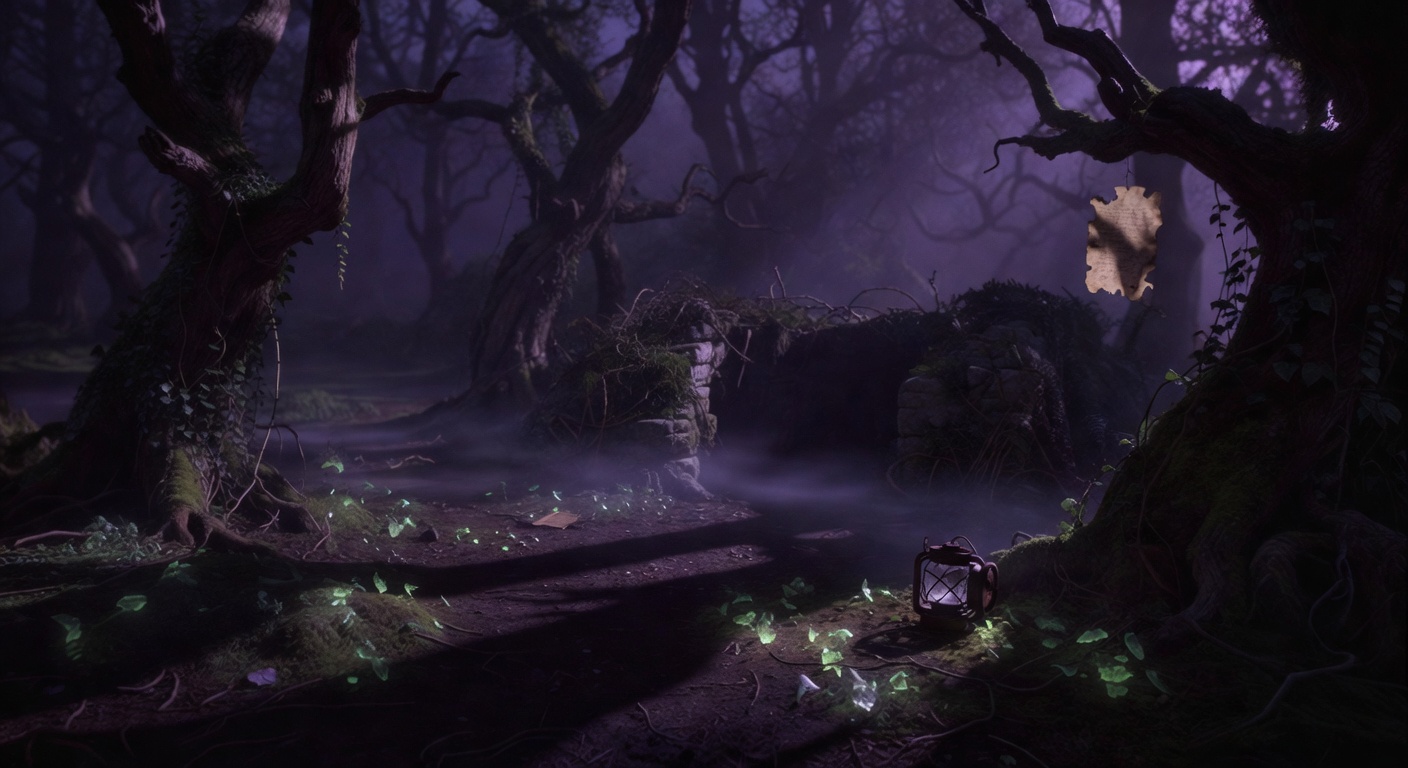
Imagine stumbling upon two children in a muddy wolf pit, their skin an unnatural shade of green, wearing clothes no one’s ever seen, speaking a language that sounds like nothing from this earth. It’s not a scene from a sci-fi flick—it’s the real-life enigma that shook the quiet village of Woolpit, Suffolk, back in the 12th century. This isn’t just a bedtime story; it’s one of history’s most baffling unsolved mysteries, whispered about by chroniclers, debated by scholars, and pondered by conspiracy realists like us. Were they fairies from a hidden realm? Victims of a nutritional curse? Or harbingers from a parallel dimension slipping through the cracks of reality? Buckle up as we dive deep into the Green Children of Woolpit, piecing together eyewitness accounts, historical context, and modern theories that might just rewrite what we think we know about our world.
The Turbulent Times of 12th-Century England: Setting the Stage
To understand the Green Children, we need to step back into the chaotic 12th century—a time when England was a powder keg of conquest, famine, and superstition. The Norman Conquest of 1066 was still fresh in living memory, with King Stephen and Empress Matilda locked in a brutal civil war known as The Anarchy (1135–1154). Villages like Woolpit—a sleepy hamlet in Suffolk, named for its wolf pits (deep traps lined with stakes to catch the predatory beasts)—were on the front lines of this turmoil. Peasants toiled under feudal lords, harvests failed, and folklore filled the gaps where science couldn’t reach.
Woolpit itself was no stranger to the weird. Its fertile fields and ancient barrows hinted at older mysteries, but around 1150, something truly bizarre happened. That’s when two chroniclers—William of Newburgh and Ralph of Coggeshall—recorded the arrival of the children. These weren’t gossipy villagers; they were respected abbots and historians, embedding the tale in Latin chronicles that survive to this day. William of Newburgh, in his Historia Rerum Anglicarum, describes it as a “wonder” amid the era’s chaos, insisting he got the story straight from eyewitnesses. No medieval tabloid spin here—these accounts feel raw, detailed, and eerily consistent.
The Astonishing Discovery: Children from the Pit
Picture this: It’s harvest time in Woolpit. Reapers are cutting wheat when panicked cries echo from a nearby wolf pit. At the bottom, huddled together, are two children—a boy and a girl, aged about 10 and 13. But these aren’t your average lost kids. Their skin gleams with a vivid green tint, like they’ve been dipped in emerald dye. They’re dressed in unfamiliar garments: hooded cloaks of an unknown fabric, seamless and strangely metallic in description. Starving and terrified, they speak no English, no French, no Latin—just a babbling tongue that baffles everyone.
The villagers, a mix of curiosity and compassion, haul them out. A local landowner, Richard de Calne, takes them into his home at Wulpet (old spelling of Woolpit). First things first: food. They reject bread, meat, cheese—everything. Then someone offers raw fava beans, still in the pod. Jackpot. They devour them ravenously, pods and all. This went on for months. The boy, weaker, sickened and died soon after. The girl thrived, her green hue fading to normal as she adapted to cooked foods. She learned English, integrated, and reportedly lived into adulthood, marrying and having kids.
But her story didn’t end there. When pressed about her origins, she spun a tale that still chills spines.
“We Come from St. Martin’s Land”: The Children’s Otherworldly Tale
Once the girl could communicate—her language turning out to resemble Flemish (a clue we’ll unpack later)—she dropped bombshells. She and her brother hailed from St. Martin’s Land, a twilight realm where the sun never fully rises or sets, bathed in perpetual dusky gloom. No churches, no bells, eternal half-light. They were herding cattle when they heard bells—church bells, she said—luring them into a cave. They followed the sound, wandering endlessly, until they emerged… into the wolf pit.
St. Martin’s Land. Dedicated to St. Martin of Tours? A Christian parallel world? Or a nod to Flemish immigrants, who revered the saint? The girl claimed everyone there looked like her—green-skinned from their diet of raw beans, the only food that grew in that shadowed place. No beasts of burden, no daylight hustle. It sounds like a fairy tale, but she described it matter-of-factly, with details too specific to invent on the spot.
Skeptics point to the Flemish angle. Suffolk had Flemish miners digging for “mart” (copper ore) in nearby Bury St. Edmunds. Maybe malnourished kids from a collapsed mine, skin green from hypochromic anemia (a condition causing pale-green skin due to iron deficiency, common in bean-heavy diets). For deeper evidence, check out this analysis from the Folklore Society, which cross-references medieval diet studies.
Eyewitness Accounts: What the Chroniclers Really Said
Let’s get evidence-forward. William of Newburgh (c. 1136–1198), writing around 1189, interviewed people connected to Richard de Calne. He notes the girl’s integration: “She was instructed in the truths of the Catholic faith, and was baptized.” Ralph of Coggeshall (d. 1227), abbot of Coggeshall Abbey (just 20 miles away), adds vivid details in his Chronicon Anglicanum: the seamless clothes, the raw bean obsession, the cave journey. Both agree on the green skin fading post-diet change.
These aren’t one-off tales. The story spread quickly—by 1220, it’s in Giraldus Cambrensis‘s works too. No major contradictions. In an age of saints’ miracles and demonic possessions, this stood out as plausible weirdness. Why? Because the girl lived among them, verifiable.
Theories That Keep Us Up at Night: Folklore, Science, or Something More?
So, what gives? Let’s pace through the big ones, from mundane to mind-bending.
The Nutritional Explanation: Science in the Shadows
Chief skeptic theory: Chlorosis or green sickness. Bean-exclusive diets lack iron, causing green pallor (historians like Brian Partridge in The Green Children of Woolpit argue this convincingly). Flemish miners in King Stephen‘s era worked grueling shifts underground, kids sometimes helping. A cave collapse traps them; bells are rescuers. They emerge green, traumatized, inventing St. Martin’s Land to cope. Plausible, evidence-based—medieval records confirm Flemish communities in Suffolk. But why the identical stories from two sources? And those clothes?
Folklore and Fairy Folk: Echoes of the Otherworld
In Celtic lore, green is the fairy color—changelings swapped for human kids. Woolpit‘s barrows scream ancient fairy mounds. The cave? A portal, like in Irish sidhe tales. The girl’s baptized normalcy fits “fairy bride” motifs. Comparative folklorist Katharine Briggs links it to global underground people legends. Compelling, but dismisses the chroniclers’ sobriety.
Parallel Dimensions and Time Slips: Conspiracy Realist Fuel
Now we crank the dial. St. Martin’s Land mirrors Hollow Earth theories or Narnia-esque realms. Modern UFOlogists (think Jacques Vallée) see it as interdimensional migrants, bells as a frequency bridge. Quantum physics toys with multiverses—could a wolf pit be a thin spot? The girl’s Flemish-like speech? A linguistic bleed from adjacent realities. Wild? Sure, but eyewitness consistency and the fading green (adapting to “our” physics?) nag at rationality.
Alien or Experiment Gone Wrong?
Tin-foil bonus: Extraterrestrials bio-engineered for low-light worlds, crash-landed via cave portal. Green skin for chlorophyll absorption? Their diet screams symbiosis. Or medieval genetic tinkering by alchemists. Low probability, high intrigue.
Modern Investigations and Lingering Questions
Fast-forward: In 2002, MonsterQuest episode “The Green Children” revisited Woolpit, interviewing locals and geologists. No cave found, but seismic anomalies hint at underground networks. Historian Paul Harris (in The Green Children of Woolpit, 1990s) tracked de Calne descendants—no family lore, but no debunk either. DNA? Impossible after 900 years.
What grips us? The story’s resilience. It inspired poems (Herbert Read‘s 1920s epic), novels, even a 1990s opera. Woolpit still hosts an annual festival—tourists flock to the pit site (now a pub garden).
Pacing it out: The evidence tilts historical, but anomalies persist. Green fading? Check. Flemish ties? Check. But a coherent otherworld narrative from a child? That’s the hook that drags us down the rabbit hole.
The Enduring Legacy: Why This Mystery Haunts Us
The Green Children of Woolpit isn’t just folklore—it’s a mirror to our fears of the unknown. In a feudal world of plagues and wars, they symbolized hope amid horror: strangers who became family. Today, amid quantum weirdness and UFO disclosures, they whisper: What if reality has trapdoors? They challenge us to question boundaries, blending history’s grit with the supernatural’s pull. Whether cave kids or cosmic wanderers, their story endures because deep down, we crave the impossible.
Down the Rabbit Hole
1. The Fairy Flags of Dunvegan: Ancient Scottish artifacts that glow green—celestial tech or fairy gifts?
2. The Solway Firth Spaceman: 1964 photo of a kid with a helmeted figure—time slip or alien photobomb?
3. Hollow Earth Expeditions: Admiral Byrd’s secret diaries and Nazi bases in Agartha.
4. The Bethlaham Lights: Ongoing UFOs over a PA town—portals mimicking medieval bells?
5. Changelings in Irish Lore: Kidnapped children returning green—parallels to Woolpit unsolved.
Disclaimer: ConspiracyRealist.com explores historical anomalies and theories for entertainment and discussion. Claims are based on primary sources and speculation; no endorsement of unverified events.