Menu

The Voynich Manuscript: An Astonishing Enigma

The Voynich Manuscript: An Astonishing Enigma

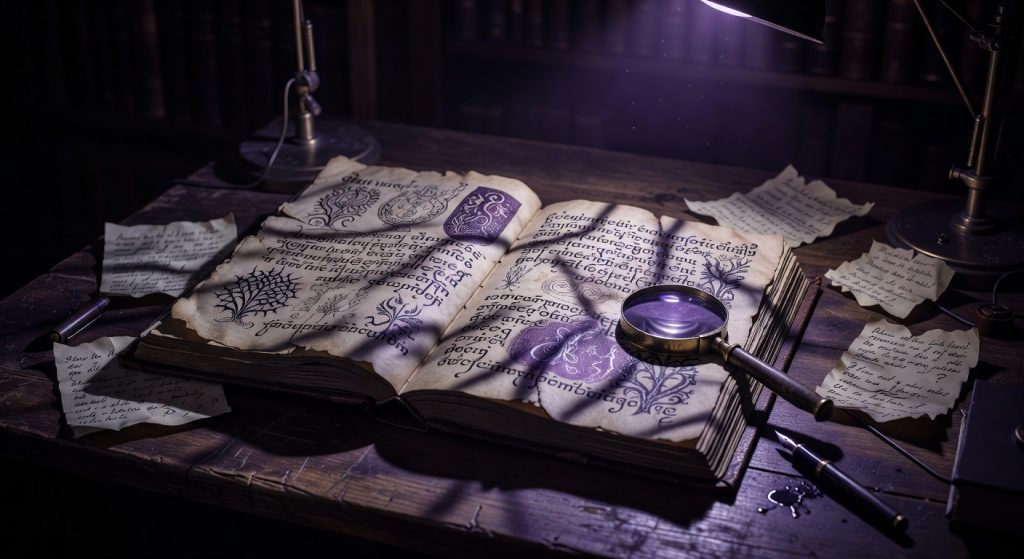
Imagine stumbling upon a book from the 1400s that’s written in a language no one can read, filled with drawings of plants that don’t exist, naked women in bizarre plumbing setups, and star charts that defy known astronomy. You’ve just tripped into the Voynich Manuscript, the world’s most infamous unsolved puzzle, locked away in Yale University‘s Beinecke Rare Book and Manuscript Library. For over a century, geniuses from Alan Turing‘s codebreakers to modern AI have thrown everything at it—and failed. Why? Because this isn’t just a book; it’s a rabbit hole that challenges everything we think we know about history, science, and hidden knowledge. Buckle up as we peel back its vellum pages, trace its shadowy path through emperors and spies, and chase the wild theories that keep conspiracy realists up at night.

A Shadowy Trail: The Manuscript’s Murky History

Picture this: It’s 1912, and Polish rare-book dealer Wilfrid Voynich is poking around a Jesuit college’s villa in Frascati, Italy. He uncovers a dusty codex hidden among forgotten tomes. Boom—the Voynich Manuscript enters the modern world. But its story doesn’t start there. Radiocarbon dating pins its creation to 1404–1438, smack in the Renaissance dawn, likely in northern Italy or maybe central Europe. The vellum? Calfskin, sourced from animals slaughtered around 1400–1430, per University of Arizona tests.

Before Voynich, the trail heats up. A 1665 letter from Prague alchemist Johannes Marcus Marci to Athanasius Kircher mentions Emperor Rudolf II owning it in the late 1500s. Rudolf, that eccentric Habsburg ruler obsessed with the occult, supposedly shelled out 600 gold ducats—think two Picassos today—for what he believed were Roger Bacon‘s 13th-century secrets. Bacon, the friar-scientist who dabbled in cryptography and early optics, fits the bill as a mythic author. Fast-forward: It passes to alchemist Georg Baresch, then vanishes into Jesuit hands until Voynich snags it.

Gaps abound. No one knows the scribe—maybe a lone genius, a secret society, or a team of illuminati precursors. In 1969, H. P. Kraus bought it for $24,500; he donated it to Yale in 1969 after failing to sell. Today, it’s MS 408, digitized online for all to obsess over. But those ownership black holes? They scream cover-up. Was it suppressed by the Church for heretical content? Smuggled from a lost civilization? The evidence is circumstantial, but the intrigue is ironclad.

Peering Inside: Structure, Script, and Surreal Illustrations

Flip open this 240-page (ish) beast—23.5 x 16.2 x 5 cm, folded quires bound in 17th-century calfskin. It’s no random scribble; the script flows left-to-right in an alphabet of 20–30 glyphs, some floral, others script-like. Stats nerds love it: Average word length 4.0 characters, no obvious grammar, yet it follows Zipf’s Law—word frequencies mimic real languages. Random hoax? Unlikely; forgers rarely ace linguistics that precisely.

Divided into six sections by ink and style shifts:

The Botanical Bounty: Alien Flora or Herbal Code?

Over 100 plants, roots twisting like fantasy art. None match known species—think blue sunflowers or pitcher plants with human teeth. Accompanied by starburst script labels. Herbalists say it’s a lost pharmacopeia; Nicholas Gibbs claimed in 2017 it’s abbreviated Latin on women’s health (debunked). Or symbolic? Yale‘s site notes parallels to Tacuinum Sanitatis, a 14th-century health manual, but twisted. For high-res scans, check Yale’s digital archive here.

Stars and Zodiac: Cosmic Blueprint?

Foldout diagrams: Sun/moon faces, 12 zodiac wheels with nude figures, pipe-like tubes connecting stars. Dates align with 15th-century skies, per astronomer Gerard Cheshire (controversial). Astrology? Sure—but the “pouring” women suggest fluid dynamics or menstrual cycles tied to heavens. Freaky.

The Biological Bathhouse: Nudes in Tubes

Most baffling: Small women bathing in green pools connected by flowing tubes, swallowing from giant forks. Balneology (bathing therapy)? Gynecology? Stephen Bax decoded a few words as plant names in 2014, hinting Semitic roots. Or plumbing for alchemical “vital fluids”?

Cosmology and Pharma: Recipes from the Void

Rosettes—maybe a map of unknown lands or organs. Starry pools, barrels. Final pages: Recipes with naked ladies? Stars? Pure enigma.

Textual Oddities: Not Your Average Gibberish

Script repeats patterns—EVA (European Voynich Alphabet) transcribes it, but entropy suggests a cipher or constructed language like Toki Pona. No punctuation, yet “paragraphs” form. AI attempts, like Greg Kondrak‘s 2018 Hebrew claim, flop under scrutiny.

Cracking the Code: A Century of Epic Fails

Since William Newbold‘s 1920s microscope lunacy (tiny letters in strokes? Nope), heavyweights have swung and missed. John Tiltman (WWII codebreaker) called it “too complex.” William Friedman‘s team—Elizebeth Friedman, Turing precursors—built Voynich boards, concluded natural language. 1970s: Robert Brumbaugh‘s partial Latin. 2010s: Stephen Bax (two words), Cheshire (proto-Romance, retracted).

Modern assaults? Multispectral scans (2014) revealed hidden signatures—Johannes de Tepenecz, Rudolf’s courtier. AI: 2018 Kondrak bot said Hebrew anagrams; 2023 Google models predict structure but no translation. Stats scream “low-entropy language”—real, but alien to us. Hoax theories? Gordon Rugg‘s 2004 grille method mimics it, but lacks nuance.

Conspiracy Fuel: Theories That Ignite the Imagination

Here’s where we go full ConspiracyRealist. Not a medieval herbal? Let’s unpack:

1. Alien/Atlantean Codex: Plants don’t exist—extraterrestrial botany? Erich von Däniken vibes. Tubes = tech diagrams?

2. Holy Grail/Alchemical Opus: Rudolf’s buy screams Magnum Opus. Women = Sophia (divine feminine), plants = philosopher’s stone ingredients.

3. Female Health Manual by Hildegard von Bingen: Nudes match her visions, script her Lingua Ignota. Suppressed misogyny?

4. Hoax by Voynich or Earlier: But carbon dating predates him. Edward Kelley, Dee’s scryer, forged for Rudolf?

5. Lost Language of Cathars/Gnostics: Heretical code, Inquisition wipeout.

Evidence tilts real: Statistical rigor, artistic skill (multiple hands?), no anachronisms. Yet undeciphered after cryptanalysts’ best? Smells like deliberate uncrackability.

Deep dive the stats: 170,000 characters, 8,000+ unique words. Entropy 2–3 bits/char (English: 1–1.5). Per Diego Amancio‘s network analysis (2013), complexity rivals Luigi Sacco‘s WWI cipher—breakable, yet isn’t. Why? Maybe needs a key, lost with the empire.

Cultural ripple: Inspired Umberto Eco‘s Foucault’s Pendulum, Dan Brown plots. Beinecke guards it like Fort Knox—public scans, no touching.

We’ve traced emperors, baffled NSA-level minds, ogled impossible plants. The Voynich Manuscript isn’t just unsolved; it’s a mirror to our limits. Does it hold cures, star maps to Nibiru, or proof we’re not alone? Or a genius troll on eternity? One thing’s sure: In a world of fake news, its authenticity endures. Keep digging—the next decode could rewrite history. What’s your theory? Drop it in comments.

Down the Rabbit Hole

  • The Beale Ciphers: Buried treasure codes unsolved since 1885—linked to Masonic secrets?
  • The Mithras Cipher: Roman cult’s star maps mirroring Voynich zodiacs.
  • Hildegard von Bingen’s Visions: Mystic nun’s herbal code as Voynich precursor.
  • Rudolf II’s Occult Court: Emperor’s alchemists and the Prague magical underground.
  • AI vs. Ancient Ciphers: How modern tech fails medieval enigmas like the Rohonc Codex.

Disclaimer: This article explores historical theories and speculation for entertainment and education. No claims are proven; always cross-reference primary sources like Yale’s Beinecke Library.

dive down the rabbit hole

The Voynich Manuscript: An Astonishing Enigma

S-FX.com
The Voynich Manuscript: An Astonishing Enigma

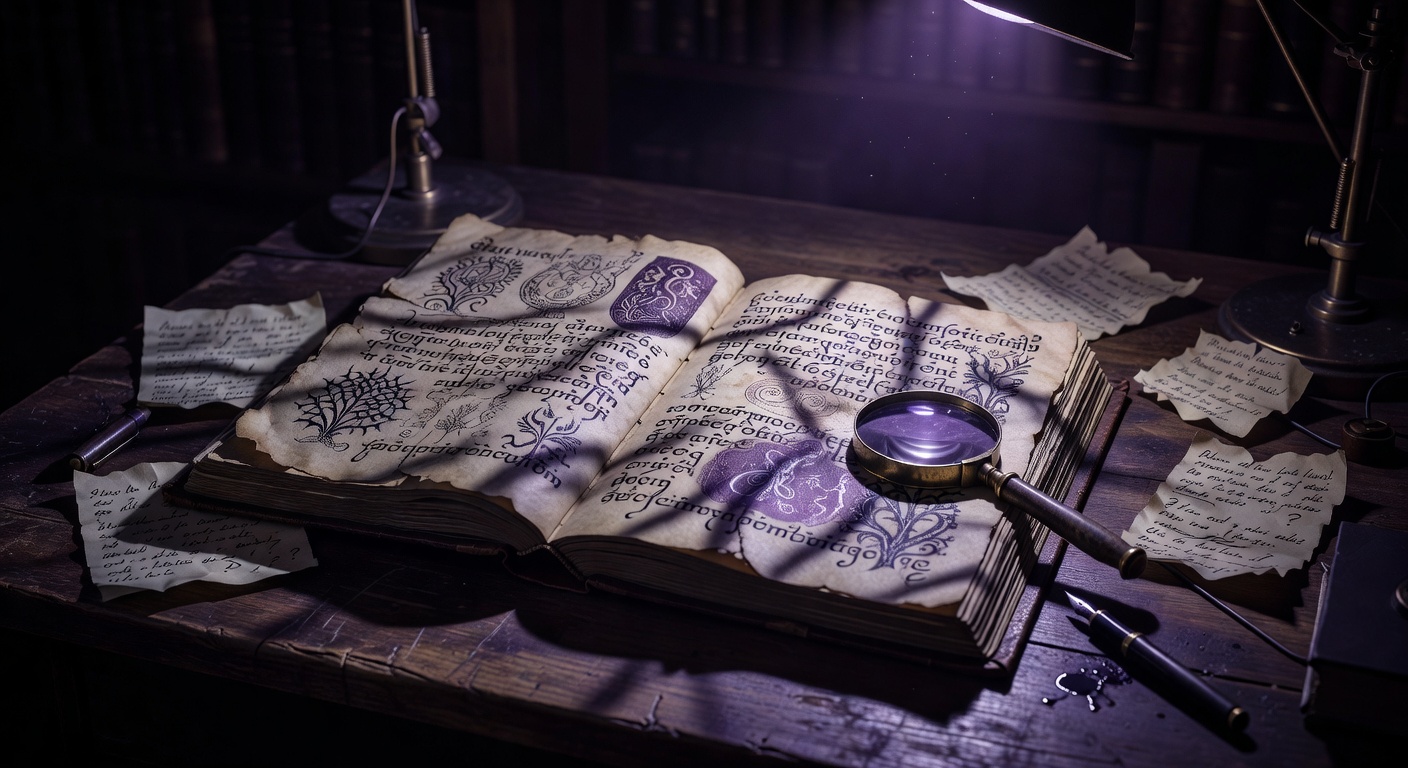
Imagine stumbling upon a book from the 1400s that’s written in a language no one can read, filled with drawings of plants that don’t exist, naked women in bizarre plumbing setups, and star charts that defy known astronomy. You’ve just tripped into the Voynich Manuscript, the world’s most infamous unsolved puzzle, locked away in Yale University‘s Beinecke Rare Book and Manuscript Library. For over a century, geniuses from Alan Turing‘s codebreakers to modern AI have thrown everything at it—and failed. Why? Because this isn’t just a book; it’s a rabbit hole that challenges everything we think we know about history, science, and hidden knowledge. Buckle up as we peel back its vellum pages, trace its shadowy path through emperors and spies, and chase the wild theories that keep conspiracy realists up at night.

A Shadowy Trail: The Manuscript’s Murky History

Picture this: It’s 1912, and Polish rare-book dealer Wilfrid Voynich is poking around a Jesuit college’s villa in Frascati, Italy. He uncovers a dusty codex hidden among forgotten tomes. Boom—the Voynich Manuscript enters the modern world. But its story doesn’t start there. Radiocarbon dating pins its creation to 1404–1438, smack in the Renaissance dawn, likely in northern Italy or maybe central Europe. The vellum? Calfskin, sourced from animals slaughtered around 1400–1430, per University of Arizona tests.

Before Voynich, the trail heats up. A 1665 letter from Prague alchemist Johannes Marcus Marci to Athanasius Kircher mentions Emperor Rudolf II owning it in the late 1500s. Rudolf, that eccentric Habsburg ruler obsessed with the occult, supposedly shelled out 600 gold ducats—think two Picassos today—for what he believed were Roger Bacon‘s 13th-century secrets. Bacon, the friar-scientist who dabbled in cryptography and early optics, fits the bill as a mythic author. Fast-forward: It passes to alchemist Georg Baresch, then vanishes into Jesuit hands until Voynich snags it.

Gaps abound. No one knows the scribe—maybe a lone genius, a secret society, or a team of illuminati precursors. In 1969, H. P. Kraus bought it for $24,500; he donated it to Yale in 1969 after failing to sell. Today, it’s MS 408, digitized online for all to obsess over. But those ownership black holes? They scream cover-up. Was it suppressed by the Church for heretical content? Smuggled from a lost civilization? The evidence is circumstantial, but the intrigue is ironclad.

Peering Inside: Structure, Script, and Surreal Illustrations

Flip open this 240-page (ish) beast—23.5 x 16.2 x 5 cm, folded quires bound in 17th-century calfskin. It’s no random scribble; the script flows left-to-right in an alphabet of 20–30 glyphs, some floral, others script-like. Stats nerds love it: Average word length 4.0 characters, no obvious grammar, yet it follows Zipf’s Law—word frequencies mimic real languages. Random hoax? Unlikely; forgers rarely ace linguistics that precisely.

Divided into six sections by ink and style shifts:

The Botanical Bounty: Alien Flora or Herbal Code?

Over 100 plants, roots twisting like fantasy art. None match known species—think blue sunflowers or pitcher plants with human teeth. Accompanied by starburst script labels. Herbalists say it’s a lost pharmacopeia; Nicholas Gibbs claimed in 2017 it’s abbreviated Latin on women’s health (debunked). Or symbolic? Yale‘s site notes parallels to Tacuinum Sanitatis, a 14th-century health manual, but twisted. For high-res scans, check Yale’s digital archive here.

Stars and Zodiac: Cosmic Blueprint?

Foldout diagrams: Sun/moon faces, 12 zodiac wheels with nude figures, pipe-like tubes connecting stars. Dates align with 15th-century skies, per astronomer Gerard Cheshire (controversial). Astrology? Sure—but the “pouring” women suggest fluid dynamics or menstrual cycles tied to heavens. Freaky.

The Biological Bathhouse: Nudes in Tubes

Most baffling: Small women bathing in green pools connected by flowing tubes, swallowing from giant forks. Balneology (bathing therapy)? Gynecology? Stephen Bax decoded a few words as plant names in 2014, hinting Semitic roots. Or plumbing for alchemical “vital fluids”?

Cosmology and Pharma: Recipes from the Void

Rosettes—maybe a map of unknown lands or organs. Starry pools, barrels. Final pages: Recipes with naked ladies? Stars? Pure enigma.

Textual Oddities: Not Your Average Gibberish

Script repeats patterns—EVA (European Voynich Alphabet) transcribes it, but entropy suggests a cipher or constructed language like Toki Pona. No punctuation, yet “paragraphs” form. AI attempts, like Greg Kondrak‘s 2018 Hebrew claim, flop under scrutiny.

Cracking the Code: A Century of Epic Fails

Since William Newbold‘s 1920s microscope lunacy (tiny letters in strokes? Nope), heavyweights have swung and missed. John Tiltman (WWII codebreaker) called it “too complex.” William Friedman‘s team—Elizebeth Friedman, Turing precursors—built Voynich boards, concluded natural language. 1970s: Robert Brumbaugh‘s partial Latin. 2010s: Stephen Bax (two words), Cheshire (proto-Romance, retracted).

Modern assaults? Multispectral scans (2014) revealed hidden signatures—Johannes de Tepenecz, Rudolf’s courtier. AI: 2018 Kondrak bot said Hebrew anagrams; 2023 Google models predict structure but no translation. Stats scream “low-entropy language”—real, but alien to us. Hoax theories? Gordon Rugg‘s 2004 grille method mimics it, but lacks nuance.

Conspiracy Fuel: Theories That Ignite the Imagination

Here’s where we go full ConspiracyRealist. Not a medieval herbal? Let’s unpack:

1. Alien/Atlantean Codex: Plants don’t exist—extraterrestrial botany? Erich von Däniken vibes. Tubes = tech diagrams?

2. Holy Grail/Alchemical Opus: Rudolf’s buy screams Magnum Opus. Women = Sophia (divine feminine), plants = philosopher’s stone ingredients.

3. Female Health Manual by Hildegard von Bingen: Nudes match her visions, script her Lingua Ignota. Suppressed misogyny?

4. Hoax by Voynich or Earlier: But carbon dating predates him. Edward Kelley, Dee’s scryer, forged for Rudolf?

5. Lost Language of Cathars/Gnostics: Heretical code, Inquisition wipeout.

Evidence tilts real: Statistical rigor, artistic skill (multiple hands?), no anachronisms. Yet undeciphered after cryptanalysts’ best? Smells like deliberate uncrackability.

Deep dive the stats: 170,000 characters, 8,000+ unique words. Entropy 2–3 bits/char (English: 1–1.5). Per Diego Amancio‘s network analysis (2013), complexity rivals Luigi Sacco‘s WWI cipher—breakable, yet isn’t. Why? Maybe needs a key, lost with the empire.

Cultural ripple: Inspired Umberto Eco‘s Foucault’s Pendulum, Dan Brown plots. Beinecke guards it like Fort Knox—public scans, no touching.

We’ve traced emperors, baffled NSA-level minds, ogled impossible plants. The Voynich Manuscript isn’t just unsolved; it’s a mirror to our limits. Does it hold cures, star maps to Nibiru, or proof we’re not alone? Or a genius troll on eternity? One thing’s sure: In a world of fake news, its authenticity endures. Keep digging—the next decode could rewrite history. What’s your theory? Drop it in comments.

Down the Rabbit Hole

  • The Beale Ciphers: Buried treasure codes unsolved since 1885—linked to Masonic secrets?
  • The Mithras Cipher: Roman cult’s star maps mirroring Voynich zodiacs.
  • Hildegard von Bingen’s Visions: Mystic nun’s herbal code as Voynich precursor.
  • Rudolf II’s Occult Court: Emperor’s alchemists and the Prague magical underground.
  • AI vs. Ancient Ciphers: How modern tech fails medieval enigmas like the Rohonc Codex.

Disclaimer: This article explores historical theories and speculation for entertainment and education. No claims are proven; always cross-reference primary sources like Yale’s Beinecke Library.

The Voynich Manuscript: An Astonishing Enigma

The Voynich Manuscript: An Astonishing Enigma

Imagine stumbling upon a book from the 1400s that’s written in a language no one can read, filled with drawings of plants that don’t exist, naked women in bizarre plumbing setups, and star charts that defy known astronomy. You’ve just tripped into the Voynich Manuscript, the world’s most infamous unsolved puzzle, locked away in Yale University‘s Beinecke Rare Book and Manuscript Library. For over a century, geniuses from Alan Turing‘s codebreakers to modern AI have thrown everything at it—and failed. Why? Because this isn’t just a book; it’s a rabbit hole that challenges everything we think we know about history, science, and hidden knowledge. Buckle up as we peel back its vellum pages, trace its shadowy path through emperors and spies, and chase the wild theories that keep conspiracy realists up at night.

A Shadowy Trail: The Manuscript’s Murky History

Picture this: It’s 1912, and Polish rare-book dealer Wilfrid Voynich is poking around a Jesuit college’s villa in Frascati, Italy. He uncovers a dusty codex hidden among forgotten tomes. Boom—the Voynich Manuscript enters the modern world. But its story doesn’t start there. Radiocarbon dating pins its creation to 1404–1438, smack in the Renaissance dawn, likely in northern Italy or maybe central Europe. The vellum? Calfskin, sourced from animals slaughtered around 1400–1430, per University of Arizona tests.

Before Voynich, the trail heats up. A 1665 letter from Prague alchemist Johannes Marcus Marci to Athanasius Kircher mentions Emperor Rudolf II owning it in the late 1500s. Rudolf, that eccentric Habsburg ruler obsessed with the occult, supposedly shelled out 600 gold ducats—think two Picassos today—for what he believed were Roger Bacon‘s 13th-century secrets. Bacon, the friar-scientist who dabbled in cryptography and early optics, fits the bill as a mythic author. Fast-forward: It passes to alchemist Georg Baresch, then vanishes into Jesuit hands until Voynich snags it.

Gaps abound. No one knows the scribe—maybe a lone genius, a secret society, or a team of illuminati precursors. In 1969, H. P. Kraus bought it for $24,500; he donated it to Yale in 1969 after failing to sell. Today, it’s MS 408, digitized online for all to obsess over. But those ownership black holes? They scream cover-up. Was it suppressed by the Church for heretical content? Smuggled from a lost civilization? The evidence is circumstantial, but the intrigue is ironclad.

Peering Inside: Structure, Script, and Surreal Illustrations

Flip open this 240-page (ish) beast—23.5 x 16.2 x 5 cm, folded quires bound in 17th-century calfskin. It’s no random scribble; the script flows left-to-right in an alphabet of 20–30 glyphs, some floral, others script-like. Stats nerds love it: Average word length 4.0 characters, no obvious grammar, yet it follows Zipf’s Law—word frequencies mimic real languages. Random hoax? Unlikely; forgers rarely ace linguistics that precisely.

Divided into six sections by ink and style shifts:

The Botanical Bounty: Alien Flora or Herbal Code?

Over 100 plants, roots twisting like fantasy art. None match known species—think blue sunflowers or pitcher plants with human teeth. Accompanied by starburst script labels. Herbalists say it’s a lost pharmacopeia; Nicholas Gibbs claimed in 2017 it’s abbreviated Latin on women’s health (debunked). Or symbolic? Yale‘s site notes parallels to Tacuinum Sanitatis, a 14th-century health manual, but twisted. For high-res scans, check Yale’s digital archive here.

Stars and Zodiac: Cosmic Blueprint?

Foldout diagrams: Sun/moon faces, 12 zodiac wheels with nude figures, pipe-like tubes connecting stars. Dates align with 15th-century skies, per astronomer Gerard Cheshire (controversial). Astrology? Sure—but the “pouring” women suggest fluid dynamics or menstrual cycles tied to heavens. Freaky.

The Biological Bathhouse: Nudes in Tubes

Most baffling: Small women bathing in green pools connected by flowing tubes, swallowing from giant forks. Balneology (bathing therapy)? Gynecology? Stephen Bax decoded a few words as plant names in 2014, hinting Semitic roots. Or plumbing for alchemical “vital fluids”?

Cosmology and Pharma: Recipes from the Void

Rosettes—maybe a map of unknown lands or organs. Starry pools, barrels. Final pages: Recipes with naked ladies? Stars? Pure enigma.

Textual Oddities: Not Your Average Gibberish

Script repeats patterns—EVA (European Voynich Alphabet) transcribes it, but entropy suggests a cipher or constructed language like Toki Pona. No punctuation, yet “paragraphs” form. AI attempts, like Greg Kondrak‘s 2018 Hebrew claim, flop under scrutiny.

Cracking the Code: A Century of Epic Fails

Since William Newbold‘s 1920s microscope lunacy (tiny letters in strokes? Nope), heavyweights have swung and missed. John Tiltman (WWII codebreaker) called it “too complex.” William Friedman‘s team—Elizebeth Friedman, Turing precursors—built Voynich boards, concluded natural language. 1970s: Robert Brumbaugh‘s partial Latin. 2010s: Stephen Bax (two words), Cheshire (proto-Romance, retracted).

Modern assaults? Multispectral scans (2014) revealed hidden signatures—Johannes de Tepenecz, Rudolf’s courtier. AI: 2018 Kondrak bot said Hebrew anagrams; 2023 Google models predict structure but no translation. Stats scream “low-entropy language”—real, but alien to us. Hoax theories? Gordon Rugg‘s 2004 grille method mimics it, but lacks nuance.

Conspiracy Fuel: Theories That Ignite the Imagination

Here’s where we go full ConspiracyRealist. Not a medieval herbal? Let’s unpack:

1. Alien/Atlantean Codex: Plants don’t exist—extraterrestrial botany? Erich von Däniken vibes. Tubes = tech diagrams?

2. Holy Grail/Alchemical Opus: Rudolf’s buy screams Magnum Opus. Women = Sophia (divine feminine), plants = philosopher’s stone ingredients.

3. Female Health Manual by Hildegard von Bingen: Nudes match her visions, script her Lingua Ignota. Suppressed misogyny?

4. Hoax by Voynich or Earlier: But carbon dating predates him. Edward Kelley, Dee’s scryer, forged for Rudolf?

5. Lost Language of Cathars/Gnostics: Heretical code, Inquisition wipeout.

Evidence tilts real: Statistical rigor, artistic skill (multiple hands?), no anachronisms. Yet undeciphered after cryptanalysts’ best? Smells like deliberate uncrackability.

Deep dive the stats: 170,000 characters, 8,000+ unique words. Entropy 2–3 bits/char (English: 1–1.5). Per Diego Amancio‘s network analysis (2013), complexity rivals Luigi Sacco‘s WWI cipher—breakable, yet isn’t. Why? Maybe needs a key, lost with the empire.

Cultural ripple: Inspired Umberto Eco‘s Foucault’s Pendulum, Dan Brown plots. Beinecke guards it like Fort Knox—public scans, no touching.

We’ve traced emperors, baffled NSA-level minds, ogled impossible plants. The Voynich Manuscript isn’t just unsolved; it’s a mirror to our limits. Does it hold cures, star maps to Nibiru, or proof we’re not alone? Or a genius troll on eternity? One thing’s sure: In a world of fake news, its authenticity endures. Keep digging—the next decode could rewrite history. What’s your theory? Drop it in comments.

Down the Rabbit Hole

  • The Beale Ciphers: Buried treasure codes unsolved since 1885—linked to Masonic secrets?
  • The Mithras Cipher: Roman cult’s star maps mirroring Voynich zodiacs.
  • Hildegard von Bingen’s Visions: Mystic nun’s herbal code as Voynich precursor.
  • Rudolf II’s Occult Court: Emperor’s alchemists and the Prague magical underground.
  • AI vs. Ancient Ciphers: How modern tech fails medieval enigmas like the Rohonc Codex.

Disclaimer: This article explores historical theories and speculation for entertainment and education. No claims are proven; always cross-reference primary sources like Yale’s Beinecke Library.

Table of contents