Opens in a new tab
Menu

Nazca Lines

Nazca Lines
Nazca Lines

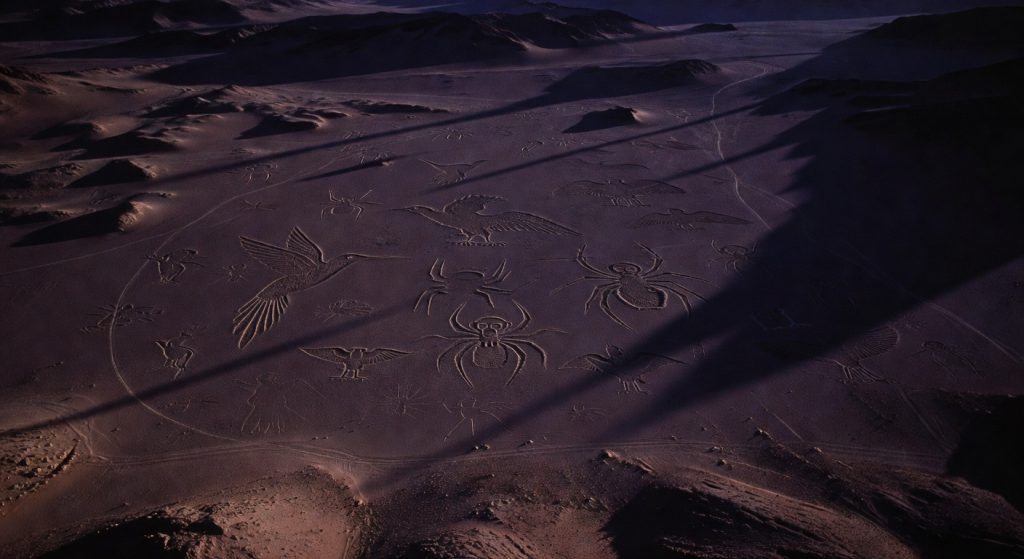
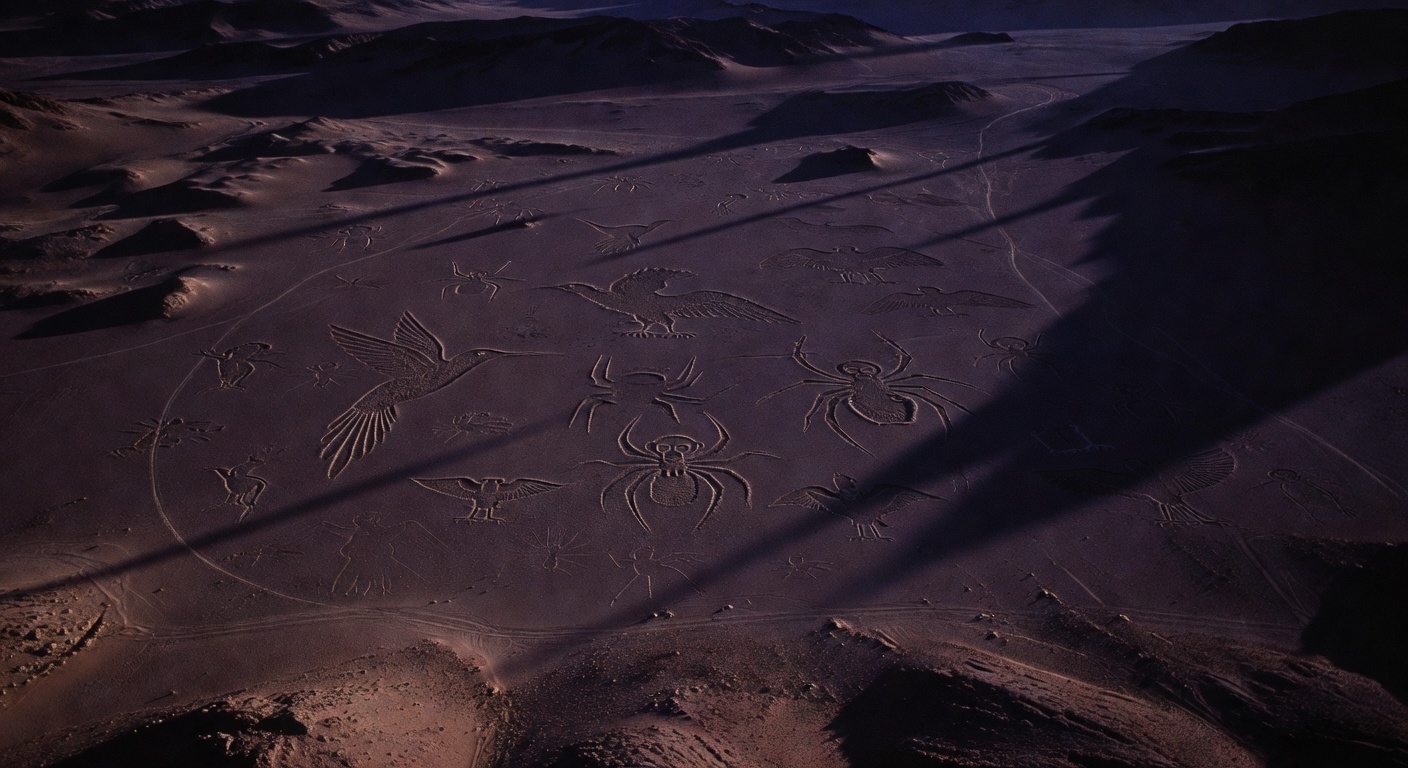
Imagine you’re hovering thousands of feet above the bone-dry Nazca Desert in southern Peru, the wind whipping past as you gaze down at colossal figures scratched into the earth—hummingbirds the size of football fields, spiders with legs spanning city blocks, and spiraling geometric patterns that seem to pulse with otherworldly intent. These aren’t doodles from bored giants; they’re the Nazca Lines, a collection of over 800 geoglyphs created between 500 BCE and 500 CE by the ingenious Nazca culture. But here’s the hook that keeps me up at night: how did a pre-Inca society, without planes or GPS, craft designs so precise they’re only fully visible from the sky? Were they signaling to gods… or something far stranger? Buckle up, truth-seekers— we’re about to peel back layers of dust, dogma, and downright bizarre theories on one of archaeology’s greatest riddles.

The Nazca Culture: Masters of the Desert

Let’s start at the ground level—literally. The Nazca people weren’t some primitive nomads scratching stick figures. Flourishing from roughly 100 BCE to 800 CE in what’s now the Ica and Nazca regions of Peru, they were agricultural wizards in one of the harshest environments on Earth. Picture this: a coastal desert where rain might fall once a decade, yet these folks engineered puquios—underground aqueducts that tapped aquifers, channeling life-giving water through spiral tunnels still in use today. Their pottery? Jaw-dropping ceramics painted with vivid scenes of warriors, mythical beings, and decapitation rituals that hint at a society obsessed with fertility, violence, and the supernatural.

Archaeologist Johan Reinhard, in his seminal work The Nazca Lines: A New Perspective, argues these lines weren’t random art but tied to the Nazca’s water-centric worldview. Check out Reinhard’s insights here for a deep dive. Evidence from excavations at sites like Cahuachi, their ceremonial capital—a sprawling complex of adobe pyramids—shows ritual pilgrimages where elites walked these lines in trance-like states, perhaps invoking rain gods like Viracocha. Carbon dating of wooden stakes found along the lines confirms construction in phases, with some trapezoids (those massive arrowhead shapes) aligned to summer solstices. But why? The official line says ritual pathways. I say… keep reading.

Crafting Giants in the Sand: How They Did It

Skeptics love to downplay the tech angle, but let’s talk engineering. Each line was made by scraping away 10-15 inches of the desert’s oxidized pebble layer, exposing stark white subsoil. Simple? Sure, if you’re drawing a smiley face. Try a 1,000-foot condor with beak-perfect symmetry on a wind-swept plateau, using only ropes, stakes, and human feet. Experiments by Maria Reiche, the German mathematician who devoted decades to the lines (mapping over 300 herself), proved it feasible: teams of workers, sighting poles, and gradual enlargement from small-scale models. Reiche’s book Mystery of the Desert details how straight lines stretch miles without deviation—some over 30 kilometers—achieved via A-frame levels and tensioned cords.

Yet, anomalies nag. Wooden stakes embedded in remote lines date to 200 BCE, predating the culture’s peak. And those “new” discoveries? In 2020, drones revealed 168 previously unknown geoglyphs near Huaca del Lazo, including killer whales and humans, suggesting ongoing activity or multiple creators. Pacing the lines on foot feels surreal—their shallowness means they’re preserved by hyper-arid conditions (less than 5mm rain/year) and morning fog. But visibility? Ground-dwellers see scraps; full form demands altitude. Coincidence?

Iconic Figures: Zooming In on the Stars of the Show

Over 13,000 lines, 70 biomorphs, and 800+ shapes sprawl across 500 square kilometers. Let’s meet the rock stars:

The Hummingbird: Tiny Bird, Massive Message

At 93 meters wing-to-tail, this delicate dart zips eternally across the pampa. Its precise beak and eye suggest deep avian lore—hummingbirds symbolized fertility in Andean myths, pollinators bridging earth and sky.

The Monkey: Playful Yet Puzzling

This 110-meter prankster curls a tail around a spiral, sporting exaggerated digits. Found damaged by modern tires (thanks, off-roaders), it evokes shamanic visions—monkeys as trickster spirits in Amazonian lore, far from Nazca’s desert home.

The Spider: Web of Intrigue

150 feet of spindly menace, legs splayed in hydraulic perfection. Entomologists note its resemblance to the Criphia boliviensis spider, linked to groundwater in local lore. Hydrologist David Johnson theorizes these arachnid paths funneled fog-trapped water to roots—walkable aqueducts etched in art.

The Condor and Killer Whale: Apex Predators from Above

The 440-foot condor soars with ritual precision, while new finds like 13-meter orcas (complete with “victims”) scream shamanic hunt magic. Geometric trapezoids? Landing strips? Runways for gods—or extraterrestrials?

These aren’t sloppy; they’re geometric marvels, some converging on sacred huacas (shrines). Drone surveys by Yamagata University‘s Masato Sakai team (ongoing since 2009) use AI to map alignments, revealing patterns invisible to the eye.

Mainstream Theories: Rituals, Water, and the Stars

Archaeologists like Anthony Aveni (author of The Nazca Lines) push the ritual walk theory: lines as sacred paths trod during Chakana ceremonies, aligning with solstices and constellations like the Pleiades for planting cues. Water is key—puquio systems mirror trapezoid shapes, suggesting hydrology. Pollen from line-adjacent altars shows coca and chili offerings, backing pilgrimage sites. Aveni’s work, blending ethnoastronomy, shows 20% of lines hit sunrise points—practical for farmers tracking seasons.

Critics? The lines’ scale defies easy walking (some paths cross figures), and why so many sky-visible only? Enter the fringes…

The Wild Side: Aliens, Runways, and Lost Civilizations

You knew it was coming. Erich von Däniken‘s 1968 bombshell Chariots of the Gods? branded them alien landing strips—too perfect for human eyes, visible only to “gods from the sky.” Trapezoids as beacons? Spirals mimicking UFOs? Swiss teacher Maria Reiche initially scoffed but later warmed to astronomical maps, calculating Orion alignments. Skeptics counter: no metallurgy in Nazca digs rules out advanced tech.

Deeper rabbit holes: Were they ley lines, geomagnetic energy conduits? Dowsers claim elevated readings. Or acoustic amplifiers? Tests show some figures resonate at 111 Hz—brainwave frequencies for altered states. Jim Woodmann‘s 1970s balloon experiment proved hot-air flight possible with reed craft (Nazca wove massive ones), suggesting aerial surveying. CIA declass docs from the 1950s even speculated on “unknown aircraft” over Peru—coincidence?

Recent twists: 2023 lidar scans hint buried structures beneath lines, fueling Atlantis-style megastructure theories. And those trophy heads? 500+ ceramic depictions of severed skulls suggest ritual warfare—lines as victory maps?

Controversies and Modern Threats

Not all mysteries are ancient. UNESCO-listed since 1994, the lines face bulldozers, trucks, and even a 2014 Qatar 2022 promo stunt that scarred a figure. Peruvian government drones now patrol, but illicit mining encroaches. Reiche battled looters till her death in 1998; today’s fight is digital—AI fakes muddy discoveries.

Why They Still Haunt Us

The Nazca Lines endure because they mock our certainties. Ritual paths? Sure. But their aerial majesty whispers of forgotten skies—pilgrims invoking rain, or ancients charting stars with impossible finesse? Evidence tilts ritual, but anomalies (perfect curves, solstice locks, new cat geoglyphs unearthed in 2021) keep doors ajar. Fly over today via Aeroparacas tours; stare long enough, and the desert stares back.

In a world of CGI illusions, Nazca’s permanence—etched for 2,000 years—demands awe. They’re not just lines; they’re a challenge: What truths did we forget?

Down the Rabbit Hole

1. The Antikythera Mechanism: Ancient Greek “computer”—Nazca-level precision or alien gift?

2. Göbekli Tepe: 12,000-year-old Turkish temple complex—rewriting civilization timelines.

3. Piri Reis Map: 1513 chart showing Antarctica ice-free—lost knowledge or hoax?

4. Baghdad Battery: Parthian “cells”—ancient electricity in the cradle of tech?

5. Voynich Manuscript: Indecipherable medieval tome—code for Nazca-style secrets?

Disclaimer: This article explores historical theories and speculation for entertainment and education. Claims are not endorsed as fact; consult peer-reviewed sources for verified info. ConspiracyRealist.com investigates—decide for yourself.

Related Reads

dive down the rabbit hole

Nazca Lines

S-FX.com
Nazca Lines

Imagine you’re hovering thousands of feet above the bone-dry Nazca Desert in southern Peru, the wind whipping past as you gaze down at colossal figures scratched into the earth—hummingbirds the size of football fields, spiders with legs spanning city blocks, and spiraling geometric patterns that seem to pulse with otherworldly intent. These aren’t doodles from bored giants; they’re the Nazca Lines, a collection of over 800 geoglyphs created between 500 BCE and 500 CE by the ingenious Nazca culture. But here’s the hook that keeps me up at night: how did a pre-Inca society, without planes or GPS, craft designs so precise they’re only fully visible from the sky? Were they signaling to gods… or something far stranger? Buckle up, truth-seekers— we’re about to peel back layers of dust, dogma, and downright bizarre theories on one of archaeology’s greatest riddles.

The Nazca Culture: Masters of the Desert

Let’s start at the ground level—literally. The Nazca people weren’t some primitive nomads scratching stick figures. Flourishing from roughly 100 BCE to 800 CE in what’s now the Ica and Nazca regions of Peru, they were agricultural wizards in one of the harshest environments on Earth. Picture this: a coastal desert where rain might fall once a decade, yet these folks engineered puquios—underground aqueducts that tapped aquifers, channeling life-giving water through spiral tunnels still in use today. Their pottery? Jaw-dropping ceramics painted with vivid scenes of warriors, mythical beings, and decapitation rituals that hint at a society obsessed with fertility, violence, and the supernatural.

Archaeologist Johan Reinhard, in his seminal work The Nazca Lines: A New Perspective, argues these lines weren’t random art but tied to the Nazca’s water-centric worldview. Check out Reinhard’s insights here for a deep dive. Evidence from excavations at sites like Cahuachi, their ceremonial capital—a sprawling complex of adobe pyramids—shows ritual pilgrimages where elites walked these lines in trance-like states, perhaps invoking rain gods like Viracocha. Carbon dating of wooden stakes found along the lines confirms construction in phases, with some trapezoids (those massive arrowhead shapes) aligned to summer solstices. But why? The official line says ritual pathways. I say… keep reading.

Crafting Giants in the Sand: How They Did It

Skeptics love to downplay the tech angle, but let’s talk engineering. Each line was made by scraping away 10-15 inches of the desert’s oxidized pebble layer, exposing stark white subsoil. Simple? Sure, if you’re drawing a smiley face. Try a 1,000-foot condor with beak-perfect symmetry on a wind-swept plateau, using only ropes, stakes, and human feet. Experiments by Maria Reiche, the German mathematician who devoted decades to the lines (mapping over 300 herself), proved it feasible: teams of workers, sighting poles, and gradual enlargement from small-scale models. Reiche’s book Mystery of the Desert details how straight lines stretch miles without deviation—some over 30 kilometers—achieved via A-frame levels and tensioned cords.

Yet, anomalies nag. Wooden stakes embedded in remote lines date to 200 BCE, predating the culture’s peak. And those “new” discoveries? In 2020, drones revealed 168 previously unknown geoglyphs near Huaca del Lazo, including killer whales and humans, suggesting ongoing activity or multiple creators. Pacing the lines on foot feels surreal—their shallowness means they’re preserved by hyper-arid conditions (less than 5mm rain/year) and morning fog. But visibility? Ground-dwellers see scraps; full form demands altitude. Coincidence?

Iconic Figures: Zooming In on the Stars of the Show

Over 13,000 lines, 70 biomorphs, and 800+ shapes sprawl across 500 square kilometers. Let’s meet the rock stars:

The Hummingbird: Tiny Bird, Massive Message

At 93 meters wing-to-tail, this delicate dart zips eternally across the pampa. Its precise beak and eye suggest deep avian lore—hummingbirds symbolized fertility in Andean myths, pollinators bridging earth and sky.

The Monkey: Playful Yet Puzzling

This 110-meter prankster curls a tail around a spiral, sporting exaggerated digits. Found damaged by modern tires (thanks, off-roaders), it evokes shamanic visions—monkeys as trickster spirits in Amazonian lore, far from Nazca’s desert home.

The Spider: Web of Intrigue

150 feet of spindly menace, legs splayed in hydraulic perfection. Entomologists note its resemblance to the Criphia boliviensis spider, linked to groundwater in local lore. Hydrologist David Johnson theorizes these arachnid paths funneled fog-trapped water to roots—walkable aqueducts etched in art.

The Condor and Killer Whale: Apex Predators from Above

The 440-foot condor soars with ritual precision, while new finds like 13-meter orcas (complete with “victims”) scream shamanic hunt magic. Geometric trapezoids? Landing strips? Runways for gods—or extraterrestrials?

These aren’t sloppy; they’re geometric marvels, some converging on sacred huacas (shrines). Drone surveys by Yamagata University‘s Masato Sakai team (ongoing since 2009) use AI to map alignments, revealing patterns invisible to the eye.

Mainstream Theories: Rituals, Water, and the Stars

Archaeologists like Anthony Aveni (author of The Nazca Lines) push the ritual walk theory: lines as sacred paths trod during Chakana ceremonies, aligning with solstices and constellations like the Pleiades for planting cues. Water is key—puquio systems mirror trapezoid shapes, suggesting hydrology. Pollen from line-adjacent altars shows coca and chili offerings, backing pilgrimage sites. Aveni’s work, blending ethnoastronomy, shows 20% of lines hit sunrise points—practical for farmers tracking seasons.

Critics? The lines’ scale defies easy walking (some paths cross figures), and why so many sky-visible only? Enter the fringes…

The Wild Side: Aliens, Runways, and Lost Civilizations

You knew it was coming. Erich von Däniken‘s 1968 bombshell Chariots of the Gods? branded them alien landing strips—too perfect for human eyes, visible only to “gods from the sky.” Trapezoids as beacons? Spirals mimicking UFOs? Swiss teacher Maria Reiche initially scoffed but later warmed to astronomical maps, calculating Orion alignments. Skeptics counter: no metallurgy in Nazca digs rules out advanced tech.

Deeper rabbit holes: Were they ley lines, geomagnetic energy conduits? Dowsers claim elevated readings. Or acoustic amplifiers? Tests show some figures resonate at 111 Hz—brainwave frequencies for altered states. Jim Woodmann‘s 1970s balloon experiment proved hot-air flight possible with reed craft (Nazca wove massive ones), suggesting aerial surveying. CIA declass docs from the 1950s even speculated on “unknown aircraft” over Peru—coincidence?

Recent twists: 2023 lidar scans hint buried structures beneath lines, fueling Atlantis-style megastructure theories. And those trophy heads? 500+ ceramic depictions of severed skulls suggest ritual warfare—lines as victory maps?

Controversies and Modern Threats

Not all mysteries are ancient. UNESCO-listed since 1994, the lines face bulldozers, trucks, and even a 2014 Qatar 2022 promo stunt that scarred a figure. Peruvian government drones now patrol, but illicit mining encroaches. Reiche battled looters till her death in 1998; today’s fight is digital—AI fakes muddy discoveries.

Why They Still Haunt Us

The Nazca Lines endure because they mock our certainties. Ritual paths? Sure. But their aerial majesty whispers of forgotten skies—pilgrims invoking rain, or ancients charting stars with impossible finesse? Evidence tilts ritual, but anomalies (perfect curves, solstice locks, new cat geoglyphs unearthed in 2021) keep doors ajar. Fly over today via Aeroparacas tours; stare long enough, and the desert stares back.

In a world of CGI illusions, Nazca’s permanence—etched for 2,000 years—demands awe. They’re not just lines; they’re a challenge: What truths did we forget?

Down the Rabbit Hole

1. The Antikythera Mechanism: Ancient Greek “computer”—Nazca-level precision or alien gift?

2. Göbekli Tepe: 12,000-year-old Turkish temple complex—rewriting civilization timelines.

3. Piri Reis Map: 1513 chart showing Antarctica ice-free—lost knowledge or hoax?

4. Baghdad Battery: Parthian “cells”—ancient electricity in the cradle of tech?

5. Voynich Manuscript: Indecipherable medieval tome—code for Nazca-style secrets?

Disclaimer: This article explores historical theories and speculation for entertainment and education. Claims are not endorsed as fact; consult peer-reviewed sources for verified info. ConspiracyRealist.com investigates—decide for yourself.

Related Reads

Nazca Lines

Nazca Lines

Imagine you’re hovering thousands of feet above the bone-dry Nazca Desert in southern Peru, the wind whipping past as you gaze down at colossal figures scratched into the earth—hummingbirds the size of football fields, spiders with legs spanning city blocks, and spiraling geometric patterns that seem to pulse with otherworldly intent. These aren’t doodles from bored giants; they’re the Nazca Lines, a collection of over 800 geoglyphs created between 500 BCE and 500 CE by the ingenious Nazca culture. But here’s the hook that keeps me up at night: how did a pre-Inca society, without planes or GPS, craft designs so precise they’re only fully visible from the sky? Were they signaling to gods… or something far stranger? Buckle up, truth-seekers— we’re about to peel back layers of dust, dogma, and downright bizarre theories on one of archaeology’s greatest riddles.

The Nazca Culture: Masters of the Desert

Let’s start at the ground level—literally. The Nazca people weren’t some primitive nomads scratching stick figures. Flourishing from roughly 100 BCE to 800 CE in what’s now the Ica and Nazca regions of Peru, they were agricultural wizards in one of the harshest environments on Earth. Picture this: a coastal desert where rain might fall once a decade, yet these folks engineered puquios—underground aqueducts that tapped aquifers, channeling life-giving water through spiral tunnels still in use today. Their pottery? Jaw-dropping ceramics painted with vivid scenes of warriors, mythical beings, and decapitation rituals that hint at a society obsessed with fertility, violence, and the supernatural.

Archaeologist Johan Reinhard, in his seminal work The Nazca Lines: A New Perspective, argues these lines weren’t random art but tied to the Nazca’s water-centric worldview. Check out Reinhard’s insights here for a deep dive. Evidence from excavations at sites like Cahuachi, their ceremonial capital—a sprawling complex of adobe pyramids—shows ritual pilgrimages where elites walked these lines in trance-like states, perhaps invoking rain gods like Viracocha. Carbon dating of wooden stakes found along the lines confirms construction in phases, with some trapezoids (those massive arrowhead shapes) aligned to summer solstices. But why? The official line says ritual pathways. I say… keep reading.

Crafting Giants in the Sand: How They Did It

Skeptics love to downplay the tech angle, but let’s talk engineering. Each line was made by scraping away 10-15 inches of the desert’s oxidized pebble layer, exposing stark white subsoil. Simple? Sure, if you’re drawing a smiley face. Try a 1,000-foot condor with beak-perfect symmetry on a wind-swept plateau, using only ropes, stakes, and human feet. Experiments by Maria Reiche, the German mathematician who devoted decades to the lines (mapping over 300 herself), proved it feasible: teams of workers, sighting poles, and gradual enlargement from small-scale models. Reiche’s book Mystery of the Desert details how straight lines stretch miles without deviation—some over 30 kilometers—achieved via A-frame levels and tensioned cords.

Yet, anomalies nag. Wooden stakes embedded in remote lines date to 200 BCE, predating the culture’s peak. And those “new” discoveries? In 2020, drones revealed 168 previously unknown geoglyphs near Huaca del Lazo, including killer whales and humans, suggesting ongoing activity or multiple creators. Pacing the lines on foot feels surreal—their shallowness means they’re preserved by hyper-arid conditions (less than 5mm rain/year) and morning fog. But visibility? Ground-dwellers see scraps; full form demands altitude. Coincidence?

Iconic Figures: Zooming In on the Stars of the Show

Over 13,000 lines, 70 biomorphs, and 800+ shapes sprawl across 500 square kilometers. Let’s meet the rock stars:

The Hummingbird: Tiny Bird, Massive Message

At 93 meters wing-to-tail, this delicate dart zips eternally across the pampa. Its precise beak and eye suggest deep avian lore—hummingbirds symbolized fertility in Andean myths, pollinators bridging earth and sky.

The Monkey: Playful Yet Puzzling

This 110-meter prankster curls a tail around a spiral, sporting exaggerated digits. Found damaged by modern tires (thanks, off-roaders), it evokes shamanic visions—monkeys as trickster spirits in Amazonian lore, far from Nazca’s desert home.

The Spider: Web of Intrigue

150 feet of spindly menace, legs splayed in hydraulic perfection. Entomologists note its resemblance to the Criphia boliviensis spider, linked to groundwater in local lore. Hydrologist David Johnson theorizes these arachnid paths funneled fog-trapped water to roots—walkable aqueducts etched in art.

The Condor and Killer Whale: Apex Predators from Above

The 440-foot condor soars with ritual precision, while new finds like 13-meter orcas (complete with “victims”) scream shamanic hunt magic. Geometric trapezoids? Landing strips? Runways for gods—or extraterrestrials?

These aren’t sloppy; they’re geometric marvels, some converging on sacred huacas (shrines). Drone surveys by Yamagata University‘s Masato Sakai team (ongoing since 2009) use AI to map alignments, revealing patterns invisible to the eye.

Mainstream Theories: Rituals, Water, and the Stars

Archaeologists like Anthony Aveni (author of The Nazca Lines) push the ritual walk theory: lines as sacred paths trod during Chakana ceremonies, aligning with solstices and constellations like the Pleiades for planting cues. Water is key—puquio systems mirror trapezoid shapes, suggesting hydrology. Pollen from line-adjacent altars shows coca and chili offerings, backing pilgrimage sites. Aveni’s work, blending ethnoastronomy, shows 20% of lines hit sunrise points—practical for farmers tracking seasons.

Critics? The lines’ scale defies easy walking (some paths cross figures), and why so many sky-visible only? Enter the fringes…

The Wild Side: Aliens, Runways, and Lost Civilizations

You knew it was coming. Erich von Däniken‘s 1968 bombshell Chariots of the Gods? branded them alien landing strips—too perfect for human eyes, visible only to “gods from the sky.” Trapezoids as beacons? Spirals mimicking UFOs? Swiss teacher Maria Reiche initially scoffed but later warmed to astronomical maps, calculating Orion alignments. Skeptics counter: no metallurgy in Nazca digs rules out advanced tech.

Deeper rabbit holes: Were they ley lines, geomagnetic energy conduits? Dowsers claim elevated readings. Or acoustic amplifiers? Tests show some figures resonate at 111 Hz—brainwave frequencies for altered states. Jim Woodmann‘s 1970s balloon experiment proved hot-air flight possible with reed craft (Nazca wove massive ones), suggesting aerial surveying. CIA declass docs from the 1950s even speculated on “unknown aircraft” over Peru—coincidence?

Recent twists: 2023 lidar scans hint buried structures beneath lines, fueling Atlantis-style megastructure theories. And those trophy heads? 500+ ceramic depictions of severed skulls suggest ritual warfare—lines as victory maps?

Controversies and Modern Threats

Not all mysteries are ancient. UNESCO-listed since 1994, the lines face bulldozers, trucks, and even a 2014 Qatar 2022 promo stunt that scarred a figure. Peruvian government drones now patrol, but illicit mining encroaches. Reiche battled looters till her death in 1998; today’s fight is digital—AI fakes muddy discoveries.

Why They Still Haunt Us

The Nazca Lines endure because they mock our certainties. Ritual paths? Sure. But their aerial majesty whispers of forgotten skies—pilgrims invoking rain, or ancients charting stars with impossible finesse? Evidence tilts ritual, but anomalies (perfect curves, solstice locks, new cat geoglyphs unearthed in 2021) keep doors ajar. Fly over today via Aeroparacas tours; stare long enough, and the desert stares back.

In a world of CGI illusions, Nazca’s permanence—etched for 2,000 years—demands awe. They’re not just lines; they’re a challenge: What truths did we forget?

Down the Rabbit Hole

1. The Antikythera Mechanism: Ancient Greek “computer”—Nazca-level precision or alien gift?

2. Göbekli Tepe: 12,000-year-old Turkish temple complex—rewriting civilization timelines.

3. Piri Reis Map: 1513 chart showing Antarctica ice-free—lost knowledge or hoax?

4. Baghdad Battery: Parthian “cells”—ancient electricity in the cradle of tech?

5. Voynich Manuscript: Indecipherable medieval tome—code for Nazca-style secrets?

Disclaimer: This article explores historical theories and speculation for entertainment and education. Claims are not endorsed as fact; consult peer-reviewed sources for verified info. ConspiracyRealist.com investigates—decide for yourself.

Related Reads

Table of contents