Menu

Scarlet Sage: The Navy’s Secret Bioaerosol Test

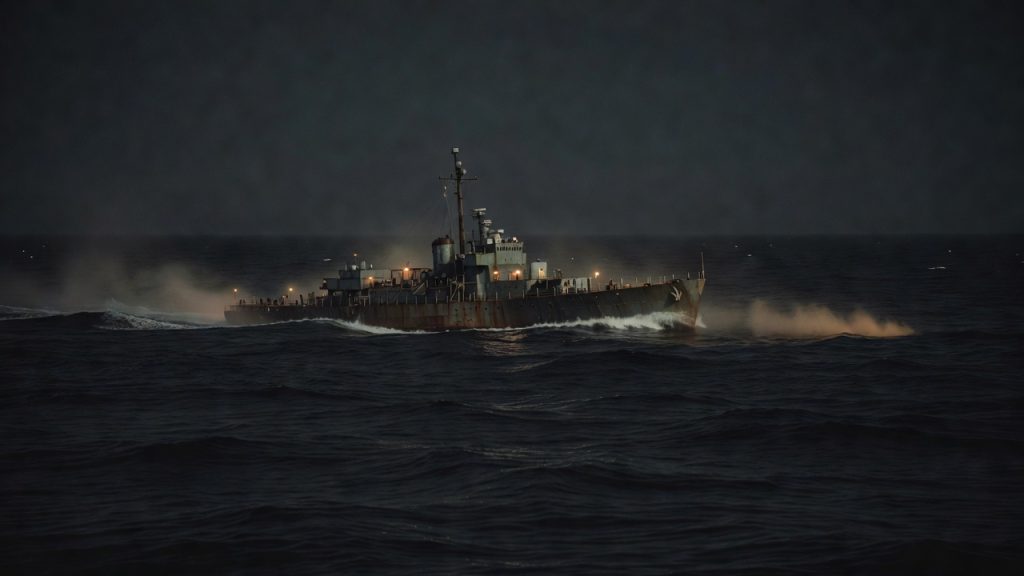
USS Herbert J. Thomas during the Scarlet Sage bioaerosol test off San Diego - ConspiracyRealist.com

Cold Open

Off San Diego in early 1966, the Pacific looked like a blank page. No headlines. No crowds. No warning sirens. Just a destroyer named the USS Herbert J. Thomas pushing through dark water while Cold War planners asked a private question in public space: if a biological cloud met an American warship at sea, how much would get inside before anyone understood what was happening? The test was called Scarlet Sage. It sounded almost pastoral. The purpose was not. Decades later, the file surfaced, the code name stopped sounding harmless, and one narrow Navy trial began to look like a clean window into how secrecy worked when the stakes were chemical, biological, and human.

The Case For

Scarlet Sage was real, classified, and aimed at a living ship.

The strongest argument for taking Scarlet Sage seriously is that the Pentagon eventually admitted it existed. In the Defense Department’s official Scarlet Sage fact sheet, the test is identified as SHAD Test 66-6, conducted from February 9 to March 4, 1966 in the Pacific Ocean off San Diego. The same sheet says the U.S. Army’s Deseret Test Center ran the operation and used the destroyer USS Herbert J. Thomas as the target vessel. That matters. Scarlet Sage was not a laboratory thought experiment. It was a field test against a functioning Navy ship.

The stated goal was to evaluate the Shipboard Toxicological Operational Protection System, or STOPS, against what the military called a biological warfare tracer. The tracer was Bacillus subtilis var. niger—better known in Cold War records as Bacillus globigii, or BG. According to the fact sheet, an aerosolized BG slurry was released from a point roughly 500 meters upwind of the destroyer. In plain English, the government created a biological cloud and measured how a warship handled it.

The bigger pattern makes Scarlet Sage feel less like an isolated drill and more like a buried doctrine.

Scarlet Sage becomes more unsettling when placed beside the wider SHAD record. The Defense Health Agency’s fact-sheet index lists Scarlet Sage beside Purple Sage, Autumn Gold, Eager Belle, and other maritime tests that used chemical agents, simulants, or biological tracers to study ship vulnerability. That pattern is why our earlier Project SHAD deep dive matters here. Scarlet Sage was one tile in a larger mosaic: repeated trials, coded names, delayed disclosure, and a military bureaucracy that explained the program only after veterans and lawmakers forced the issue.

The 2016 National Academies review of SHAD test descriptions adds more texture. Its Scarlet Sage summary says the test consisted of 19 trials and was designed to judge how effective STOPS would be against “an envelopment attack of a biological aerosol.” That wording lands hard. Even in the government’s own language, this was practice for an attack scenario. When you line Scarlet Sage up with the broader government secrets archive and the more recent Bacillus globigii investigation, the suspicion sharpens: Cold War planners normalized real-world exposure tests first and public explanation much later.

The Realist’s Eye

A secret test is not the same thing as proof of concealed mass harm.

This is where the story has to be tightened, not inflated. Scarlet Sage used BG because officials at the time regarded it as a low-risk biological simulant rather than an active warfare pathogen. The same Scarlet Sage fact sheet describes it through a biosafety lens that treated it as not known to consistently cause disease in healthy adults. The 2007 and 2016 National Academies studies, cited by the Department of Veterans Affairs, also stop short of claiming that SHAD participation produced a clear, program-wide pattern of specific long-term illness.

The VA’s Project SHAD research page says there is currently no clear evidence of specific long-term health effects associated with participation in Project SHAD overall. That does not erase concern. It does matter when separating what is documented from what is inferred. Scarlet Sage is a verified secret test. It is not verified proof of a hidden biological disaster off California.

The ethical problem may be stronger than the medical one.

Still, the realist view does not let the program off the hook. A government does not need to leave behind a documented wave of casualties to cross a serious line. It can cross that line by treating service members as operational test surfaces inside a classified program they did not meaningfully understand. The same VA history notes that the Defense Department only began declassifying and sharing information with VA in 2000, decades after the tests. That lag is part of the scandal. Delayed transparency distorts medical follow-up, veteran trust, and public confidence all at once.

There is also the archive problem. SHAD records were scattered, partially classified, and reconstructed long after the Deseret Test Center closed. That means confidence in the official story rests on a record that was incomplete from the moment the public finally saw it. The realist conclusion, then, is not that Scarlet Sage proves every darker suspicion. It is that the surviving documentation already proves something disturbing enough: the U.S. military rehearsed biological attack conditions on its own shipboard personnel under a secrecy regime that lasted for decades.

What We Know For Certain

  • Scarlet Sage was an official Project SHAD test run by the U.S. Army’s Deseret Test Center in February and March 1966 off San Diego.
  • The target vessel was the USS Herbert J. Thomas (DD-833).
  • The stated purpose was to evaluate the STOPS protective system against a biological aerosol scenario.
  • The simulant used was Bacillus globigii under its older designation Bacillus subtilis var. niger.
  • VA says broad follow-up studies have found no clear evidence of specific long-term health effects across SHAD participants as a whole.

The Unanswered Questions

  • How fully were sailors informed about the nature of Scarlet Sage while it was happening?
  • How complete are the surviving records for the 19 Scarlet Sage trials and any follow-up observations?
  • Did decades of classification prevent earlier, better health monitoring for participants?
  • How often did Cold War planners rely on “safe” simulants before the science around those substances was fully settled?

The Closer — You Decide

Scarlet Sage is the kind of file that changes temperature once you read it. On paper, it was a defensive readiness test. In practice, it was a secret rehearsal for a biological attack carried out against an American destroyer with American personnel aboard. Maybe the long-term risk was limited. Maybe the deeper wound was the assumption that secrecy itself could stand in for consent. The records are real. The delay is real. And the trust lost in that gap is real too. The evidence is on the table. You decide.

dive down the rabbit hole

Scarlet Sage: The Navy’s Secret Bioaerosol Test

S-FX.com
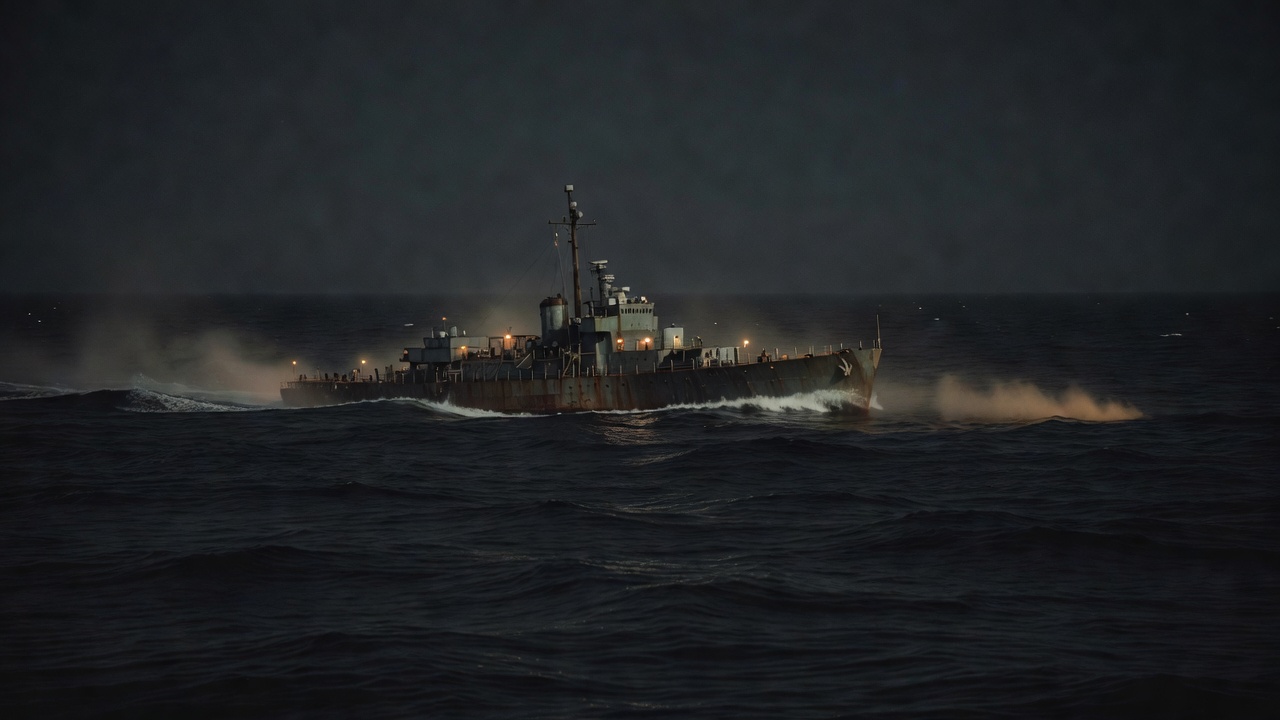
USS Herbert J. Thomas during the Scarlet Sage bioaerosol test off San Diego - ConspiracyRealist.com

Cold Open

Off San Diego in early 1966, the Pacific looked like a blank page. No headlines. No crowds. No warning sirens. Just a destroyer named the USS Herbert J. Thomas pushing through dark water while Cold War planners asked a private question in public space: if a biological cloud met an American warship at sea, how much would get inside before anyone understood what was happening? The test was called Scarlet Sage. It sounded almost pastoral. The purpose was not. Decades later, the file surfaced, the code name stopped sounding harmless, and one narrow Navy trial began to look like a clean window into how secrecy worked when the stakes were chemical, biological, and human.

The Case For

Scarlet Sage was real, classified, and aimed at a living ship.

The strongest argument for taking Scarlet Sage seriously is that the Pentagon eventually admitted it existed. In the Defense Department’s official Scarlet Sage fact sheet, the test is identified as SHAD Test 66-6, conducted from February 9 to March 4, 1966 in the Pacific Ocean off San Diego. The same sheet says the U.S. Army’s Deseret Test Center ran the operation and used the destroyer USS Herbert J. Thomas as the target vessel. That matters. Scarlet Sage was not a laboratory thought experiment. It was a field test against a functioning Navy ship.

The stated goal was to evaluate the Shipboard Toxicological Operational Protection System, or STOPS, against what the military called a biological warfare tracer. The tracer was Bacillus subtilis var. niger—better known in Cold War records as Bacillus globigii, or BG. According to the fact sheet, an aerosolized BG slurry was released from a point roughly 500 meters upwind of the destroyer. In plain English, the government created a biological cloud and measured how a warship handled it.

The bigger pattern makes Scarlet Sage feel less like an isolated drill and more like a buried doctrine.

Scarlet Sage becomes more unsettling when placed beside the wider SHAD record. The Defense Health Agency’s fact-sheet index lists Scarlet Sage beside Purple Sage, Autumn Gold, Eager Belle, and other maritime tests that used chemical agents, simulants, or biological tracers to study ship vulnerability. That pattern is why our earlier Project SHAD deep dive matters here. Scarlet Sage was one tile in a larger mosaic: repeated trials, coded names, delayed disclosure, and a military bureaucracy that explained the program only after veterans and lawmakers forced the issue.

The 2016 National Academies review of SHAD test descriptions adds more texture. Its Scarlet Sage summary says the test consisted of 19 trials and was designed to judge how effective STOPS would be against “an envelopment attack of a biological aerosol.” That wording lands hard. Even in the government’s own language, this was practice for an attack scenario. When you line Scarlet Sage up with the broader government secrets archive and the more recent Bacillus globigii investigation, the suspicion sharpens: Cold War planners normalized real-world exposure tests first and public explanation much later.

The Realist’s Eye

A secret test is not the same thing as proof of concealed mass harm.

This is where the story has to be tightened, not inflated. Scarlet Sage used BG because officials at the time regarded it as a low-risk biological simulant rather than an active warfare pathogen. The same Scarlet Sage fact sheet describes it through a biosafety lens that treated it as not known to consistently cause disease in healthy adults. The 2007 and 2016 National Academies studies, cited by the Department of Veterans Affairs, also stop short of claiming that SHAD participation produced a clear, program-wide pattern of specific long-term illness.

The VA’s Project SHAD research page says there is currently no clear evidence of specific long-term health effects associated with participation in Project SHAD overall. That does not erase concern. It does matter when separating what is documented from what is inferred. Scarlet Sage is a verified secret test. It is not verified proof of a hidden biological disaster off California.

The ethical problem may be stronger than the medical one.

Still, the realist view does not let the program off the hook. A government does not need to leave behind a documented wave of casualties to cross a serious line. It can cross that line by treating service members as operational test surfaces inside a classified program they did not meaningfully understand. The same VA history notes that the Defense Department only began declassifying and sharing information with VA in 2000, decades after the tests. That lag is part of the scandal. Delayed transparency distorts medical follow-up, veteran trust, and public confidence all at once.

There is also the archive problem. SHAD records were scattered, partially classified, and reconstructed long after the Deseret Test Center closed. That means confidence in the official story rests on a record that was incomplete from the moment the public finally saw it. The realist conclusion, then, is not that Scarlet Sage proves every darker suspicion. It is that the surviving documentation already proves something disturbing enough: the U.S. military rehearsed biological attack conditions on its own shipboard personnel under a secrecy regime that lasted for decades.

What We Know For Certain

  • Scarlet Sage was an official Project SHAD test run by the U.S. Army’s Deseret Test Center in February and March 1966 off San Diego.
  • The target vessel was the USS Herbert J. Thomas (DD-833).
  • The stated purpose was to evaluate the STOPS protective system against a biological aerosol scenario.
  • The simulant used was Bacillus globigii under its older designation Bacillus subtilis var. niger.
  • VA says broad follow-up studies have found no clear evidence of specific long-term health effects across SHAD participants as a whole.

The Unanswered Questions

  • How fully were sailors informed about the nature of Scarlet Sage while it was happening?
  • How complete are the surviving records for the 19 Scarlet Sage trials and any follow-up observations?
  • Did decades of classification prevent earlier, better health monitoring for participants?
  • How often did Cold War planners rely on “safe” simulants before the science around those substances was fully settled?

The Closer — You Decide

Scarlet Sage is the kind of file that changes temperature once you read it. On paper, it was a defensive readiness test. In practice, it was a secret rehearsal for a biological attack carried out against an American destroyer with American personnel aboard. Maybe the long-term risk was limited. Maybe the deeper wound was the assumption that secrecy itself could stand in for consent. The records are real. The delay is real. And the trust lost in that gap is real too. The evidence is on the table. You decide.

Scarlet Sage: The Navy’s Secret Bioaerosol Test

USS Herbert J. Thomas during the Scarlet Sage bioaerosol test off San Diego - ConspiracyRealist.com

Cold Open

Off San Diego in early 1966, the Pacific looked like a blank page. No headlines. No crowds. No warning sirens. Just a destroyer named the USS Herbert J. Thomas pushing through dark water while Cold War planners asked a private question in public space: if a biological cloud met an American warship at sea, how much would get inside before anyone understood what was happening? The test was called Scarlet Sage. It sounded almost pastoral. The purpose was not. Decades later, the file surfaced, the code name stopped sounding harmless, and one narrow Navy trial began to look like a clean window into how secrecy worked when the stakes were chemical, biological, and human.

The Case For

Scarlet Sage was real, classified, and aimed at a living ship.

The strongest argument for taking Scarlet Sage seriously is that the Pentagon eventually admitted it existed. In the Defense Department’s official Scarlet Sage fact sheet, the test is identified as SHAD Test 66-6, conducted from February 9 to March 4, 1966 in the Pacific Ocean off San Diego. The same sheet says the U.S. Army’s Deseret Test Center ran the operation and used the destroyer USS Herbert J. Thomas as the target vessel. That matters. Scarlet Sage was not a laboratory thought experiment. It was a field test against a functioning Navy ship.

The stated goal was to evaluate the Shipboard Toxicological Operational Protection System, or STOPS, against what the military called a biological warfare tracer. The tracer was Bacillus subtilis var. niger—better known in Cold War records as Bacillus globigii, or BG. According to the fact sheet, an aerosolized BG slurry was released from a point roughly 500 meters upwind of the destroyer. In plain English, the government created a biological cloud and measured how a warship handled it.

The bigger pattern makes Scarlet Sage feel less like an isolated drill and more like a buried doctrine.

Scarlet Sage becomes more unsettling when placed beside the wider SHAD record. The Defense Health Agency’s fact-sheet index lists Scarlet Sage beside Purple Sage, Autumn Gold, Eager Belle, and other maritime tests that used chemical agents, simulants, or biological tracers to study ship vulnerability. That pattern is why our earlier Project SHAD deep dive matters here. Scarlet Sage was one tile in a larger mosaic: repeated trials, coded names, delayed disclosure, and a military bureaucracy that explained the program only after veterans and lawmakers forced the issue.

The 2016 National Academies review of SHAD test descriptions adds more texture. Its Scarlet Sage summary says the test consisted of 19 trials and was designed to judge how effective STOPS would be against “an envelopment attack of a biological aerosol.” That wording lands hard. Even in the government’s own language, this was practice for an attack scenario. When you line Scarlet Sage up with the broader government secrets archive and the more recent Bacillus globigii investigation, the suspicion sharpens: Cold War planners normalized real-world exposure tests first and public explanation much later.

The Realist’s Eye

A secret test is not the same thing as proof of concealed mass harm.

This is where the story has to be tightened, not inflated. Scarlet Sage used BG because officials at the time regarded it as a low-risk biological simulant rather than an active warfare pathogen. The same Scarlet Sage fact sheet describes it through a biosafety lens that treated it as not known to consistently cause disease in healthy adults. The 2007 and 2016 National Academies studies, cited by the Department of Veterans Affairs, also stop short of claiming that SHAD participation produced a clear, program-wide pattern of specific long-term illness.

The VA’s Project SHAD research page says there is currently no clear evidence of specific long-term health effects associated with participation in Project SHAD overall. That does not erase concern. It does matter when separating what is documented from what is inferred. Scarlet Sage is a verified secret test. It is not verified proof of a hidden biological disaster off California.

The ethical problem may be stronger than the medical one.

Still, the realist view does not let the program off the hook. A government does not need to leave behind a documented wave of casualties to cross a serious line. It can cross that line by treating service members as operational test surfaces inside a classified program they did not meaningfully understand. The same VA history notes that the Defense Department only began declassifying and sharing information with VA in 2000, decades after the tests. That lag is part of the scandal. Delayed transparency distorts medical follow-up, veteran trust, and public confidence all at once.

There is also the archive problem. SHAD records were scattered, partially classified, and reconstructed long after the Deseret Test Center closed. That means confidence in the official story rests on a record that was incomplete from the moment the public finally saw it. The realist conclusion, then, is not that Scarlet Sage proves every darker suspicion. It is that the surviving documentation already proves something disturbing enough: the U.S. military rehearsed biological attack conditions on its own shipboard personnel under a secrecy regime that lasted for decades.

What We Know For Certain

  • Scarlet Sage was an official Project SHAD test run by the U.S. Army’s Deseret Test Center in February and March 1966 off San Diego.
  • The target vessel was the USS Herbert J. Thomas (DD-833).
  • The stated purpose was to evaluate the STOPS protective system against a biological aerosol scenario.
  • The simulant used was Bacillus globigii under its older designation Bacillus subtilis var. niger.
  • VA says broad follow-up studies have found no clear evidence of specific long-term health effects across SHAD participants as a whole.

The Unanswered Questions

  • How fully were sailors informed about the nature of Scarlet Sage while it was happening?
  • How complete are the surviving records for the 19 Scarlet Sage trials and any follow-up observations?
  • Did decades of classification prevent earlier, better health monitoring for participants?
  • How often did Cold War planners rely on “safe” simulants before the science around those substances was fully settled?

The Closer — You Decide

Scarlet Sage is the kind of file that changes temperature once you read it. On paper, it was a defensive readiness test. In practice, it was a secret rehearsal for a biological attack carried out against an American destroyer with American personnel aboard. Maybe the long-term risk was limited. Maybe the deeper wound was the assumption that secrecy itself could stand in for consent. The records are real. The delay is real. And the trust lost in that gap is real too. The evidence is on the table. You decide.

Table of contents