Menu

Inside a Chemical Weapons Challenge Inspection

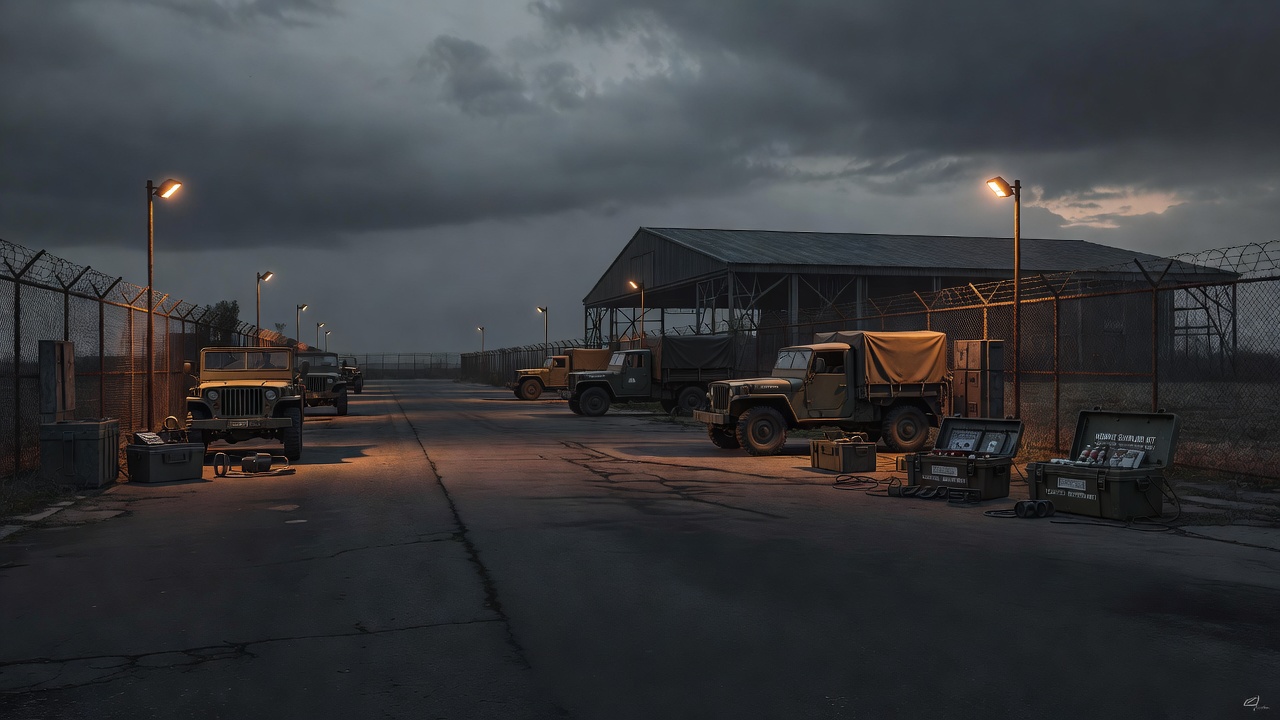
Chemical weapons challenge inspection military base perimeter — ConspiracyRealist.com

It starts before dawn, not with sirens but with paperwork. A complaint lands in The Hague. On a military base that was not expecting company, phones begin to ring up the chain of command. Within hours, an international inspection team is moving with maps, sampling kits, and one narrow mission: find out whether chemical weapons work is hiding behind fences and flight lines. The Chemical Weapons Convention built this mechanism on purpose. The unsettling part is how close it can get before politics slam the brakes.

The Case For

The treaty was designed to reach places routine inspections never can

The strongest argument for taking the challenge inspection mechanism seriously is simple: it was written for the places most likely to matter. Article IX of the Chemical Weapons Convention gives any state party the right to request an on-site inspection of any facility or location under another state party’s jurisdiction or control for the sole purpose of clarifying possible non-compliance. The OPCW’s published text of Article IX makes the ambition plain. If routine declarations miss an undeclared lab, storage point, or field deployment site, challenge inspections are supposed to close that gap.

The Verification Annex goes further. Under Part X of the OPCW verification rules, the inspected state must provide access as soon as possible and no later than 108 hours after inspectors arrive at the point of entry. The team can negotiate a perimeter, begin perimeter activities immediately, collect wipe, air, soil, or effluent samples, and inspect vehicle traffic leaving the site on a managed-access basis. This is not a symbolic visit. It is a compressed search procedure built to preserve evidence before it can vanish into trucks, drains, or burn pits.

Military sites are explicitly part of the picture

This is where the story gets darker. Challenge inspections were never meant only for chemical plants. U.S. military guidance in CJCSI 2030.01E states that managed access is to be employed for military facilities, public vessels, state aircraft, and geographically separated units. In other words, the Pentagon’s own public compliance policy assumes that a real challenge inspection could target sensitive military assets on short notice. Commanders are instructed not to permit an inspection without notifying the chain of command and not to expose restricted or formerly restricted data. That is contingency planning, not fantasy.

The U.S. Bureau of Industry and Security made the point even more directly in its 2006 Chemical Weapons Convention: Challenge Inspection Overview. BIS wrote that any facility may be inspected and that, if a private U.S. facility refused consent, the government could seek a criminal warrant. The machinery is legal as well as diplomatic.

The world has rehearsed this for a reason

Governments have also drilled the process in realistic conditions. In March 2006, Germany hosted a mock OPCW challenge inspection at Lagerlechfeld military airbase near Augsburg. The OPCW said fifteen inspectors deployed after a simulated request, gained swift access, flew helicopter overflights, and used detection equipment and a mobile laboratory on a twelve-square-kilometre inspection area. That was not a tabletop exercise. It was a rehearsal for entry into a real military site.

Seen that way, the mechanism looks less like treaty theater and more like an emergency brake: rarely pulled, politically risky, but powerful because it can threaten access to places that normally answer only to national security bureaucracy.

The Realist’s Eye

A powerful mechanism on paper is still vulnerable in practice

Now the hard part. A challenge inspection can be intrusive without being all-seeing. The same Part X rules that empower inspectors also promise the inspected state a least-intrusive process and allow managed access measures to protect national security and proprietary information. Those protections are not loopholes by definition; they are part of the bargain that made the treaty politically possible. But they also create friction exactly where suspicion is highest.

An inspected state can negotiate the perimeter, propose alternatives to full access, and shield restricted information. The treaty says those measures cannot hide non-compliance, but disputes over what is truly necessary can still burn precious time. If no agreement is reached, an alternative perimeter becomes final. That may still leave inspectors with a huge search area and finite hours.

Politics can neutralize a tool before inspectors ever board the plane

There is also the historical problem: no state has ever demanded a full challenge inspection. As Jonathan B. Tucker wrote for the Arms Control Association in 2007, the mechanism exists to reach undeclared sites, yet political hesitation has kept it unused. Requesting an inspection is an accusation with consequences. If the evidence is weak, the requester risks looking abusive. If the target is powerful, the diplomatic fallout can dwarf the inspection itself.

Sampling is potent, but only if inspectors can reach the right places quickly. Chemical signatures degrade. Equipment can be moved. Military sites are physically large and operationally layered. Germany’s 2006 exercise covered twelve square kilometres, and that was a cooperative drill. A real challenge inspection at a hostile base would be messier.

The realist conclusion is not that the mechanism is fake. It is that the mechanism lives in tension with the very security realities it was created to police. A treaty can promise surprise access, but it cannot remove fear, alliance politics, or the instinct to compartmentalize first and explain later.

What We Know For Certain

  • Article IX of the Chemical Weapons Convention allows a state party to request a challenge inspection of any site under another state party’s jurisdiction or control to clarify possible non-compliance.
  • OPCW Verification Annex Part X sets timelines, perimeter rules, sampling authorities, managed-access procedures, and an 84-hour inspection period unless extended by agreement.
  • Public U.S. guidance states that managed access is to be used for challenge inspections involving military facilities, vessels, aircraft, and geographically separated units.
  • Germany hosted a simulated OPCW challenge inspection at Lagerlechfeld military airbase in March 2006 with fifteen inspectors, helicopter overflights, detection equipment, and a mobile lab.
  • No full Chemical Weapons Convention challenge inspection has been carried out in the real world to date.

The Unanswered Questions

  • Would inspectors receive enough meaningful access at a real military site to verify or refute a serious compliance suspicion?
  • How much evidence could be moved, diluted, or concealed during the political and logistical countdown before arrival?
  • Would any state risk the diplomatic fallout of requesting a challenge inspection against a major power or close ally?
  • If managed access and national-security protections collide with inspection demands, who really controls the practical boundary?

The Closer — You Decide

The treaty books say inspectors can show up at the fence line, draw a perimeter, pull samples, and ask dangerous questions in a hurry. The drill books say governments still rehearse for that day. The history books say no one has been willing to pull the trigger for real. That leaves us in familiar territory: between a mechanism that clearly exists and a political world that may never let it fully breathe. The documents are real. The constraints are real. The evidence is on the table. You decide.

Related reading: why CWC challenge inspections never happen, Germany’s 2006 OPCW challenge inspection drill, and the broader Government Secrets archive.

dive down the rabbit hole

Inside a Chemical Weapons Challenge Inspection

S-FX.com
Chemical weapons challenge inspection military base perimeter — ConspiracyRealist.com

It starts before dawn, not with sirens but with paperwork. A complaint lands in The Hague. On a military base that was not expecting company, phones begin to ring up the chain of command. Within hours, an international inspection team is moving with maps, sampling kits, and one narrow mission: find out whether chemical weapons work is hiding behind fences and flight lines. The Chemical Weapons Convention built this mechanism on purpose. The unsettling part is how close it can get before politics slam the brakes.

The Case For

The treaty was designed to reach places routine inspections never can

The strongest argument for taking the challenge inspection mechanism seriously is simple: it was written for the places most likely to matter. Article IX of the Chemical Weapons Convention gives any state party the right to request an on-site inspection of any facility or location under another state party’s jurisdiction or control for the sole purpose of clarifying possible non-compliance. The OPCW’s published text of Article IX makes the ambition plain. If routine declarations miss an undeclared lab, storage point, or field deployment site, challenge inspections are supposed to close that gap.

The Verification Annex goes further. Under Part X of the OPCW verification rules, the inspected state must provide access as soon as possible and no later than 108 hours after inspectors arrive at the point of entry. The team can negotiate a perimeter, begin perimeter activities immediately, collect wipe, air, soil, or effluent samples, and inspect vehicle traffic leaving the site on a managed-access basis. This is not a symbolic visit. It is a compressed search procedure built to preserve evidence before it can vanish into trucks, drains, or burn pits.

Military sites are explicitly part of the picture

This is where the story gets darker. Challenge inspections were never meant only for chemical plants. U.S. military guidance in CJCSI 2030.01E states that managed access is to be employed for military facilities, public vessels, state aircraft, and geographically separated units. In other words, the Pentagon’s own public compliance policy assumes that a real challenge inspection could target sensitive military assets on short notice. Commanders are instructed not to permit an inspection without notifying the chain of command and not to expose restricted or formerly restricted data. That is contingency planning, not fantasy.

The U.S. Bureau of Industry and Security made the point even more directly in its 2006 Chemical Weapons Convention: Challenge Inspection Overview. BIS wrote that any facility may be inspected and that, if a private U.S. facility refused consent, the government could seek a criminal warrant. The machinery is legal as well as diplomatic.

The world has rehearsed this for a reason

Governments have also drilled the process in realistic conditions. In March 2006, Germany hosted a mock OPCW challenge inspection at Lagerlechfeld military airbase near Augsburg. The OPCW said fifteen inspectors deployed after a simulated request, gained swift access, flew helicopter overflights, and used detection equipment and a mobile laboratory on a twelve-square-kilometre inspection area. That was not a tabletop exercise. It was a rehearsal for entry into a real military site.

Seen that way, the mechanism looks less like treaty theater and more like an emergency brake: rarely pulled, politically risky, but powerful because it can threaten access to places that normally answer only to national security bureaucracy.

The Realist’s Eye

A powerful mechanism on paper is still vulnerable in practice

Now the hard part. A challenge inspection can be intrusive without being all-seeing. The same Part X rules that empower inspectors also promise the inspected state a least-intrusive process and allow managed access measures to protect national security and proprietary information. Those protections are not loopholes by definition; they are part of the bargain that made the treaty politically possible. But they also create friction exactly where suspicion is highest.

An inspected state can negotiate the perimeter, propose alternatives to full access, and shield restricted information. The treaty says those measures cannot hide non-compliance, but disputes over what is truly necessary can still burn precious time. If no agreement is reached, an alternative perimeter becomes final. That may still leave inspectors with a huge search area and finite hours.

Politics can neutralize a tool before inspectors ever board the plane

There is also the historical problem: no state has ever demanded a full challenge inspection. As Jonathan B. Tucker wrote for the Arms Control Association in 2007, the mechanism exists to reach undeclared sites, yet political hesitation has kept it unused. Requesting an inspection is an accusation with consequences. If the evidence is weak, the requester risks looking abusive. If the target is powerful, the diplomatic fallout can dwarf the inspection itself.

Sampling is potent, but only if inspectors can reach the right places quickly. Chemical signatures degrade. Equipment can be moved. Military sites are physically large and operationally layered. Germany’s 2006 exercise covered twelve square kilometres, and that was a cooperative drill. A real challenge inspection at a hostile base would be messier.

The realist conclusion is not that the mechanism is fake. It is that the mechanism lives in tension with the very security realities it was created to police. A treaty can promise surprise access, but it cannot remove fear, alliance politics, or the instinct to compartmentalize first and explain later.

What We Know For Certain

  • Article IX of the Chemical Weapons Convention allows a state party to request a challenge inspection of any site under another state party’s jurisdiction or control to clarify possible non-compliance.
  • OPCW Verification Annex Part X sets timelines, perimeter rules, sampling authorities, managed-access procedures, and an 84-hour inspection period unless extended by agreement.
  • Public U.S. guidance states that managed access is to be used for challenge inspections involving military facilities, vessels, aircraft, and geographically separated units.
  • Germany hosted a simulated OPCW challenge inspection at Lagerlechfeld military airbase in March 2006 with fifteen inspectors, helicopter overflights, detection equipment, and a mobile lab.
  • No full Chemical Weapons Convention challenge inspection has been carried out in the real world to date.

The Unanswered Questions

  • Would inspectors receive enough meaningful access at a real military site to verify or refute a serious compliance suspicion?
  • How much evidence could be moved, diluted, or concealed during the political and logistical countdown before arrival?
  • Would any state risk the diplomatic fallout of requesting a challenge inspection against a major power or close ally?
  • If managed access and national-security protections collide with inspection demands, who really controls the practical boundary?

The Closer — You Decide

The treaty books say inspectors can show up at the fence line, draw a perimeter, pull samples, and ask dangerous questions in a hurry. The drill books say governments still rehearse for that day. The history books say no one has been willing to pull the trigger for real. That leaves us in familiar territory: between a mechanism that clearly exists and a political world that may never let it fully breathe. The documents are real. The constraints are real. The evidence is on the table. You decide.

Related reading: why CWC challenge inspections never happen, Germany’s 2006 OPCW challenge inspection drill, and the broader Government Secrets archive.

Inside a Chemical Weapons Challenge Inspection

Chemical weapons challenge inspection military base perimeter — ConspiracyRealist.com

It starts before dawn, not with sirens but with paperwork. A complaint lands in The Hague. On a military base that was not expecting company, phones begin to ring up the chain of command. Within hours, an international inspection team is moving with maps, sampling kits, and one narrow mission: find out whether chemical weapons work is hiding behind fences and flight lines. The Chemical Weapons Convention built this mechanism on purpose. The unsettling part is how close it can get before politics slam the brakes.

The Case For

The treaty was designed to reach places routine inspections never can

The strongest argument for taking the challenge inspection mechanism seriously is simple: it was written for the places most likely to matter. Article IX of the Chemical Weapons Convention gives any state party the right to request an on-site inspection of any facility or location under another state party’s jurisdiction or control for the sole purpose of clarifying possible non-compliance. The OPCW’s published text of Article IX makes the ambition plain. If routine declarations miss an undeclared lab, storage point, or field deployment site, challenge inspections are supposed to close that gap.

The Verification Annex goes further. Under Part X of the OPCW verification rules, the inspected state must provide access as soon as possible and no later than 108 hours after inspectors arrive at the point of entry. The team can negotiate a perimeter, begin perimeter activities immediately, collect wipe, air, soil, or effluent samples, and inspect vehicle traffic leaving the site on a managed-access basis. This is not a symbolic visit. It is a compressed search procedure built to preserve evidence before it can vanish into trucks, drains, or burn pits.

Military sites are explicitly part of the picture

This is where the story gets darker. Challenge inspections were never meant only for chemical plants. U.S. military guidance in CJCSI 2030.01E states that managed access is to be employed for military facilities, public vessels, state aircraft, and geographically separated units. In other words, the Pentagon’s own public compliance policy assumes that a real challenge inspection could target sensitive military assets on short notice. Commanders are instructed not to permit an inspection without notifying the chain of command and not to expose restricted or formerly restricted data. That is contingency planning, not fantasy.

The U.S. Bureau of Industry and Security made the point even more directly in its 2006 Chemical Weapons Convention: Challenge Inspection Overview. BIS wrote that any facility may be inspected and that, if a private U.S. facility refused consent, the government could seek a criminal warrant. The machinery is legal as well as diplomatic.

The world has rehearsed this for a reason

Governments have also drilled the process in realistic conditions. In March 2006, Germany hosted a mock OPCW challenge inspection at Lagerlechfeld military airbase near Augsburg. The OPCW said fifteen inspectors deployed after a simulated request, gained swift access, flew helicopter overflights, and used detection equipment and a mobile laboratory on a twelve-square-kilometre inspection area. That was not a tabletop exercise. It was a rehearsal for entry into a real military site.

Seen that way, the mechanism looks less like treaty theater and more like an emergency brake: rarely pulled, politically risky, but powerful because it can threaten access to places that normally answer only to national security bureaucracy.

The Realist’s Eye

A powerful mechanism on paper is still vulnerable in practice

Now the hard part. A challenge inspection can be intrusive without being all-seeing. The same Part X rules that empower inspectors also promise the inspected state a least-intrusive process and allow managed access measures to protect national security and proprietary information. Those protections are not loopholes by definition; they are part of the bargain that made the treaty politically possible. But they also create friction exactly where suspicion is highest.

An inspected state can negotiate the perimeter, propose alternatives to full access, and shield restricted information. The treaty says those measures cannot hide non-compliance, but disputes over what is truly necessary can still burn precious time. If no agreement is reached, an alternative perimeter becomes final. That may still leave inspectors with a huge search area and finite hours.

Politics can neutralize a tool before inspectors ever board the plane

There is also the historical problem: no state has ever demanded a full challenge inspection. As Jonathan B. Tucker wrote for the Arms Control Association in 2007, the mechanism exists to reach undeclared sites, yet political hesitation has kept it unused. Requesting an inspection is an accusation with consequences. If the evidence is weak, the requester risks looking abusive. If the target is powerful, the diplomatic fallout can dwarf the inspection itself.

Sampling is potent, but only if inspectors can reach the right places quickly. Chemical signatures degrade. Equipment can be moved. Military sites are physically large and operationally layered. Germany’s 2006 exercise covered twelve square kilometres, and that was a cooperative drill. A real challenge inspection at a hostile base would be messier.

The realist conclusion is not that the mechanism is fake. It is that the mechanism lives in tension with the very security realities it was created to police. A treaty can promise surprise access, but it cannot remove fear, alliance politics, or the instinct to compartmentalize first and explain later.

What We Know For Certain

  • Article IX of the Chemical Weapons Convention allows a state party to request a challenge inspection of any site under another state party’s jurisdiction or control to clarify possible non-compliance.
  • OPCW Verification Annex Part X sets timelines, perimeter rules, sampling authorities, managed-access procedures, and an 84-hour inspection period unless extended by agreement.
  • Public U.S. guidance states that managed access is to be used for challenge inspections involving military facilities, vessels, aircraft, and geographically separated units.
  • Germany hosted a simulated OPCW challenge inspection at Lagerlechfeld military airbase in March 2006 with fifteen inspectors, helicopter overflights, detection equipment, and a mobile lab.
  • No full Chemical Weapons Convention challenge inspection has been carried out in the real world to date.

The Unanswered Questions

  • Would inspectors receive enough meaningful access at a real military site to verify or refute a serious compliance suspicion?
  • How much evidence could be moved, diluted, or concealed during the political and logistical countdown before arrival?
  • Would any state risk the diplomatic fallout of requesting a challenge inspection against a major power or close ally?
  • If managed access and national-security protections collide with inspection demands, who really controls the practical boundary?

The Closer — You Decide

The treaty books say inspectors can show up at the fence line, draw a perimeter, pull samples, and ask dangerous questions in a hurry. The drill books say governments still rehearse for that day. The history books say no one has been willing to pull the trigger for real. That leaves us in familiar territory: between a mechanism that clearly exists and a political world that may never let it fully breathe. The documents are real. The constraints are real. The evidence is on the table. You decide.

Related reading: why CWC challenge inspections never happen, Germany’s 2006 OPCW challenge inspection drill, and the broader Government Secrets archive.

Table of contents