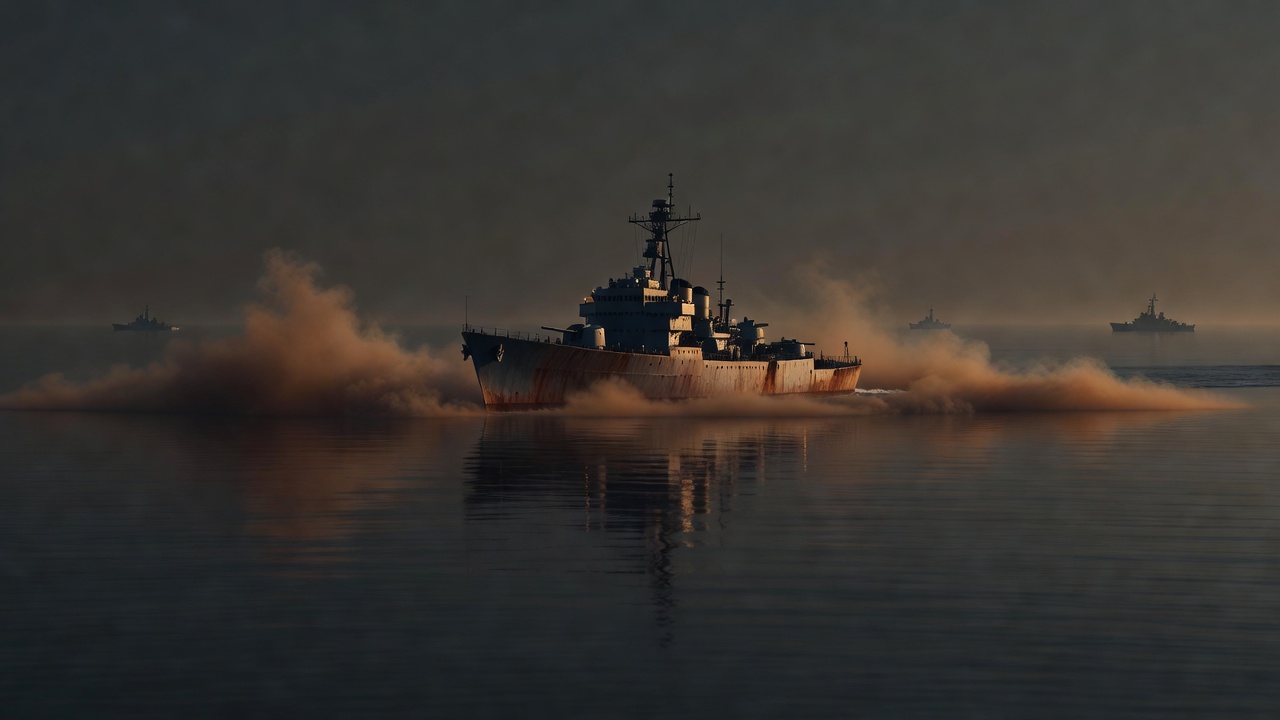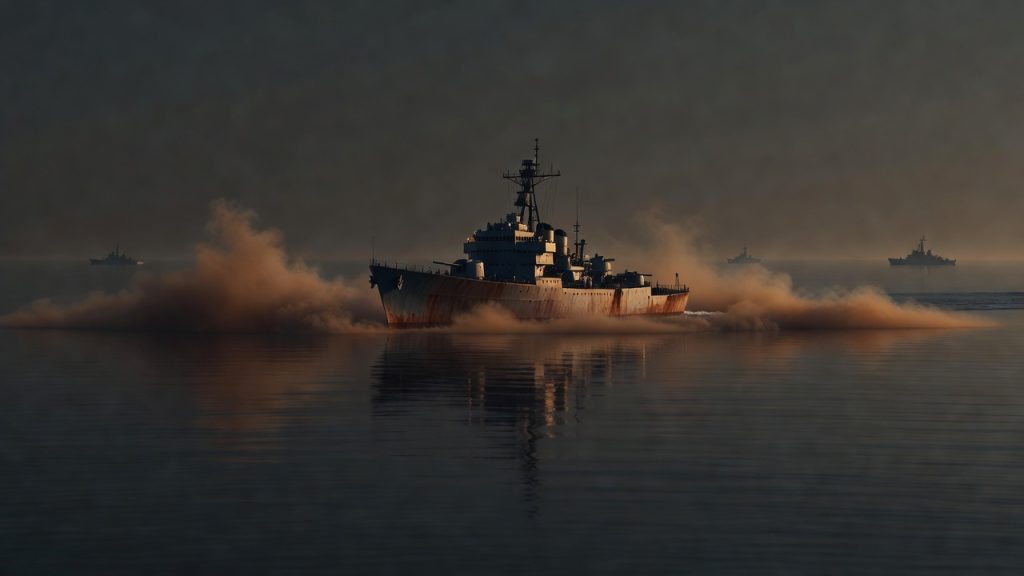
Night off San Diego. Dark water. Running lights. A destroyer cuts through the Pacific while a machine on its bow breathes out an invisible lesson. The sailors aboard know they are inside a test, but not the full shape of the story they will become part of decades later. When Project SHAD finally surfaced from Cold War secrecy, one exercise in particular stood out: High Low, a 1965 sea trial built to answer a brutal question. If a U.S. warship sailed into a nerve-agent cloud, how much of that cloud would get inside?
The Case For
A classified sea trial built around ship vulnerability
The declassified Defense Department fact sheet for High Low says the primary purpose of the test was to assess the vulnerability of ships to an enveloping cloud of toxic G-series nerve agent. That language matters. This was not a public-health drill or a harmless training vignette. It was a Cold War operational experiment under the Army’s Deseret Test Center, aimed at understanding how a chemical attack might penetrate real Navy vessels at sea.
According to that fact sheet, High Low was conducted from January 11 through February 26, 1965, in the Pacific off San Diego. Four ship types were involved: USS Berkeley, USS Fechteler, USS Okanogan, and USS Wexford County. The agent used was methylacetoacetate, or MAA, a simulant for sarin. The same document notes that DoD had to correct an earlier public date, changing the test from 1966 to 1965 after reviewing ship logs. Even in declassification, the record needed repair.
The model was broader than one ship and one spray run
High Low was not just about whether a cloud touched steel. The fact sheet says the first objective was to study how a sarin simulant penetrated four classes of naval vessels operating at sea. The second objective went further: estimate how actual sarin would behave by combining High Low results with data from Flower Drum I, an earlier SHAD test. In plain English, the military was using real ships and a real release to build a mathematical picture of a nerve-agent attack on the fleet.
That fits the larger SHAD mission. The VA’s overview of Project 112/Project SHAD states that ship-based tests were designed to identify the vulnerability of U.S. warships to chemical and biological attacks and develop response procedures. The 2004 GAO review of Project 112 went further, finding that DoD had accurately identified the major tests but likely had not identified all potentially exposed personnel. The tests were real. The secrecy was real. The paper trail was incomplete.
That is why High Low lingers. A government that quietly modeled sarin penetration aboard operational ships, then spent decades reconstructing who was involved, gives conspiracy-minded readers plenty to work with. It also links naturally to the broader Project SHAD record and to the later MAA-centered trial Purple Sage, where the same simulant appears in another war-at-sea experiment.
The Realist’s Eye
No sarin was used in High Low
This is where the temperature has to come down. The High Low fact sheet is explicit: no sarin was used in the test. The projection of sarin penetration was done mathematically from the behavior of methylacetoacetate and earlier comparative data. That does not make the exercise benign, but it does narrow what can be claimed. High Low was a chemical-warfare vulnerability test using a simulant, not proof that the Navy sprayed sailors with live nerve agent off California.
The same record also says personnel were instructed in the use of protective masks, and masks were worn by those directly exposed to significant quantities of MAA. That suggests at least some effort at risk control, even if it does not answer the larger consent question. Were sailors given enough information to understand why they were being exposed to a sarin stand-in? The surviving public documents do not fully settle that.
The archive is strong enough to confirm the test, not every conclusion
There is another brake on the wilder versions of the story. The VA says there is no clear evidence of specific long-term health problems associated with participation in Project SHAD as a whole. That is not the same as saying every concern was disproved. It is a statement about what the evidence has and has not established. Likewise, the High Low fact sheet itself carries a caveat: VA accepts the released information on dates, ships, and substances, but cannot verify its accuracy.
Then there is the paperwork problem. The SHAD fact-sheet index notes that records were scattered and the Deseret Test Center had been closed for decades before investigators tried to reconstruct the program. GAO concluded DoD probably identified the major Project 112 tests, but likely did not identify every potentially exposed person. That means the strongest version of the High Low story is not that we have a perfect secret file. It is that we have a partial official record confirming a classified Navy vulnerability test whose human accounting remained incomplete long after the Cold War ended.
So the realist position is uncomfortable but clear. High Low is not a hoax. It is not a fever dream stitched together from rumor. It is also not a documented case of sailors being dosed with live sarin. The truth that survives in public is narrower, and maybe more unsettling for that reason: the government really did run these simulations on operational ships, and only later tried to piece together what it had done.
What We Know For Certain
- High Low was a real Project SHAD test conducted by the U.S. Army’s Deseret Test Center in the Pacific off San Diego in early 1965.
- The test used methylacetoacetate as a simulant for sarin; the released fact sheet says no sarin was used in High Low itself.
- The stated goal was to measure how a simulated nerve-agent cloud could penetrate multiple classes of Navy ships at sea.
- Four ships were named in the released record: USS Berkeley, USS Fechteler, USS Okanogan, and USS Wexford County.
- DoD later corrected the public date of the test from 1966 to 1965 after reviewing ship logs.
The Unanswered Questions
- How much did participating sailors actually know about the purpose and limits of the exposure they were part of?
- What internal calculations linked the MAA results in High Low to estimates of actual sarin penetration?
- Why did the public chronology need correction years after declassification began?
- How many participants were never fully identified in later outreach and benefits reviews?
- What do the missing or fragmented SHAD records still leave out about shipboard safety procedures and follow-up monitoring?
The Closer — You Decide
Some conspiracy stories collapse the moment the paperwork shows up. High Low does the opposite. The paperwork is the story. A classified sea trial. A sarin simulant drifting over real ships. A corrected timeline. A veteran-notification effort that started decades late. That does not prove every darkest suspicion. It does prove the Navy and the Pentagon ran experiments the public was never meant to see in real time. The documents are on the table. The gaps are on the table too. You decide.